With more than 10‑year industry experience, Shandong Headpowder delivers full‑service pneumatic‑conveying systems and blowers, undertaking nationwide turn‑key powder‑handling projects.
Clay ash, as a byproduct from industrial processes such as power generation, requires efficient handling and transportation. The pneumatic conveying system designed by Shandong HeadPowder Engineering Co., Ltd. offers a reliable solution for transporting clay ash, ensuring minimal dust emission and optimal material flow. This article delves into the operation process and working principle of the clay ash pneumatic conveying machine, highlighting the key components and the step-by-step mechanism that enables seamless material transfer.
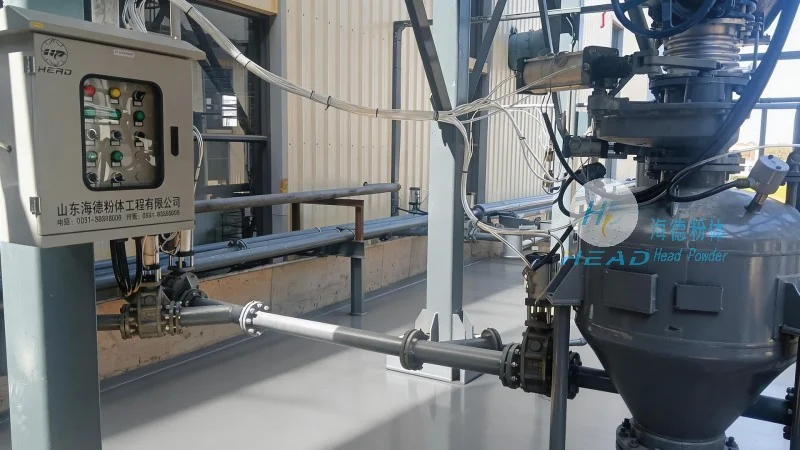
At the core of the clay ash pneumatic conveying system is the headpowder technology, which leverages the principles of pneumatic transport to move bulk materials through a pipeline using air pressure. The system typically consists of several critical components, including a hopper for material storage, a rotary valve for controlled material discharge, a blower or air compressor to generate the necessary airflow, a pipeline network for material transport, and a receiver or silo for the destination storage. Each component plays a vital role in the overall operation, ensuring that clay ash is conveyed safely and efficiently from the source to the target location.
The operation process begins with the loading of clay ash into the hopper. The hopper is designed with a sloped bottom to facilitate the flow of material into the rotary valve. The rotary valve, often equipped with a sealing mechanism, controls the rate of material discharge into the pipeline. As the material enters the pipeline, the blower or air compressor starts operating, generating a high-velocity airflow that creates a negative pressure within the pipeline. This negative pressure draws the clay ash particles into the air stream, forming a dense mixture known as a "slurry" or "solid-gas mixture." The air and ash mixture then travels through the pipeline to the receiving hopper or silo, where the air is separated from the ash and discharged through a filter or vent system.
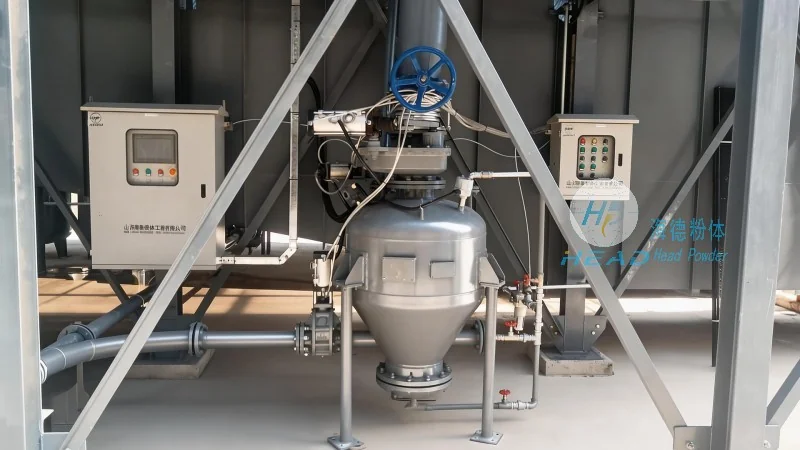
During the conveying process, the air velocity within the pipeline is a critical parameter. It must be sufficient to maintain the material in suspension and prevent particle deposition or blockage. The system is designed to maintain a consistent air velocity, which is achieved by controlling the blower speed and adjusting the material feed rate. This balance ensures that the clay ash is conveyed without excessive pressure drop or energy consumption. The rotary valve and hopper design also contribute to the smooth operation, as they prevent material bridging or clogging, which could disrupt the flow.
The working principle of the pneumatic conveying machine is based on the interaction between the air and the solid particles. The air flow creates a drag force on the ash particles, lifting them into the air stream. The particle size, density, and moisture content of the clay ash affect the required air velocity and pressure. For clay ash, which is typically fine and cohesive, the system may use a positive pressure or a combination of positive and negative pressure (pneumatic conveying with a vacuum at the receiving end). This approach ensures that the material is transported without degradation or loss of quality.
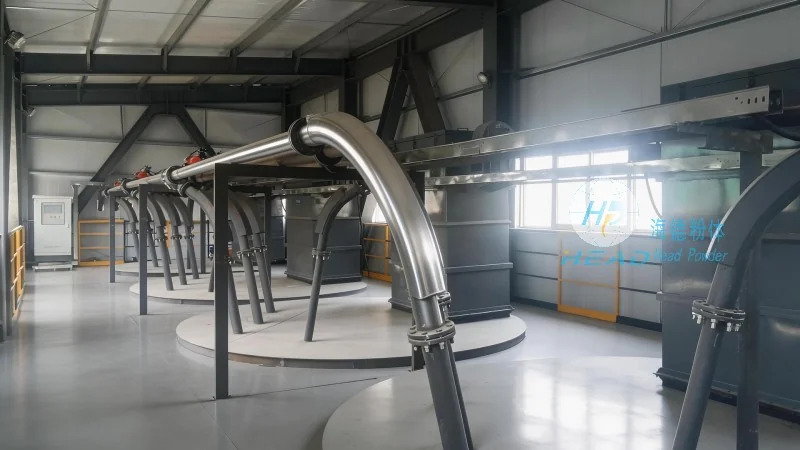
Shandong HeadPowder Engineering Co., Ltd. specializes in designing and manufacturing customized pneumatic conveying solutions tailored to the specific needs of clay ash handling. Their expertise lies in optimizing the system components to achieve high conveying efficiency, low maintenance costs, and minimal environmental impact. The company's engineers consider factors such as the ash's physical properties, the required conveying distance, and the destination storage capacity when designing the system. This tailored approach ensures that the clay ash pneumatic conveying machine operates at peak performance, meeting the operational and environmental standards of the client.
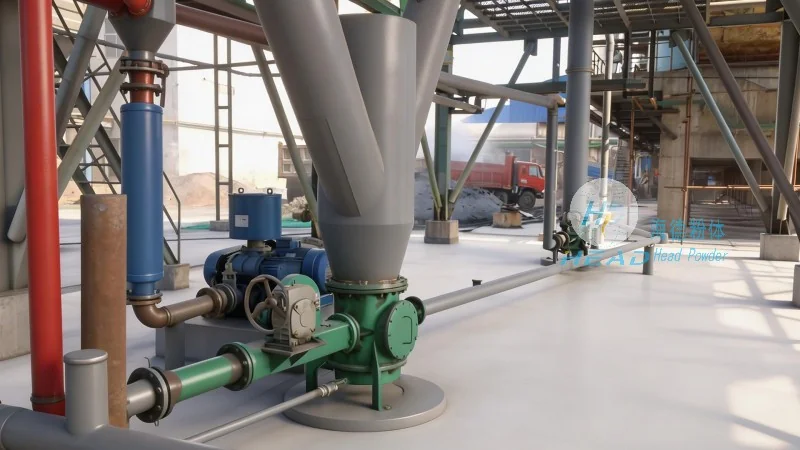
Key advantages of the clay ash pneumatic conveying machine include its ability to handle fine and dusty materials without generating excessive dust, its compact design which saves space in industrial facilities, and its low noise operation compared to traditional mechanical conveying systems. The system also reduces the risk of material contamination and improves safety by eliminating the need for manual handling of ash. Additionally, the use of air as the conveying medium allows for flexible pipeline routing, enabling the machine to be integrated into existing industrial layouts with minimal modifications.
In conclusion, the clay ash pneumatic conveying machine from Shandong HeadPowder Engineering Co., Ltd. represents a sophisticated solution for the efficient and safe transportation of clay ash. By understanding the operation process and working principle, users can appreciate how the system leverages pneumatic technology to achieve reliable material transfer. The integration of advanced components and tailored design ensures that the machine meets the demands of modern industrial applications, providing a sustainable and efficient method for clay ash handling.

 Shandong Headpowder Engineering Co., Ltd.
 156-6277-7102(Manager Zhang)
  0531-83386006
  Zhangqiu District, Jinan City, Shandong Province, China
telephone
WeChatconsult
top