With more than 10‑year industry experience, Shandong Headpowder delivers full‑service pneumatic‑conveying systems and blowers, undertaking nationwide turn‑key powder‑handling projects.
For agricultural processing facilities, the efficient and reliable transportation of bulk materials like corn is crucial for maintaining production efficiency and ensuring product quality. This article provides a detailed overview of the operation process and working principle of corn pneumatic conveying lines, highlighting the key components, operational steps, and technical aspects that contribute to their effective performance.
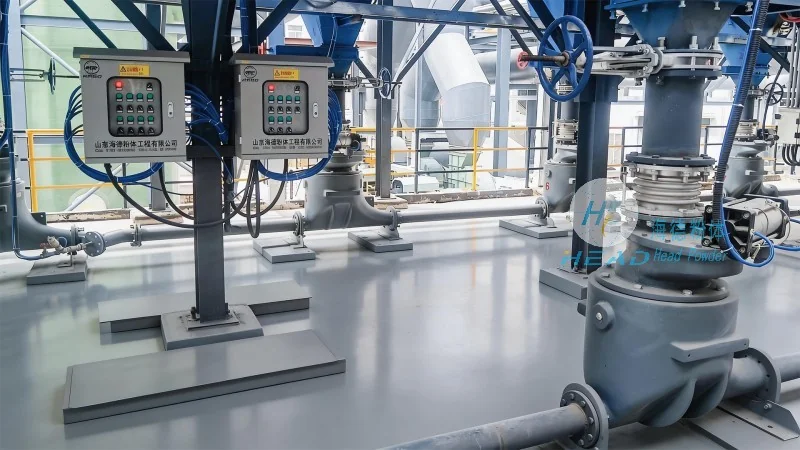
Corn pneumatic conveying systems are specialized equipment used to transport corn and other bulk grains from one location to another within a processing facility. These systems utilize air pressure to move the material through a pipeline network, eliminating the need for mechanical components like belts or buckets. The primary advantage of pneumatic conveying is its ability to handle high volumes of material while minimizing contamination and product degradation. As a leading manufacturer in the field, Shandong HeadPowder Engineering Co., Ltd. (referred to as HeadPowder) has developed advanced corn pneumatic conveying lines that meet the highest industry standards for performance and durability.
The corn pneumatic conveying line consists of several critical components that work in tandem to ensure smooth material transport. These include the hopper, feeder, air compressor, conveying pipeline, and receiver. The hopper is designed to store and feed the corn into the system, while the feeder controls the flow rate of the material. The air compressor generates the necessary air pressure to move the corn through the pipeline. The conveying pipeline is typically made of stainless steel or other corrosion-resistant materials to prevent contamination and ensure longevity. The receiver collects the conveyed corn and discharges it into the next processing stage.
The operation process of a corn pneumatic conveying line involves several sequential steps. First, the corn is loaded into the hopper. The feeder then regulates the flow of corn into the pipeline, ensuring a consistent feed rate. The air compressor starts and generates high-pressure air, which is introduced into the pipeline. As the air flows through the pipeline, it lifts and transports the corn particles, creating a slurry-like mixture. The mixture travels through the pipeline to the receiver, where the air is separated from the corn and discharged. The corn is then collected in the receiver and prepared for further processing. This process is typically automated, with sensors and controls monitoring the system to maintain optimal performance.
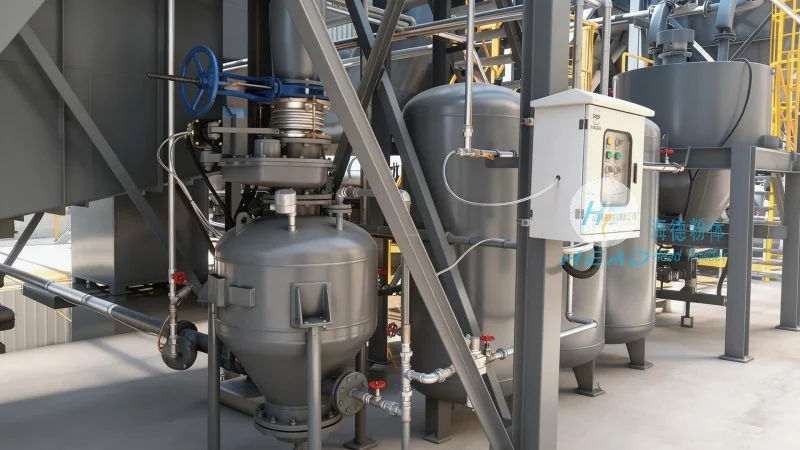
The working principle of corn pneumatic conveying relies on the principles of fluid dynamics and particle transport. When air is introduced into the pipeline at a high velocity, it creates a low-pressure zone that draws the corn particles into the flow. The corn particles are suspended in the air stream and transported through the pipeline. The velocity of the air and the size of the corn particles determine the conveying capacity and efficiency of the system. Advanced systems use positive displacement or negative pressure (suction) methods to optimize material transport. HeadPowder's corn pneumatic conveying lines are engineered to maximize conveying efficiency while minimizing energy consumption and wear on components.
Compared to traditional mechanical conveying systems, corn pneumatic conveying lines offer several advantages. These include reduced product contamination, lower maintenance requirements, and the ability to transport materials over long distances without the need for intermediate storage. The systems are also flexible, allowing for easy integration with existing processing equipment. Additionally, pneumatic conveying can handle a wide range of corn qualities, from whole kernels to broken or ground products. HeadPowder's systems are designed to handle various corn types, ensuring compatibility with different processing applications.
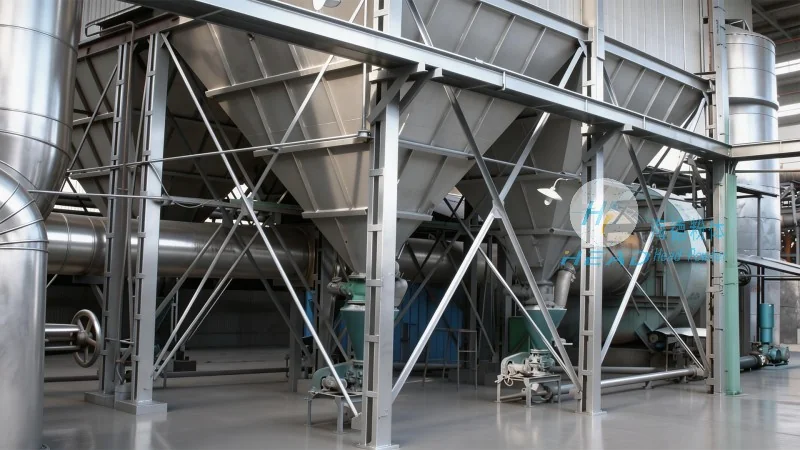
Corn pneumatic conveying lines are widely used in various agricultural processing applications, including grain storage, milling, and food processing. In grain storage facilities, the systems are used to transfer corn from storage silos to processing plants. In milling operations, the systems transport corn to grinding and milling equipment, where it is processed into flour or other products. In food processing, the systems are used to move corn to canning or packaging lines. HeadPowder's corn pneumatic conveying lines are suitable for a range of applications, from small-scale farms to large industrial processing facilities.
To ensure the long-term performance of corn pneumatic conveying lines, regular maintenance is essential. This includes cleaning the hopper and feeder to prevent material buildup, checking the air compressor for proper operation, and inspecting the pipeline for leaks or damage. Common issues that may arise include clogging of the pipeline, air leaks, and motor failures. HeadPowder provides comprehensive maintenance services and technical support to help customers troubleshoot and resolve these issues. Regular maintenance can extend the lifespan of the system and ensure consistent performance.
Corn pneumatic conveying lines are an essential component of modern agricultural processing facilities, providing efficient and reliable transportation of bulk corn. The systems offer numerous advantages over traditional mechanical conveying methods, including reduced contamination, lower maintenance, and flexibility. Shandong HeadPowder Engineering Co., Ltd. specializes in the design and manufacturing of advanced corn pneumatic conveying lines, meeting the needs of various agricultural processing applications. By understanding the operation process and working principle of these systems, facility operators can optimize their performance and ensure efficient corn processing.

 Shandong Headpowder Engineering Co., Ltd.
 156-6277-7102(Manager Zhang)
  0531-83386006
  Zhangqiu District, Jinan City, Shandong Province, China
telephone
WeChatconsult
top