With more than 10‑year industry experience, Shandong Headpowder delivers full‑service pneumatic‑conveying systems and blowers, undertaking nationwide turn‑key powder‑handling projects.
Calcium chloride is a widely used chemical in various industrial applications, and the efficient handling of this material is crucial for maintaining production efficiency and safety. Pneumatic conveying systems have emerged as a reliable solution for transporting calcium chloride, offering advantages such as dust-free operation, reduced material degradation, and improved process control. This article delves into the operation process and working principle of calcium chloride pneumatic conveying equipment, providing insights into how these systems function and the key components involved.
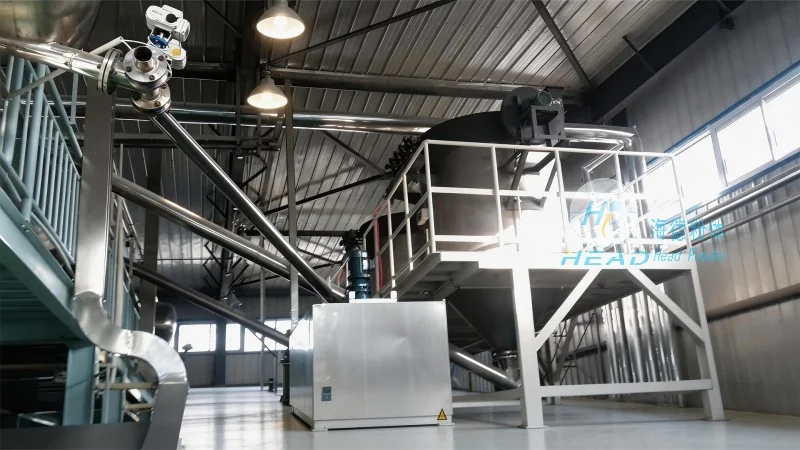
Headpowder, the professional manufacturer of pneumatic conveying equipment, is dedicated to delivering high-quality solutions tailored to the needs of the chemical industry. With years of experience and a commitment to innovation, Shandong HeadPowder Engineering Co., Ltd. has established itself as a trusted partner for businesses seeking efficient material handling systems. The company's headquarters is located in Shandong, China, where it operates a state-of-the-art manufacturing facility and research center. Headpowder's team of experts focuses on developing customized pneumatic conveying solutions that meet the specific requirements of clients, ensuring optimal performance and durability.
The core of a calcium chloride pneumatic conveying system is the ability to transport bulk materials using air or gas as the conveying medium. The system operates on the principle of creating a pressure differential between the material feed point and the discharge point. When air is introduced into the system, it creates a flow that pulls the calcium chloride particles into the pipeline. The material is then carried through the system by the air stream, which can be either positive pressure (where air is blown into the system) or negative pressure (where air is drawn out of the system). The choice between positive and negative pressure depends on factors such as the distance to be covered, the material characteristics, and the desired level of control.
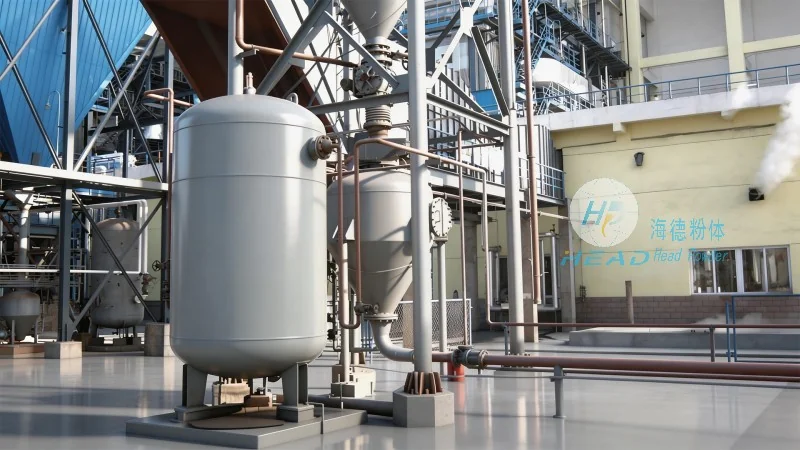
A calcium chloride pneumatic conveying system typically consists of several key components, each playing a critical role in the overall operation. These components include the material hopper, which stores the calcium chloride and feeds it into the system; the feeder, which controls the flow rate of the material; the conveying pipeline, which transports the material from the hopper to the discharge point; the air compressor or vacuum pump, which provides the necessary air or gas pressure; and the dust collector, which removes any airborne particles to ensure a clean and safe environment. Each component is designed to work in harmony, ensuring smooth and efficient material transport.
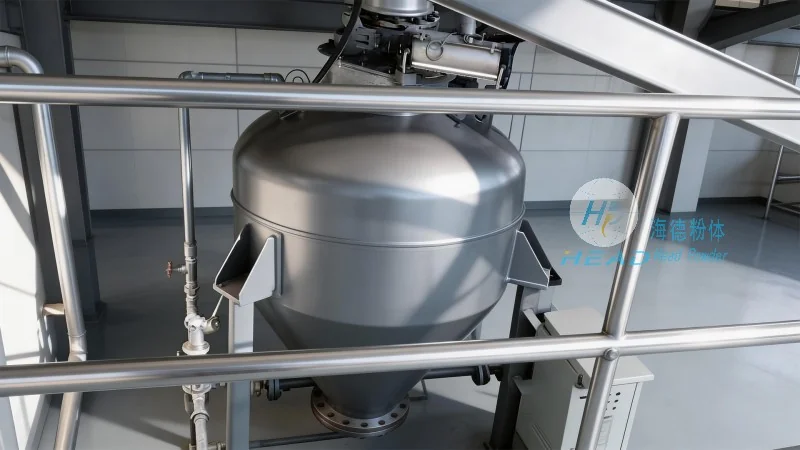
The operation of a calcium chloride pneumatic conveying system involves several steps, each carefully managed to ensure optimal performance. The process begins with the loading of calcium chloride into the material hopper. The feeder then regulates the flow of material from the hopper into the conveying pipeline. Simultaneously, the air compressor or vacuum pump generates the required air pressure or vacuum. As the air flows through the pipeline, it pulls the calcium chloride particles into the system, creating a continuous flow of material. The material is then discharged at the desired location, such as a storage silo or processing unit. Throughout the process, the system continuously monitors pressure and flow rates to maintain stable operation and prevent any blockages or inefficiencies.
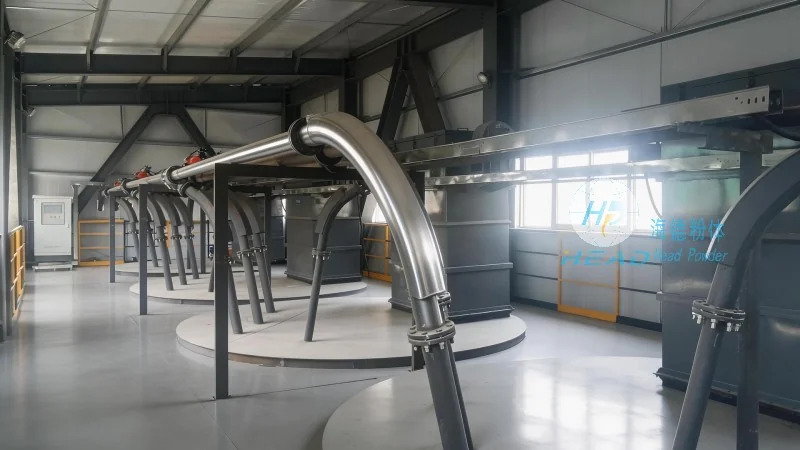
Compared to traditional methods like belt conveyors or bucket elevators, pneumatic conveying offers several advantages for handling calcium chloride. One of the primary benefits is the ability to transport material in a dust-free environment, which reduces the risk of respiratory issues and improves workplace safety. Additionally, pneumatic systems minimize material degradation, as the particles are not subjected to friction or impact during transport. The system also provides better process control, allowing for precise regulation of material flow rates and pressure. Furthermore, pneumatic conveying is suitable for transporting calcium chloride over long distances and through multiple points, making it ideal for complex industrial setups.
Headpowder understands that each industrial application has unique requirements, and therefore, offers customized pneumatic conveying solutions for calcium chloride handling. The company works closely with clients to assess their specific needs, including the volume of material to be transported, the distance, and the desired discharge points. Based on this assessment, Headpowder designs and manufactures a system that meets all the technical specifications. The company's expertise in material handling ensures that the final solution is not only efficient but also cost-effective and durable. Whether for small-scale operations or large industrial plants, Headpowder's calcium chloride pneumatic conveying equipment can be tailored to fit any application.

 Shandong Headpowder Engineering Co., Ltd.
 156-6277-7102(Manager Zhang)
  0531-83386006
  Zhangqiu District, Jinan City, Shandong Province, China
telephone
WeChatconsult
top