With more than 10‑year industry experience, Shandong Headpowder delivers full‑service pneumatic‑conveying systems and blowers, undertaking nationwide turn‑key powder‑handling projects.
Micro-silica powder, a fine particulate material widely used in industries such as refractory, construction, and chemical manufacturing, presents unique challenges for material handling due to its high fineness and potential for dust generation. Traditional methods like manual handling or mechanical conveyors often fall short in maintaining product integrity and operational safety. Pneumatic conveying systems, particularly those designed for micro-silica powders, offer a solution by utilizing air flow to transport materials in a closed system, minimizing exposure to contaminants and improving process efficiency.
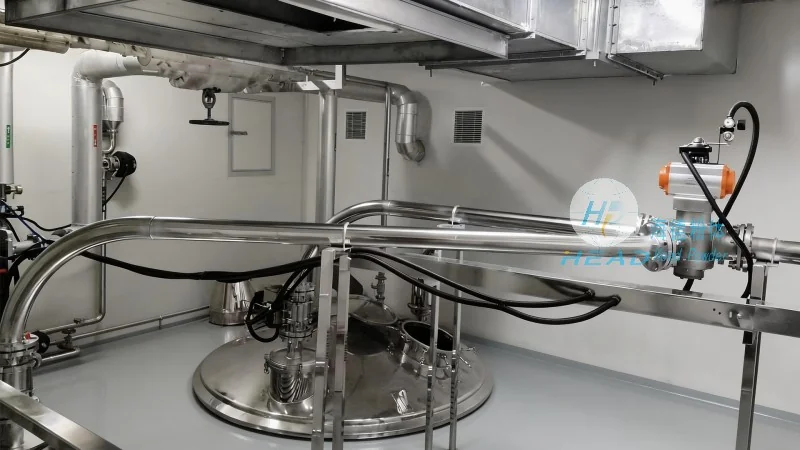
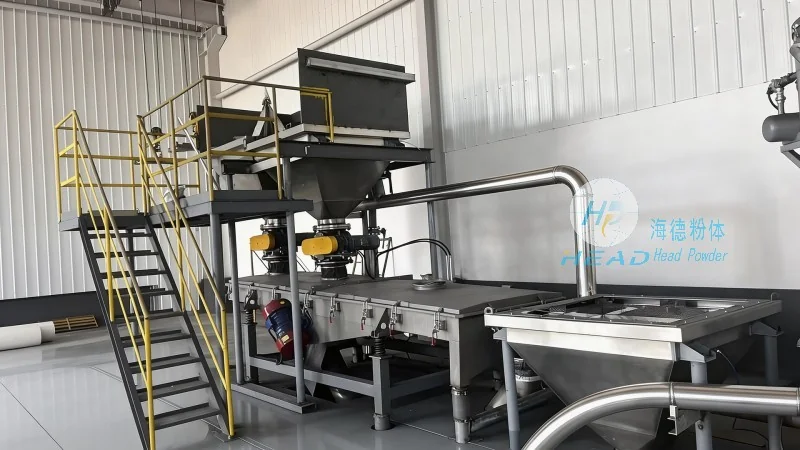
At the core of micro-silica powder pneumatic conveying is the transfer of material using compressed air or vacuum. The system typically operates through two main modes: suction (or aspirating) and pressure (or pressurized) conveying. In suction mode, a vacuum is created at the material source to draw the powder into the conveying line. This method is ideal for applications where the material is located at a higher elevation or needs to be collected from a hopper. Conversely, pressure conveying uses compressed air to push the powder through the system, often employed when the material must be transported to a lower or distant location. The choice between these modes depends on factors like the distance of transport, the height difference, and the material's flow characteristics.
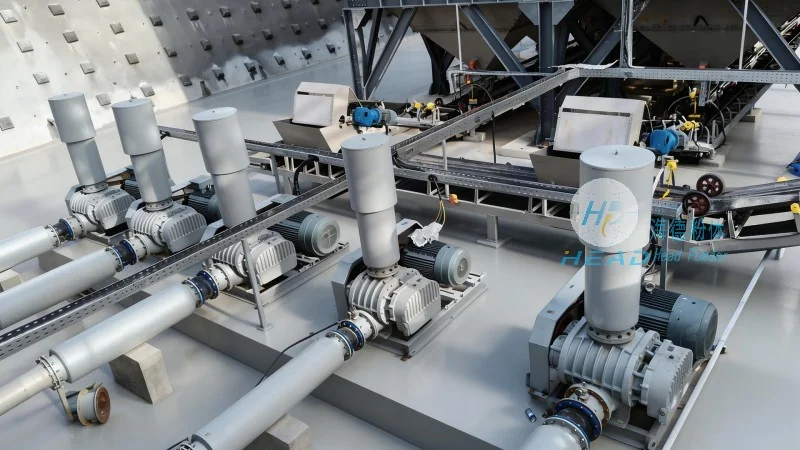
When applied in real-world scenarios, micro-silica powder pneumatic conveying machines exhibit several distinct advantages. Firstly, the closed system design effectively prevents dust dispersion, which is crucial for maintaining a clean working environment and complying with occupational health and safety regulations. Secondly, the technology allows for continuous, high-volume material transport, reducing downtime and labor costs associated with manual handling. Additionally, the system's flexibility enables integration with existing production lines, adapting to varying production rates and material flow requirements. For instance, in a refractory manufacturing plant, the machine can seamlessly connect to a silo, feed a mixer, and then discharge into a storage silo, forming an automated material flow loop.
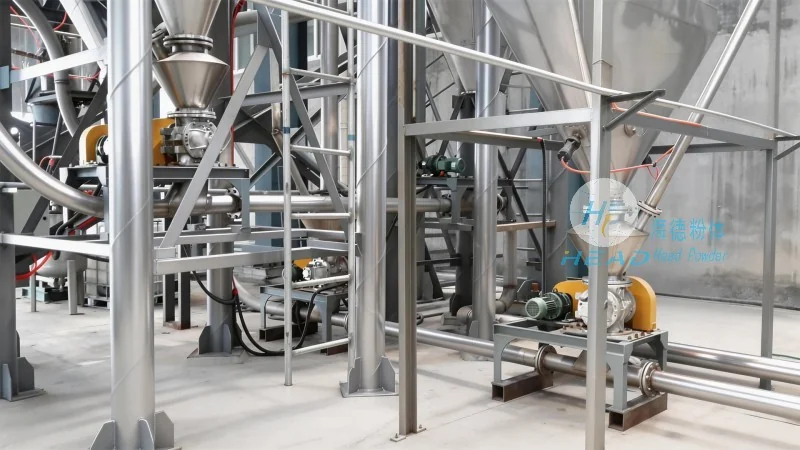
The working scene characteristics of micro-silica powder pneumatic conveying systems are tailored to meet the demands of specific industrial environments. In the construction sector, these machines are commonly used to transport fine silica powders for concrete additives or insulation materials, where consistent particle size and low moisture content are critical. In the chemical industry, they facilitate the handling of reactive powders, ensuring that the material remains isolated from external factors until it reaches the processing stage. Furthermore, the system's ability to handle abrasive materials without causing wear to the conveying components makes it suitable for long-term operation in demanding applications. HeadPowder, as a manufacturer based in Shandong, China, specializes in designing and producing such systems, leveraging years of experience to deliver reliable solutions that meet the unique needs of each client.

 Shandong Headpowder Engineering Co., Ltd.
 156-6277-7102(Manager Zhang)
  0531-83386006
  Zhangqiu District, Jinan City, Shandong Province, China
telephone
WeChatconsult
top