With more than 10‑year industry experience, Shandong Headpowder delivers full‑service pneumatic‑conveying systems and blowers, undertaking nationwide turn‑key powder‑handling projects.
Barite powder, a critical industrial material utilized in drilling fluids, paints, and other applications, often requires efficient and reliable transportation methods. Pneumatic conveying systems have become a preferred solution for handling such powders due to their ability to transport materials in a dust-free environment, enhancing safety and operational efficiency. This article explores the fundamental principles of barite powder pneumatic conveying systems and highlights the key characteristics of their working scenarios, providing insights into the technology's practical applications.
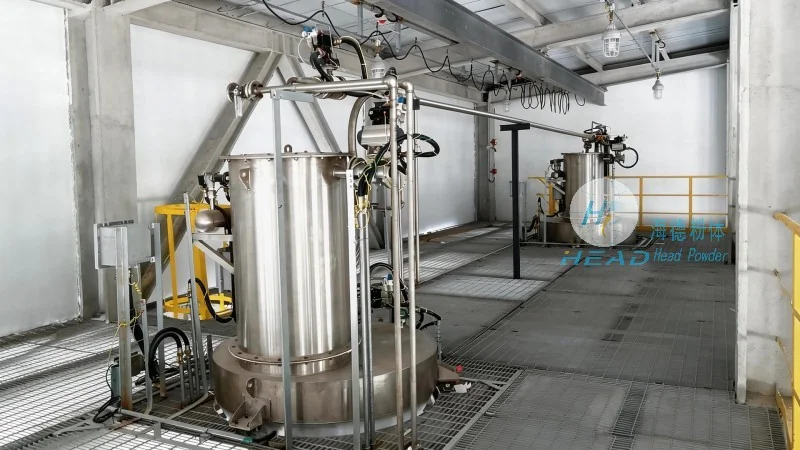
HeadPowder, a leading engineering company headquartered in Shandong, China, specializes in the design, manufacturing, and installation of advanced material handling systems. With a strong focus on innovation and customer satisfaction, the company has established a reputation for delivering high-quality solutions tailored to the unique needs of various industries. The expertise of HeadPowder engineers ensures that pneumatic conveying systems are optimized for performance, durability, and cost-effectiveness, making them a trusted partner for businesses dealing with barite powder and other fine materials.
The core principle of pneumatic conveying systems involves the use of compressed air or gas to transport particulate materials like barite powder through a pipeline. This method operates on the principle of fluidization, where the material is suspended and moved by the air flow. There are two primary types of pneumatic conveying: dilute-phase and dense-phase. Dilute-phase systems utilize high-velocity air to transport particles in a dispersed state, while dense-phase systems employ lower velocities and higher air-to-material ratios to ensure more controlled and gentle handling of the powder. For barite powder, which is typically fine and can be prone to caking or agglomeration, the choice of system type depends on the specific application requirements, such as distance, material characteristics, and desired flow rates.

The working scenarios of barite powder pneumatic conveying systems vary based on the industry and the scale of operations. In mining and mineral processing industries, these systems are commonly used to transport barite from storage silos to processing plants or to other production facilities. The systems are designed to handle large volumes of material efficiently, minimizing downtime and ensuring a steady supply of raw materials. In the construction and paint industries, pneumatic conveying is utilized to transport barite powder from bulk storage to mixing stations or production lines, where it is incorporated into formulations. The dust-free operation of these systems is particularly beneficial in such environments, as it reduces health hazards and improves workplace safety. Additionally, in pharmaceutical and food processing sectors, where material purity is critical, pneumatic conveying systems are preferred to prevent contamination and maintain product quality. The working characteristics of these systems, including their ability to handle abrasive materials and maintain consistent flow rates, make them suitable for a wide range of applications.
Barite powder pneumatic conveying systems offer several advantages that make them ideal for industrial applications. One of the primary benefits is the elimination of manual handling, which reduces labor costs and minimizes the risk of accidents. The systems are also capable of transporting materials over long distances without the need for intermediate storage or transfer points, enhancing operational efficiency. Another key advantage is the ability to maintain a dust-free environment, which is crucial for maintaining product quality and ensuring workplace safety. The systems are designed to handle a wide range of particle sizes and densities, making them versatile for various barite powder applications. Furthermore, the compact design of many pneumatic conveying systems allows for easy integration into existing production lines, reducing installation time and costs. The reliability of these systems, with minimal maintenance requirements, ensures consistent performance and reduces downtime, contributing to overall operational efficiency.
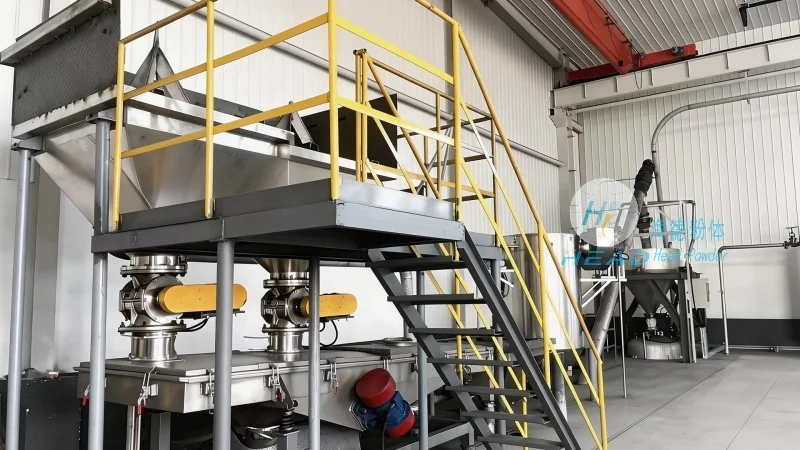
Real-world applications of barite powder pneumatic conveying systems demonstrate their effectiveness in various industrial settings. For instance, in a drilling fluid manufacturing plant, a dilute-phase system is used to transport barite powder from a bulk storage silo to a mixing tank, achieving a flow rate of 10 tons per hour over a distance of 200 meters. The system operates at a pressure of 0.6 MPa, with an air consumption rate of 30 m³/min. The performance metrics, such as the system's efficiency and material handling capacity, are consistently met, ensuring smooth production processes. In another scenario, a dense-phase system is employed in a paint manufacturing facility to transport barite powder from a hopper to a mixing machine, with a flow rate of 5 tons per hour over a distance of 50 meters. The system operates at a lower velocity, reducing the risk of material degradation and ensuring a consistent product quality. These examples highlight the adaptability of pneumatic conveying systems to different operational requirements and their ability to deliver reliable performance in diverse working environments.
Pneumatic conveying systems for barite powder offer a robust and efficient solution for material handling in various industries. The principles of fluidization and the ability to transport materials in a dust-free environment make these systems a preferred choice for businesses dealing with fine powders. The working scene characteristics, including the need for long-distance transport, dust control, and material purity, are well addressed by these systems. As industrial demands for efficient and safe material handling continue to grow, the technology is expected to evolve with advancements in materials, control systems, and energy efficiency. Companies like Shandong HeadPowder Engineering Co., Ltd. play a vital role in developing and implementing these systems, ensuring that the needs of the barite powder industry are met with innovative and reliable solutions.

 Shandong Headpowder Engineering Co., Ltd.
 156-6277-7102(Manager Zhang)
  0531-83386006
  Zhangqiu District, Jinan City, Shandong Province, China
telephone
WeChatconsult
top