With more than 10‑year industry experience, Shandong Headpowder delivers full‑service pneumatic‑conveying systems and blowers, undertaking nationwide turn‑key powder‑handling projects.
Ammonium bicarbonate, a widely used chemical in agriculture and industry, often requires efficient and reliable transportation methods for its handling and distribution. Pneumatic conveying is a key technology that enables the safe and effective movement of this powder material. This article explores the principles behind ammonium bicarbonate powder pneumatic conveying and highlights the distinct characteristics of its working scenes, providing insights into how this technology optimizes material handling processes. The information is provided by Shandong HeadPowder Engineering Co., Ltd., a leading provider of specialized engineering solutions for bulk material handling in China.
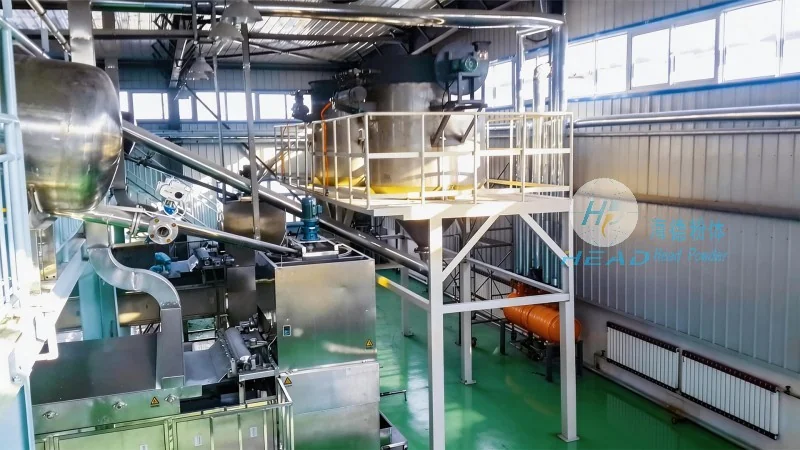
Pneumatic conveying utilizes air or gas to transport bulk materials like ammonium bicarbonate through a pipeline system. The process involves generating a pressure differential, either by creating a vacuum (negative pressure) or by blowing air under pressure (positive pressure), to move the powder particles. For ammonium bicarbonate, which is a fine powder with specific physical properties such as low bulk density and potential moisture sensitivity, the choice of conveying method is critical. The system typically consists of a hopper, a conveyor line, and a receiver, with the air flow controlled by a blower or fan. The key principle is to maintain a consistent flow of air to prevent material bridging, agglomeration, or blockages in the pipeline. This ensures the material is transported smoothly and without degradation, preserving its quality for downstream applications.
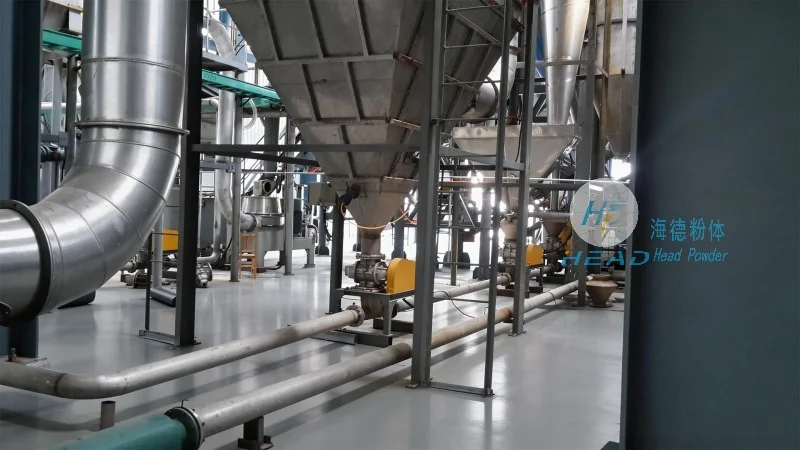
The working scenes for ammonium bicarbonate pneumatic conveying vary based on the application and scale of operation. In agricultural settings, for instance, the technology is often used in fertilizer production and distribution facilities, where large quantities of ammonium bicarbonate are processed and transported to storage or packaging areas. The working environment in these scenes may involve high humidity and temperature fluctuations, requiring the conveying system to be designed with corrosion-resistant materials and effective moisture control to prevent material caking or degradation. In industrial applications, such as chemical manufacturing or food processing, the focus is on precision and cleanliness, with the system integrated into automated production lines. The working scenes here may involve multiple stages of conveying, from raw material input to intermediate processing, with the system designed to handle varying particle sizes and flow rates efficiently.
Several factors determine the effectiveness of ammonium bicarbonate powder pneumatic conveying. The particle size distribution of the material is a critical factor, as finer particles may require higher air velocities to prevent deposition in the pipeline. The bulk density and flowability of ammonium bicarbonate also impact the system's design, with adjustments made to the air flow rate and pipeline diameter to ensure optimal transport. Additionally, the system's energy efficiency is a key consideration, as pneumatic conveying can be energy-intensive. Modern systems incorporate advanced control technologies, such as variable frequency drives and real-time monitoring, to optimize air usage and reduce operational costs. The working scene characteristics, including the distance of transport and the number of turns in the pipeline, also influence the system's performance, with longer or more complex routes requiring higher air pressure or additional booster units to maintain material flow.
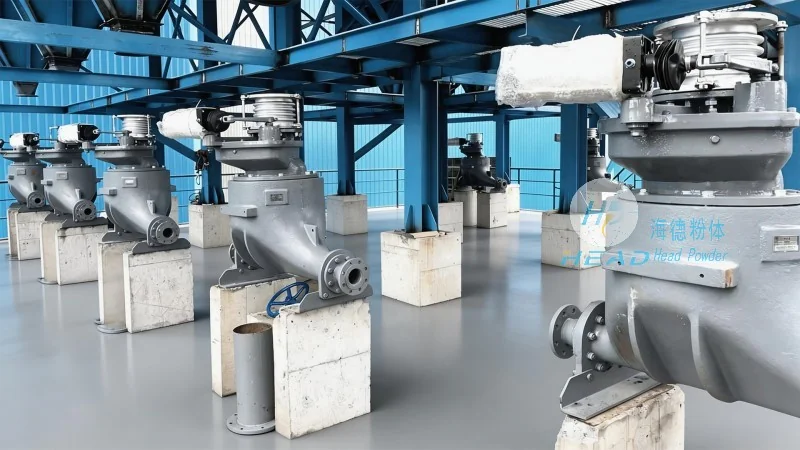
Ammonium bicarbonate pneumatic conveying is employed in various real-world scenarios, each with unique requirements. In a fertilizer plant, for example, the system may transport ammonium bicarbonate from a storage silo to a mixing and packaging line, ensuring a continuous and uninterrupted supply of material. The benefits of this technology include reduced labor costs, improved safety by minimizing manual handling of powders, and enhanced product quality by preventing contamination or degradation during transport. Shandong HeadPowder Engineering Co., Ltd. specializes in designing and implementing such pneumatic conveying systems tailored to the specific needs of agricultural and industrial clients. In industrial settings, such as chemical processing, the system may be used to transfer ammonium bicarbonate to reactors or reactors, where it is used as a raw material in the production of other chemicals. The working scene here emphasizes precision and reliability, with the system designed to handle high volumes of material while maintaining consistent flow rates. The advantages of pneumatic conveying in these scenarios include the ability to handle abrasive or corrosive materials, as well as the flexibility to integrate with existing production lines without major modifications.

 Shandong Headpowder Engineering Co., Ltd.
 156-6277-7102(Manager Zhang)
  0531-83386006
  Zhangqiu District, Jinan City, Shandong Province, China
telephone
WeChatconsult
top