With more than 10‑year industry experience, Shandong Headpowder delivers full‑service pneumatic‑conveying systems and blowers, undertaking nationwide turn‑key powder‑handling projects.
Pneumatic conveying is a widely used technology for transporting dry powders, including coffee powder, through the use of air as a conveying medium. This method involves the creation of a pressure differential that propels the powder particles through a pipeline system. The core principle relies on the interaction between the powder and the air stream, where the air flow entrains the particles, allowing them to be transported efficiently over long distances or through complex system configurations.
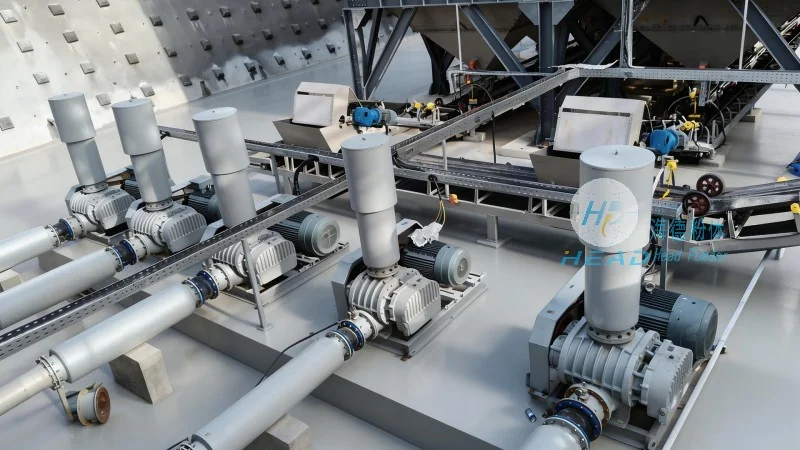
HeadPowder, or Shandong HeadPowder Engineering Co., Ltd., specializes in the design, manufacturing, and implementation of advanced pneumatic conveying systems tailored for the coffee industry. With a focus on precision and reliability, their solutions are engineered to meet the specific demands of coffee processing, from raw bean handling to final product packaging. The company’s expertise lies in optimizing material flow, ensuring minimal product degradation, and enhancing overall operational efficiency in coffee production facilities.
The application of pneumatic conveying in coffee processing encompasses several critical stages, each requiring specialized system designs to address unique challenges. One primary scenario involves the transport of ground coffee from grinding units to storage silos or packaging lines. In this context, the system must handle fine, abrasive particles while maintaining consistent flow rates to prevent clogging or degradation of the coffee’s aromatic properties. HeadPowder’s systems are equipped with features such as pulse-jet cleaning and variable speed control to ensure smooth operation and extend equipment lifespan.
Another significant use case is the transfer of coffee powder from blending stations to mixing tanks or flavoring units. Here, the conveying system must maintain the integrity of the coffee’s flavor profile by minimizing exposure to air and moisture. The company’s solutions incorporate sealed, airtight pipelines and controlled air pressure to preserve the product’s quality. Additionally, the systems are designed to integrate seamlessly with existing coffee production lines, allowing for flexible adjustments to production volumes and product types.
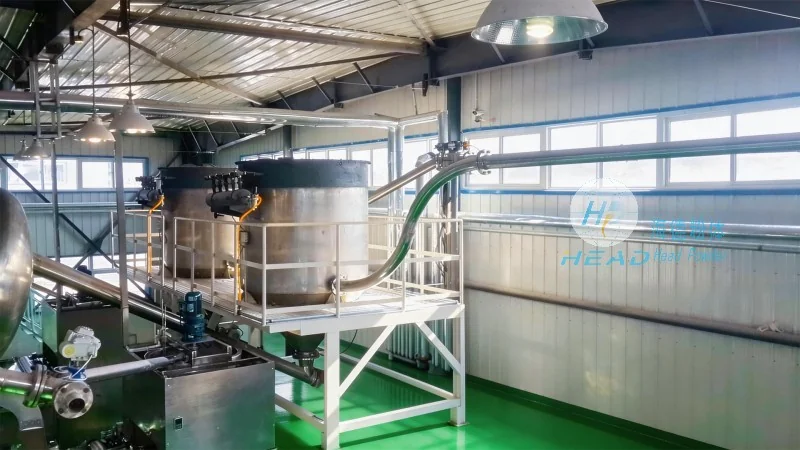
Implementing pneumatic conveying for dry coffee powder offers several distinct advantages over traditional mechanical methods. Firstly, it eliminates the need for mechanical components like conveyors or buckets, reducing maintenance costs and the risk of product contamination. The air-based system also allows for the transportation of materials over vertical and horizontal distances, making it ideal for multi-level coffee processing facilities. Furthermore, the technology enables precise control over flow rates, ensuring that the correct amount of coffee powder is delivered to each stage of production. This level of control is crucial for maintaining product consistency and meeting quality standards.
Additionally, pneumatic conveying systems are highly adaptable to changes in production requirements. Whether scaling up production or introducing new coffee blends, the system can be adjusted to accommodate varying particle sizes and flow rates. HeadPowder’s customized solutions are designed to grow with the client’s business, providing long-term value and operational flexibility. The company’s commitment to innovation ensures that their systems incorporate the latest advancements in material handling technology, such as energy-efficient air compressors and intelligent control systems.
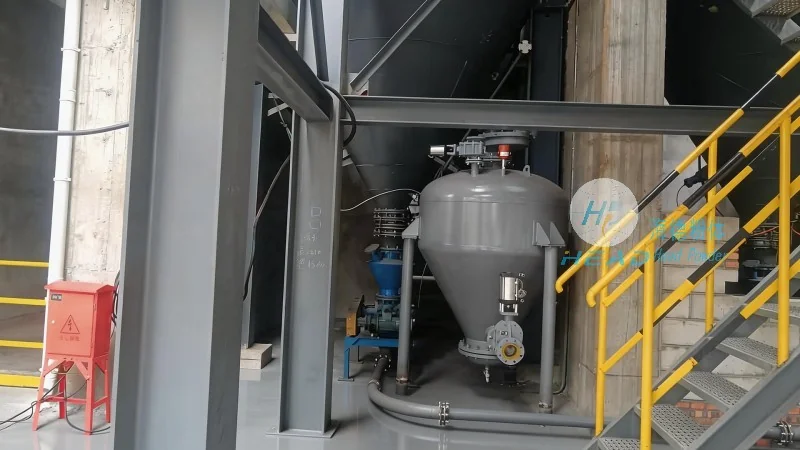
A typical pneumatic conveying system for dry coffee powder consists of several key components, each playing a vital role in the overall operation. The primary elements include a material feeder, which meters the coffee powder into the system; a conveying pipeline, which transports the material; a separator, which separates the air from the powder at the destination; and a dust collection system, which captures any airborne particles to maintain environmental compliance.
Designing an effective system requires careful consideration of several factors, including the particle size, density, and moisture content of the coffee powder. For example, fine coffee powders may require higher air velocities to prevent clogging, while coarser particles can be conveyed at lower speeds. The system’s layout, including the number and configuration of pipelines, is also critical to optimizing flow and minimizing pressure losses. HeadPowder’s engineering team conducts thorough feasibility studies and material analysis to develop tailored system designs that address these variables and ensure optimal performance.
Another important consideration is the system’s energy efficiency. Pneumatic conveying systems can be energy-intensive, especially when operating at high pressures or with long pipelines. HeadPowder incorporates energy-saving features such as variable frequency drives (VFDs) and optimized pipeline designs to reduce power consumption without compromising conveying performance. This focus on sustainability aligns with the growing demand for eco-friendly solutions in the coffee industry.

 Shandong Headpowder Engineering Co., Ltd.
 156-6277-7102(Manager Zhang)
  0531-83386006
  Zhangqiu District, Jinan City, Shandong Province, China
telephone
WeChatconsult
top