With more than 10‑year industry experience, Shandong Headpowder delivers full‑service pneumatic‑conveying systems and blowers, undertaking nationwide turn‑key powder‑handling projects.
Expanded clay aggregate pneumatic conveying lines represent a sophisticated method for transporting bulk materials, particularly expanded clay, through an air-driven system. The core principle of this technology involves using compressed air to create a flow that propels the material along a pipeline. This approach eliminates the need for mechanical components like belts or buckets, offering advantages such as reduced maintenance and enhanced safety in material handling processes.
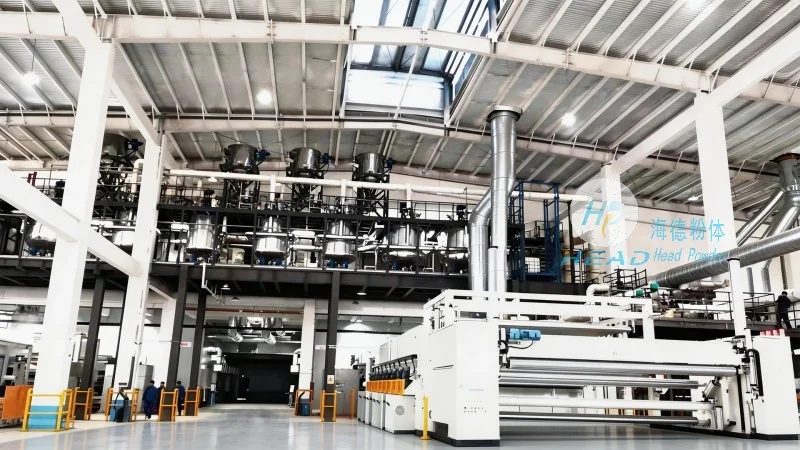
In the system, a hopper or storage silo feeds the expanded clay into a conveying line. A blower or compressor generates the necessary air pressure, which is then introduced into the pipeline. The air flow, often combined with the material, forms a dense phase or dilute phase stream depending on the system design. For expanded clay, which has specific bulk density and particle size characteristics, the system is optimized to ensure efficient and low-loss transport. The pneumatic conveying process minimizes material degradation and contamination, making it suitable for applications where product integrity is critical.
The application of expanded clay pneumatic conveying lines varies across different industrial sectors, each presenting unique requirements that the system addresses effectively. In the construction industry, these lines are commonly used to transport expanded clay aggregates for lightweight concrete production, where consistent material flow and particle size control are essential for achieving desired concrete properties. The system’s ability to handle large volumes of material efficiently supports high production rates in concrete mixing plants.
In the chemical and industrial processing sectors, expanded clay is utilized as a filtration medium or as a component in composite materials. The pneumatic conveying line ensures that the material is delivered to processing equipment without the need for manual handling, reducing labor costs and improving operational safety. The system’s flexibility allows it to integrate with existing production lines, adapting to varying material flow rates and processing demands.
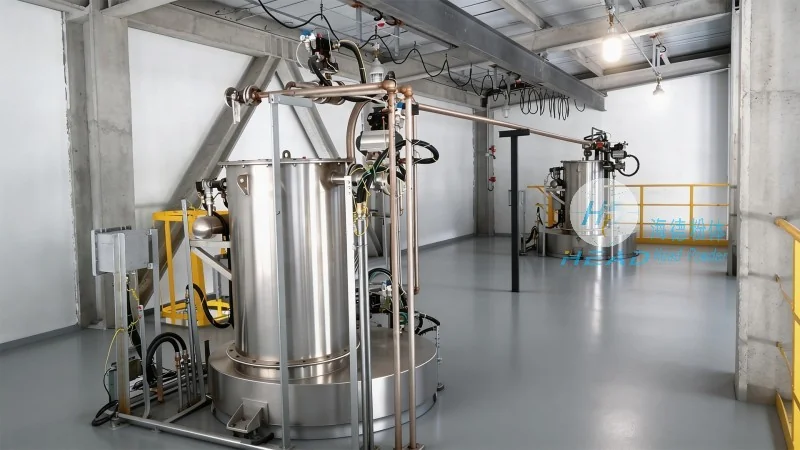
Another key working scene is in the agricultural and horticultural industries, where expanded clay is used for soil amendment or as a growing medium in greenhouses. The pneumatic conveying line enables the material to be transported from storage to application areas, such as greenhouse nurseries or agricultural farms, with minimal dust and contamination. This is particularly important for maintaining the quality of the growing medium and ensuring plant health.
Implementing expanded clay pneumatic conveying lines offers several advantages over traditional mechanical conveying methods. The primary benefit is the reduction in mechanical wear and tear, as there are no moving parts in direct contact with the material. This leads to lower maintenance costs and longer equipment lifespan. Additionally, the system provides better control over material flow, allowing for precise dosing and regulation, which is crucial for processes that require consistent material input.
From an operational perspective, pneumatic conveying systems are more flexible in terms of layout and integration. They can be easily reconfigured to accommodate changes in production processes or facility expansions without major structural modifications. The system also minimizes material degradation, as the material is not subjected to abrasion or impact from mechanical components. For expanded clay, which can be sensitive to particle breakage, this is a significant advantage, preserving the material’s structural integrity and performance characteristics.
Technical considerations for expanded clay pneumatic conveying include the selection of appropriate air pressure and flow rates, which depend on the material’s properties such as bulk density, particle size distribution, and moisture content. The system design must account for these factors to ensure efficient transport and minimize energy consumption. For example, higher air velocities may be required for finer particles to prevent clogging, while lower velocities are suitable for larger, more cohesive particles to reduce energy costs.
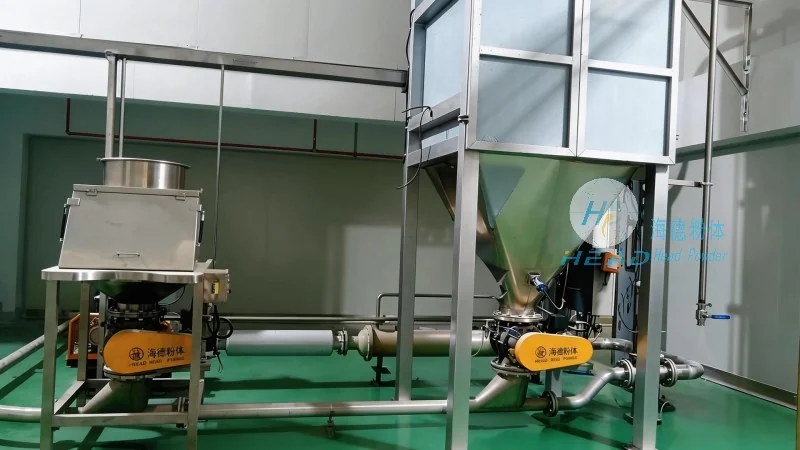
Shandong HeadPowder Engineering Co., Ltd., operating under the brand name headpowder, specializes in the design, manufacturing, and installation of advanced material handling systems, including expanded clay pneumatic conveying lines. With a focus on innovation and customer-centric solutions, the company has established itself as a leader in the industry, providing tailored systems that meet the specific needs of various applications.
HeadPowder’s expertise lies in understanding the unique characteristics of materials like expanded clay and designing systems that optimize their transport efficiency. The company’s engineering team conducts thorough material analysis and process simulations to ensure that the conveying lines are optimized for performance, reliability, and cost-effectiveness. This approach results in systems that deliver consistent material flow, reduce operational downtime, and enhance overall productivity for clients.
HeadPowder’s facilities are located in Shandong, China, where the company leverages local resources and expertise to support its operations. The company maintains a commitment to quality and sustainability, adhering to industry standards and best practices in material handling technology. By combining technical expertise with practical experience, HeadPowder provides comprehensive solutions that address the diverse needs of clients across different sectors, from construction to agriculture.

 Shandong Headpowder Engineering Co., Ltd.
 156-6277-7102(Manager Zhang)
  0531-83386006
  Zhangqiu District, Jinan City, Shandong Province, China
telephone
WeChatconsult
top