With more than 10‑year industry experience, Shandong Headpowder delivers full‑service pneumatic‑conveying systems and blowers, undertaking nationwide turn‑key powder‑handling projects.
HeadPowder, a leading manufacturer in the field of powder handling technology, specializes in providing advanced pneumatic conveying solutions tailored for the processing of lithium-ion battery anode material powders. With a strong presence in Shandong, China, the company has established itself as a trusted partner for businesses operating in the battery manufacturing sector. This article delves into the fundamental principles behind pneumatic conveying systems designed for anode material powders, as well as the specific working scene characteristics that make these systems indispensable in modern battery production lines.
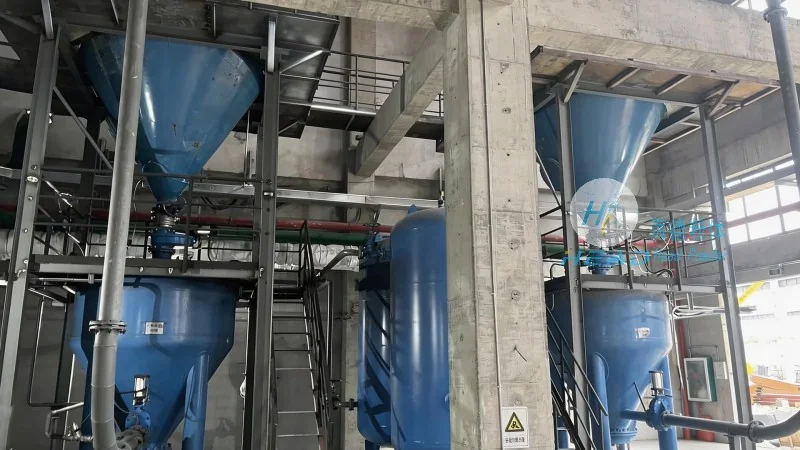
Pneumatic conveying is a method of transporting bulk materials, such as fine powders, through a pipeline using air or gas as the conveying medium. In the context of lithium-ion battery anode material processing, this technology is crucial for efficiently moving materials like graphite, silicon, and other composite powders from storage silos to processing equipment, such as mixers, extruders, or coating machines. The core principle involves creating a pressure differential within the pipeline, which propels the powder particles forward while maintaining their integrity and preventing agglomeration. This process is typically achieved through either pressure or vacuum systems, each with its own advantages depending on the material properties and application requirements.
The pneumatic conveying equipment for anode materials consists of several critical components that work in tandem to ensure reliable and efficient material transport. These include the material feed hopper, which stores and feeds the powder into the system; the conveying line, which is usually made of stainless steel to withstand the abrasive nature of the powders; and the air supply system, which generates the necessary pressure or vacuum. The system may also incorporate features like rotary valves, which control the flow of material into the conveying line, and filters, which capture any fine particles to prevent contamination. The operational principle revolves around the interaction between the powder particles and the air stream. When air is introduced into the pipeline, it creates a fluidized bed of particles, allowing them to be carried along with the air flow. The velocity of the air must be sufficient to overcome the gravitational forces acting on the particles, ensuring stable transport without causing excessive wear on the equipment.
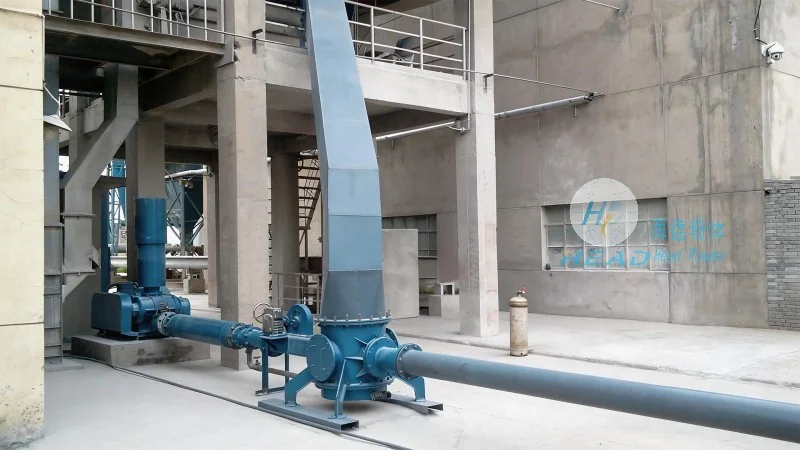
The working scene characteristics of pneumatic conveying systems for lithium-ion battery anode materials are shaped by the specific demands of the battery production process. These systems are commonly used in scenarios where materials need to be transported over relatively short to medium distances, typically within a factory or production facility. The key characteristics include high efficiency in handling fine powders, minimal product contamination due to enclosed systems, and the ability to handle a wide range of material types with varying particle sizes and densities. In a typical working scene, the equipment might be integrated into a production line where anode powders are first stored in bulk bags or silos, then conveyed to a mixing station where they are combined with binders and conductive agents. From there, the mixed material is conveyed to an extrusion or coating machine for further processing. The system’s ability to maintain consistent flow rates and particle size distribution is critical for ensuring the quality and uniformity of the final anode material, which directly impacts the performance of the lithium-ion battery.
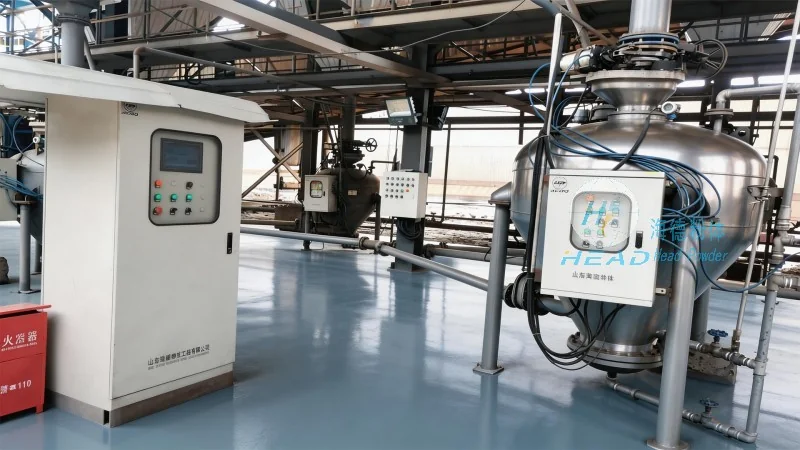
Implementing pneumatic conveying systems for lithium-ion battery anode materials offers several advantages that make them a preferred choice over traditional mechanical conveying methods. These include reduced risk of dust explosions due to enclosed systems, lower maintenance costs compared to belt conveyors, and the ability to handle materials with high moisture content or sensitivity to air exposure. However, there are also considerations to keep in mind, such as the need for proper air filtration to prevent dust accumulation in the system, and the potential for pressure drops over long distances, which may require additional air boosters or larger diameter pipelines. The choice of system type—whether pressure or vacuum—depends on factors like the material's density, flowability, and the distance to be covered. For instance, pressure systems are often used for short to medium distances and high-volume transport, while vacuum systems are suitable for longer distances or when materials need to be drawn from multiple sources.
As the demand for lithium-ion batteries continues to grow, the efficiency and reliability of anode material handling systems become increasingly important. Pneumatic conveying equipment from HeadPowder Engineering Co., Ltd. provides a robust solution that addresses the unique challenges of processing fine powders in battery manufacturing. With a headquarters in Shandong, China, the company leverages its expertise in powder technology to design and manufacture systems that meet the stringent requirements of modern battery production. By understanding the principle and working scene characteristics of these systems, manufacturers can optimize their production processes, improve material quality, and enhance overall operational efficiency. HeadPowder remains committed to delivering innovative and reliable pneumatic conveying solutions that support the advancement of the battery industry.

 Shandong Headpowder Engineering Co., Ltd.
 156-6277-7102(Manager Zhang)
  0531-83386006
  Zhangqiu District, Jinan City, Shandong Province, China
telephone
WeChatconsult
top