With more than 10‑year industry experience, Shandong Headpowder delivers full‑service pneumatic‑conveying systems and blowers, undertaking nationwide turn‑key powder‑handling projects.
Shandong HeadPowder Engineering Co., Ltd. specializes in the design, manufacturing, and installation of advanced pneumatic conveying systems tailored for handling stone powder granules. With a focus on efficient material transport solutions, the company's expertise lies in optimizing the performance of pneumatic conveying equipment for various industrial applications. Located in Shandong, China, HeadPowder provides comprehensive services that ensure reliable and cost-effective material handling for clients in the stone processing and related industries.
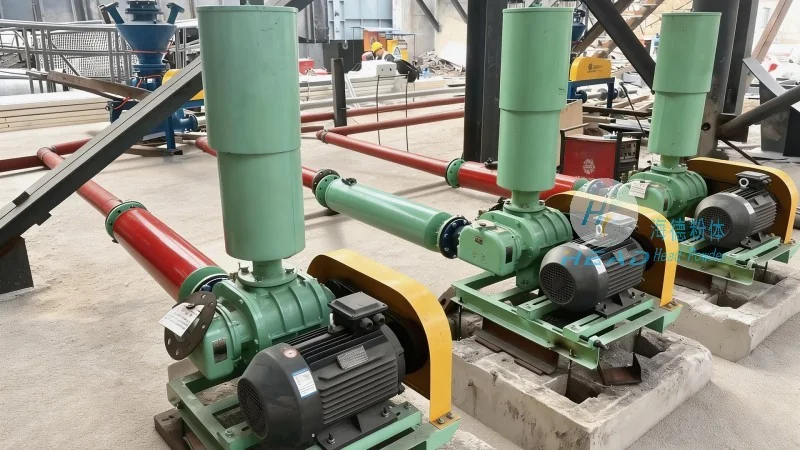
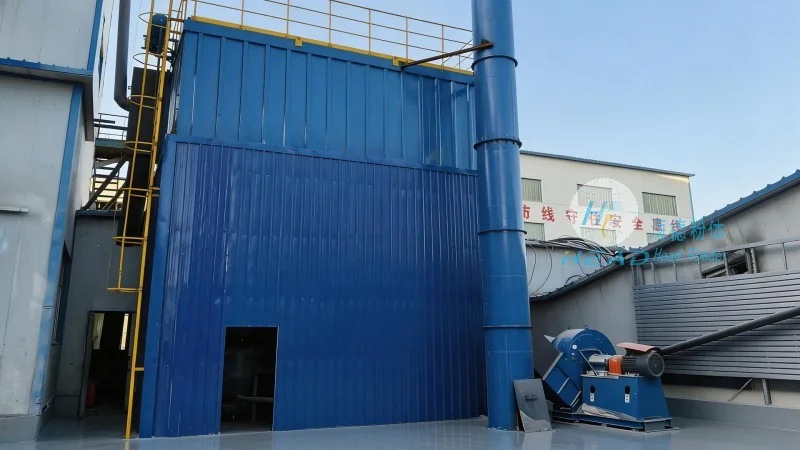
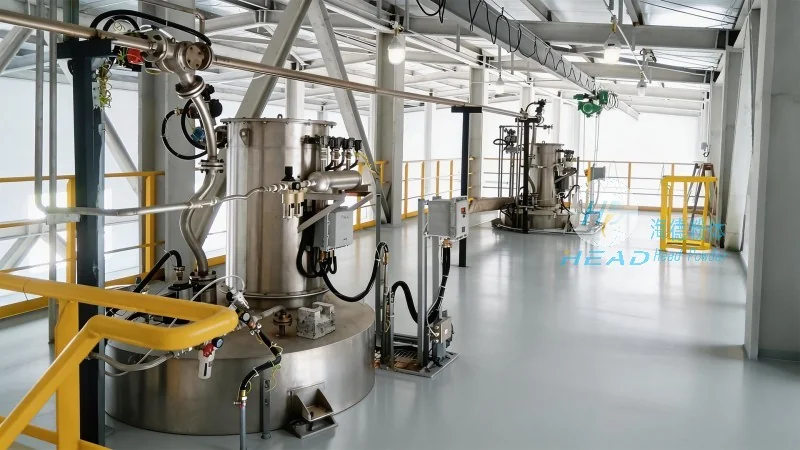
The core principle of pneumatic conveying systems for stone powder granules involves the use of air as the medium to transport solid particles through a pipeline. In this system, a blower or compressor generates a high-pressure airflow that draws or pushes the stone powder granules into the conveying line. The system typically operates under positive or negative pressure, depending on the specific design and application requirements. The key components include the air source unit, material feed hopper, conveying pipeline, and discharge device. The air flow velocity is carefully controlled to ensure that the stone powder granules are suspended and transported efficiently without causing blockages or excessive wear on the system components. This method offers advantages such as continuous operation, reduced labor costs, and the ability to transport materials over long distances without the need for intermediate storage or handling. There are two main types of pneumatic conveying systems: dilute-phase and dense-phase. Dilute-phase systems operate at higher air velocities, typically transporting particles in a dispersed state, suitable for short to medium distances and low to medium particle sizes. Dense-phase systems, on the other hand, use lower air velocities and higher material concentrations, which is ideal for handling abrasive or sensitive stone powder granules over longer distances. The selection of the appropriate system type depends on factors such as particle size distribution, moisture content, and the required conveying distance, ensuring optimal performance and system longevity.
The working scene characteristics of pneumatic conveying systems for stone powder granules vary based on the specific industrial application and the nature of the material being handled. For example, in the stone processing industry, these systems are commonly used in scenarios where stone powder needs to be transported from crushing and grinding units to storage silos or processing equipment. The systems are designed to handle different particle sizes and moisture contents of stone powder, ensuring consistent performance under varying operational conditions. Another key characteristic is the system's adaptability to different plant layouts, allowing for flexible installation in both new and existing facilities. The working environment may include high dust levels, requiring effective dust control measures integrated into the system design. Additionally, the systems are engineered to minimize material degradation and maintain product quality, which is crucial for applications where the stone powder is used in downstream processes like cement production or construction materials. The operational efficiency and reliability of these systems are critical factors in optimizing production lines and reducing downtime in industrial settings. In mining operations, pneumatic conveying systems are used to transport stone powder from ore processing plants to processing facilities, where the material is further refined. The systems are designed to handle large volumes of material and operate continuously, supporting high-throughput production. The working scene may also involve integration with other equipment, such as crushers and grinders, to form a seamless material handling process. The characteristics of the working scene, including the scale of operation and the specific material properties, influence the system's design and performance, ensuring that it meets the operational demands of the industrial environment.

 Shandong Headpowder Engineering Co., Ltd.
 156-6277-7102(Manager Zhang)
  0531-83386006
  Zhangqiu District, Jinan City, Shandong Province, China
telephone
WeChatconsult
top