With more than 10‑year industry experience, Shandong Headpowder delivers full‑service pneumatic‑conveying systems and blowers, undertaking nationwide turn‑key powder‑handling projects.
HeadPowder, a leading provider of industrial material handling solutions, specializes in advanced pneumatic conveying systems for pasty powder materials. This article explores the fundamental working principles and key characteristics of such systems, highlighting their efficiency and reliability in material transport applications.
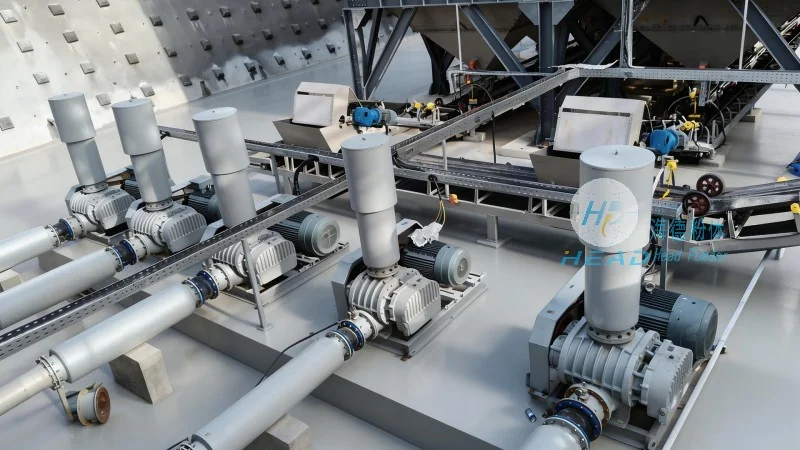
Pneumatic conveying is a method of transporting bulk materials, including pasty powders, through a pipeline using air or gas as the conveying medium. The technology has evolved significantly over the years, offering a flexible and efficient alternative to traditional mechanical conveying methods. For pasty powder, which often exhibits unique properties like varying particle sizes, moisture content, and flow characteristics, specialized pneumatic systems are essential to ensure optimal performance and material integrity.
The core working principle of pasty powder pneumatic conveying involves creating a pressure differential within a closed pipeline system. This is typically achieved through either positive pressure (pressure conveying) or negative pressure (vacuum conveying) methods. In positive pressure systems, compressed air is introduced at the material inlet, generating a pressure higher than the ambient air, which propels the powder forward through the pipeline. Conversely, negative pressure systems use a vacuum at the discharge end to draw the material into the pipeline. The choice between these methods depends on factors such as material properties, system layout, and operational requirements.
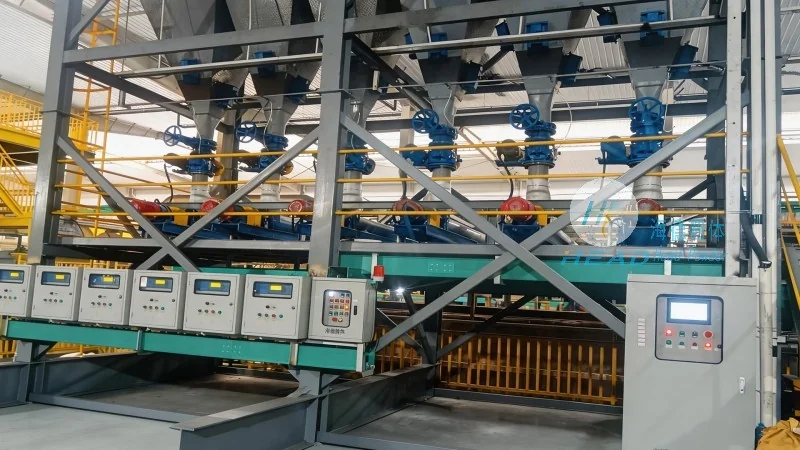
For pasty powders, which may have cohesive or non-uniform particle structures, the conveying process must account for these characteristics. The system design often incorporates features like air-liquid separators, cyclone separators, and rotary air locks to prevent material buildup and ensure smooth flow. The air velocity within the pipeline is carefully controlled to maintain the powder in a suspended state without causing excessive wear on the system components. This balance is crucial for maintaining the quality of the pasty powder and minimizing operational downtime.
Several distinct characteristics define the performance of pneumatic conveying systems for pasty powder materials. First, the systems offer high efficiency in material transport, with the ability to move large volumes of material over long distances with minimal energy consumption compared to mechanical systems. This efficiency is particularly valuable in industrial settings where material handling is a critical operational cost.
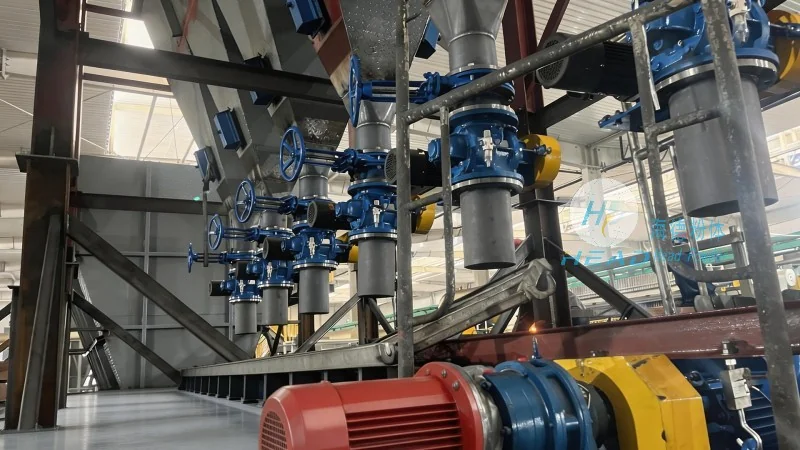
Second, pneumatic conveying provides excellent material containment and environmental protection. The closed pipeline system prevents dust emissions and cross-contamination, which is essential for maintaining product quality and compliance with environmental regulations. This feature is especially important for pasty powders, which may be sensitive to moisture or air exposure.
Third, the systems are highly adaptable to varying material properties. By adjusting air pressure, velocity, and pipeline design, operators can optimize the conveying process for different types of pasty powders, such as those with high moisture content or varying particle sizes. This flexibility allows for seamless integration into existing production lines and reduces the need for extensive system modifications.
Fourth, maintenance and operational simplicity are notable characteristics. Pneumatic conveying systems typically require less maintenance compared to mechanical systems, as there are fewer moving parts and less wear from friction. The absence of mechanical components like belts or chains also reduces the risk of breakdowns and extends the system's service life. Additionally, the systems are easy to operate and control, with advanced automation features that allow for precise material flow management.
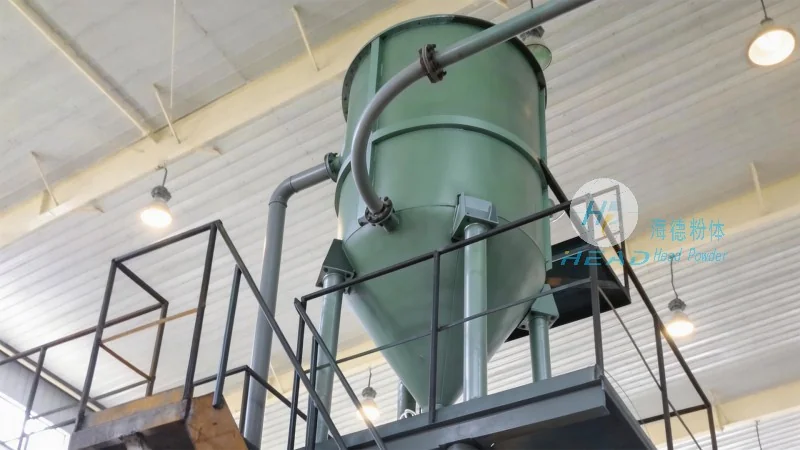
Pneumatic conveying systems for pasty powder are widely used in various industrial sectors, including construction, pharmaceuticals, and food processing. In the construction industry, for example, these systems are used to transport gypsum-based pasty powders for wallboard production, ensuring consistent quality and efficient material handling. In pharmaceutical applications, the closed system prevents contamination and maintains product purity, which is critical for compliance with regulatory standards. The benefits of these systems extend beyond material transport, as they contribute to overall operational efficiency and cost reduction in industrial processes.
HeadPowder, with its expertise in engineering and manufacturing, provides customized pneumatic conveying solutions tailored to the specific needs of pasty powder applications. The company's commitment to quality and innovation ensures that clients receive systems that meet the highest standards of performance and reliability. By leveraging advanced technology and a deep understanding of material handling principles, HeadPowder continues to deliver effective solutions for the efficient transport of pasty powder materials.

 Shandong Headpowder Engineering Co., Ltd.
 156-6277-7102(Manager Zhang)
  0531-83386006
  Zhangqiu District, Jinan City, Shandong Province, China
telephone
WeChatconsult
top