

Working Principle and Features of Cement and Mineral Powder Pneumatic Conveying Lines
HeadPowder, a leading enterprise in the field of material handling systems, specializes in the design, manufacturing, and installation of advanced pneumatic conveying lines. Based in Shandong, China, the company has established itself as a trusted provider of efficient solutions for transporting cement, mineral powders, and other fine particulate materials. This article delves into the working principle and key features of cement gray mineral powder pneumatic conveying lines, highlighting how these systems enhance operational efficiency and reliability in industrial applications.
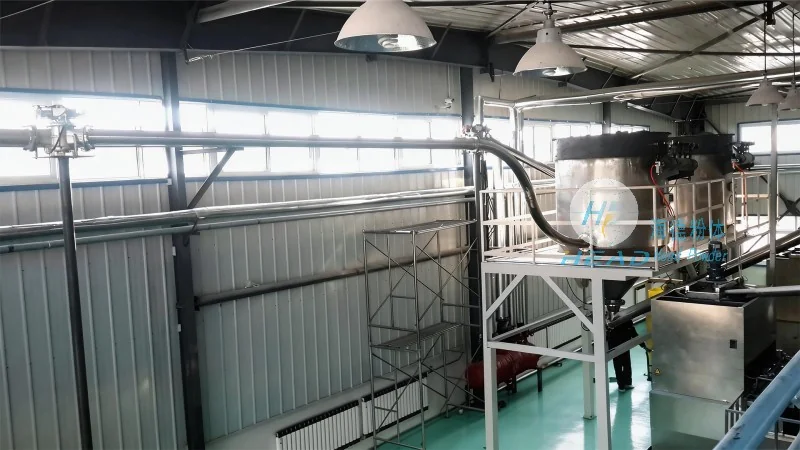
Understanding the Working Principle of Cement and Mineral Powder Pneumatic Conveying Lines
The core of a cement and mineral powder pneumatic conveying line lies in its ability to transport dry bulk materials through a pressurized or vacuum system. At the heart of the system is a blower or fan that generates the necessary air flow to move the material. The process typically begins with the material being fed into a hopper or feeder, where it is then drawn into the conveying line by the air flow. As the material travels through the pipeline, it is suspended in the air stream, allowing it to be transported over long distances without the need for mechanical components like belts or buckets. The system often includes components such as a rotary valve, which controls the material flow from the hopper, and a filter or cyclone separator at the receiving end to separate the material from the air, ensuring clean and efficient operation.
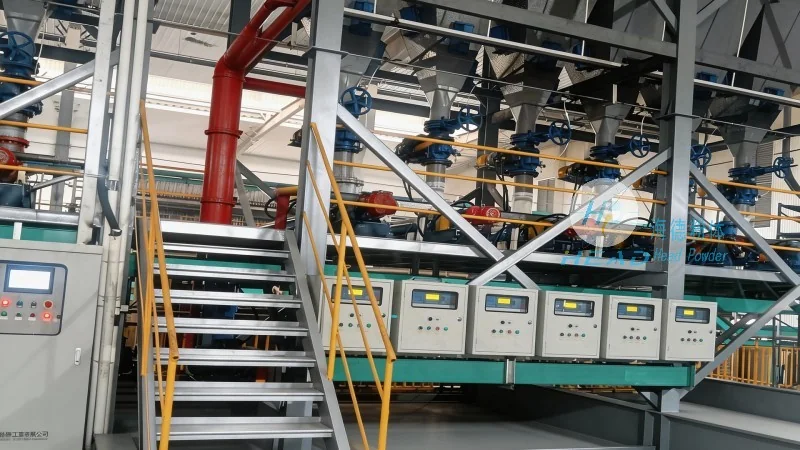
Key Features of Cement and Mineral Powder Pneumatic Conveying Lines
Cement and mineral powder pneumatic conveying lines offered by Shandong HeadPowder Engineering Co., Ltd. are characterized by several distinct features that set them apart in the industry. Firstly, these systems are highly flexible, allowing for the transportation of materials over varying distances and through complex layouts, including vertical and horizontal segments. The use of air as the conveying medium eliminates the need for physical contact between the material and the equipment, reducing wear and tear and minimizing the risk of contamination. Additionally, the systems are designed for high efficiency, with minimal energy consumption compared to traditional mechanical conveying methods. This efficiency is further enhanced by the ability to handle a wide range of particle sizes and densities, making them suitable for diverse industrial applications. Another notable feature is the system's ability to operate in both positive pressure and negative pressure modes, providing versatility in different operational scenarios. The advanced control systems integrated into these lines ensure precise regulation of material flow, pressure, and air volume, optimizing performance and reducing downtime.
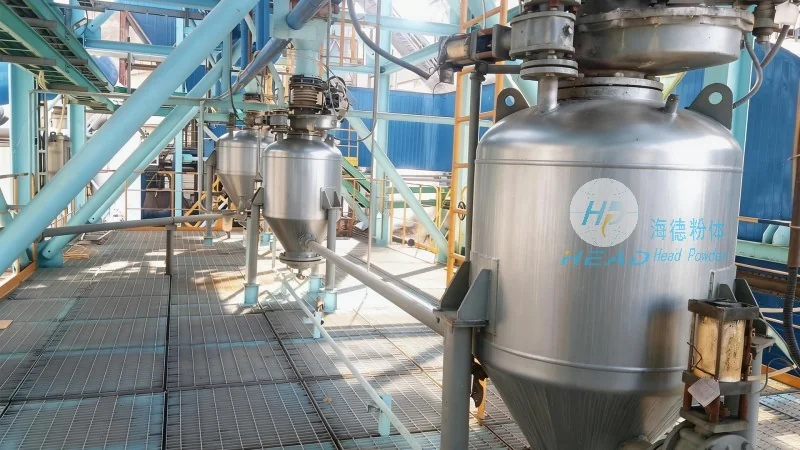
Advantages and Applications in Industrial Settings
The implementation of cement and mineral powder pneumatic conveying lines brings numerous advantages to industrial operations. For one, the systems significantly reduce labor costs by automating the material handling process, eliminating the need for manual loading and unloading. This not only improves safety in the workplace but also increases overall productivity. The ability to transport materials over long distances without intermediate storage points streamlines production workflows, minimizing bottlenecks and enhancing process continuity. Furthermore, the systems are designed with durability and low maintenance in mind, featuring robust components that can withstand the rigors of continuous operation. This reliability is crucial for industries where consistent material supply is essential, such as cement manufacturing, mining, and chemical processing. The applications of these lines are diverse, ranging from the transport of raw materials to finished products, and can be integrated into existing production lines with minimal disruption. By leveraging the expertise of Shandong HeadPowder Engineering Co., Ltd., industries can achieve improved operational efficiency, reduced costs, and enhanced product quality through the adoption of advanced pneumatic conveying solutions.