

What is a Dry Powder Mortar Material Pneumatic Conveying System? What are the Design Principles?
Understanding the dry powder mortar material pneumatic conveying system and its design principles is crucial for industries that rely on efficient material handling. This article delves into the core components, operational mechanisms, and engineering considerations that define such systems, providing a comprehensive overview for professionals in construction, manufacturing, and related fields.
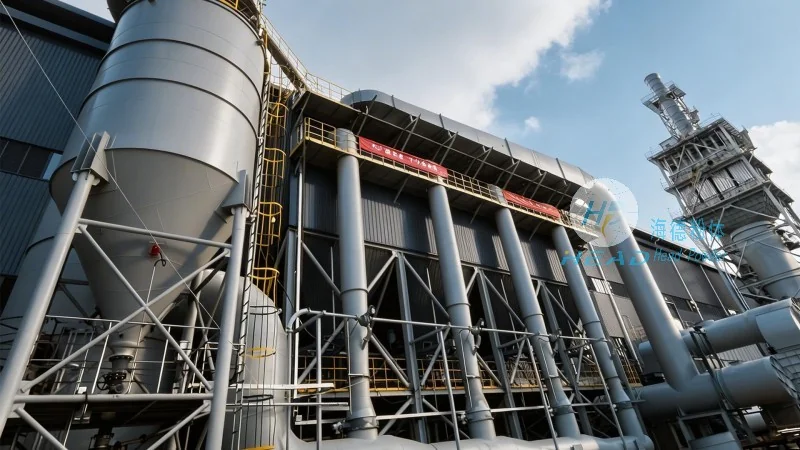
Overview of Dry Powder Mortar Material Pneumatic Conveying Systems
Dry powder mortar material pneumatic conveying systems are specialized equipment designed to transport dry powders, such as cement, sand, and additives, through a pipeline using air or gas as the conveying medium. Unlike traditional mechanical conveying methods (e.g., belt conveyors or screw conveyors), pneumatic systems offer advantages like flexibility in layout, reduced material degradation, and the ability to handle a wide range of particle sizes and moisture contents. These systems are widely used in the production of dry-mix mortars, where precise control over material flow and quality is essential.
Design Principles and Operational Mechanisms
The design of a pneumatic conveying system for dry powder mortar materials is based on several key principles, including the balance of pressure and velocity, particle size distribution, and the properties of the conveying medium. The primary components of such a system typically include a hopper for material storage, a feeder to control the flow rate, a conveying line (often equipped with bends and filters), and a receiver for the discharged material. The system operates by creating a pressure differential between the hopper and the receiver, either through positive pressure (where air is blown into the line) or negative pressure (where air is drawn out). The choice between positive and negative pressure depends on factors like the distance to be covered, the material's characteristics, and the desired system efficiency.
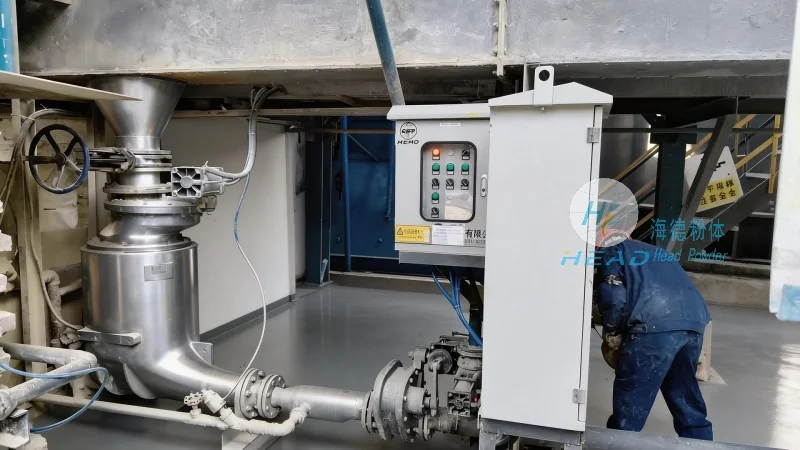
Types of Pneumatic Conveying Systems
Dry powder mortar material pneumatic conveying systems can be categorized into two main types: dilute-phase and dense-phase systems. Dilute-phase systems operate at relatively low pressure and high air velocity, suitable for short distances and low material loads. Dense-phase systems, on the other hand, use higher pressure and lower air velocity to transport material in a more concentrated form, ideal for longer distances and higher material volumes. The selection of a system type depends on factors such as the distance between the hopper and receiver, the material's flowability, and the required throughput. Additionally, the system design must consider the particle size distribution of the dry powder, as larger particles may require higher air velocities to prevent blockages or degradation. Proper filtration and cleaning mechanisms are also critical to maintain system performance and prevent contamination of the conveyed material.
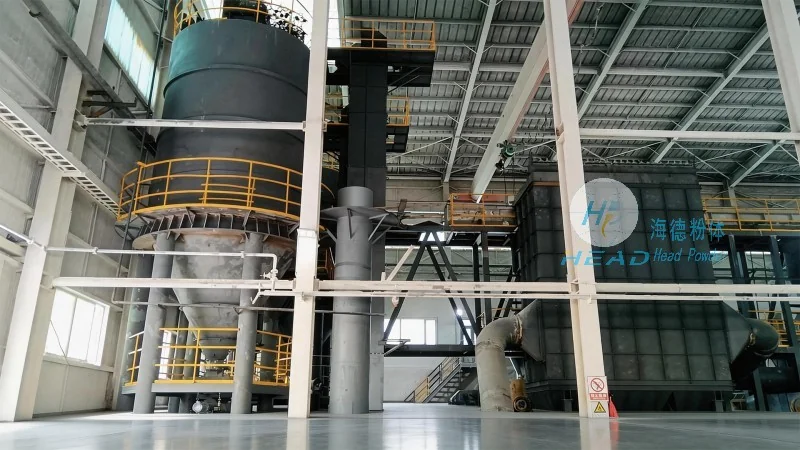
Engineering Considerations in System Design
The design process for a pneumatic conveying system involves careful consideration of several engineering parameters. The pressure drop across the conveying line is a key factor, as it determines the energy required to move the material. Engineers use empirical formulas and computational fluid dynamics (CFD) simulations to calculate the optimal pressure and air velocity for a given application. The hopper design is also crucial, as it must prevent material bridging and ensure consistent flow. Feeder mechanisms, such as rotary valves or screw feeders, are used to control the material discharge rate, which directly impacts the system's throughput. The receiver, typically equipped with a filter and dust collection system, ensures that the material is delivered in a clean and dry state, ready for use in the production process.
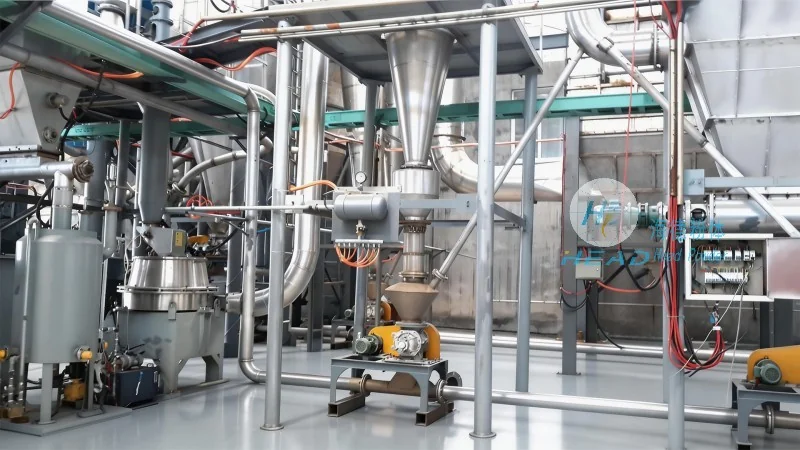
About Shandong HeadPowder Engineering Co., Ltd.
HeadPowder, or Shandong HeadPowder Engineering Co., Ltd., is a leading manufacturer and supplier of advanced material handling solutions, including pneumatic conveying systems for dry powder mortar applications. With a focus on innovation and customer-centric design, the company has established itself as a trusted partner in the construction and manufacturing sectors. HeadPowder's systems are engineered to meet the stringent requirements of modern production lines, ensuring reliability, efficiency, and compliance with industry standards. The company's headquarters is located in Shandong, China, where it leverages local expertise and resources to deliver high-quality products and services to clients worldwide.
Custom Solutions and Technical Expertise
HeadPowder Engineering Co., Ltd. specializes in the design, manufacturing, and installation of custom pneumatic conveying systems tailored to the specific needs of dry powder mortar manufacturers. The company's team of experienced engineers works closely with clients to understand their production requirements, material characteristics, and operational constraints, ensuring that the final system meets all technical and performance specifications. HeadPowder's commitment to quality is reflected in its adherence to international standards, such as ISO 9001, and its use of advanced manufacturing technologies. The company's facilities in Shandong, China, are equipped with state-of-the-art equipment and testing facilities, enabling it to produce high-performance systems that deliver reliable and efficient material handling solutions. HeadPowder's products are used by a wide range of clients, from small-scale mortar producers to large industrial manufacturers, and the company's reputation for excellence has earned it a strong presence in both domestic and international markets.