With more than 10‑year industry experience, Shandong Headpowder delivers full‑service pneumatic‑conveying systems and blowers, undertaking nationwide turn‑key powder‑handling projects.
For industrial applications involving the transport of limestone and other bulk powders, understanding the mechanics of pneumatic conveying systems is crucial. This article provides an overview of the structure and operational principles of limestone pneumatic conveying equipment, highlighting its design features and functional aspects. The information is presented by Shandong HeadPowder Engineering Co., Ltd., a leading manufacturer based in China, specializing in powder handling solutions.
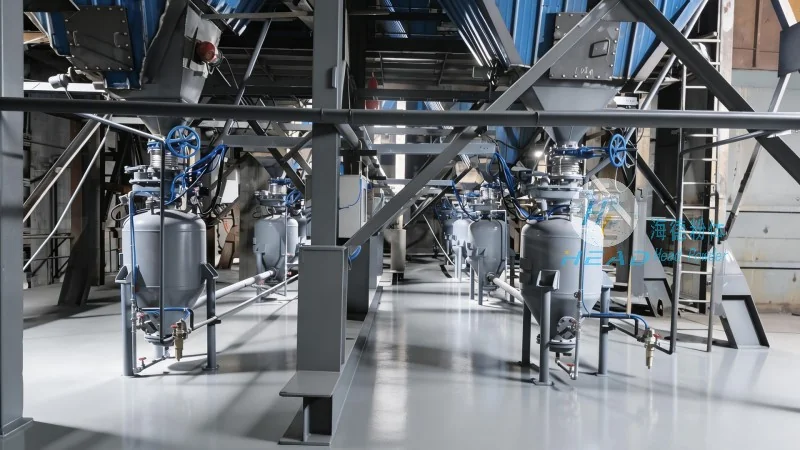
A typical limestone pneumatic conveying system comprises several essential components that work in concert to achieve efficient material transport. The primary elements include the hopper for material storage, a feeder to control the flow rate, a conveying pipeline, a blower or compressor to generate the air flow, and a receiver or discharge unit. Each component plays a vital role in ensuring the smooth and reliable operation of the system. The hopper is designed to hold a sufficient quantity of limestone, preventing material buildup and ensuring a consistent feed to the feeder. The feeder, often a rotary valve or a screw feeder, regulates the material flow into the pipeline, maintaining a steady rate that matches the air flow capacity. The conveying pipeline, usually made of stainless steel or other corrosion-resistant materials, transports the limestone particles mixed with air. The blower or compressor provides the necessary pressure and airflow to move the material through the pipeline. Finally, the receiver collects the conveyed limestone and discharges it into the next processing stage.
The operation of a limestone pneumatic conveying system is based on the principle of fluidization and suspension of solid particles in a gas stream. When the blower or compressor generates a high-velocity air flow, the limestone particles are lifted and carried through the pipeline. The air velocity must be sufficient to overcome the gravitational force acting on the particles and to maintain them in a suspended state. The system can operate in either positive or negative pressure modes. In positive pressure systems, the air is pressurized and forced through the pipeline, pushing the material forward. In negative pressure systems, the air is drawn from the pipeline, creating a vacuum that pulls the material into the system. The choice between positive and negative pressure depends on factors such as the distance of transport, the material characteristics, and the system layout. The efficiency of the conveying process is influenced by the air velocity, the particle size distribution, and the moisture content of the limestone. Proper design and maintenance of the system components are essential to achieve optimal performance and minimize energy consumption.
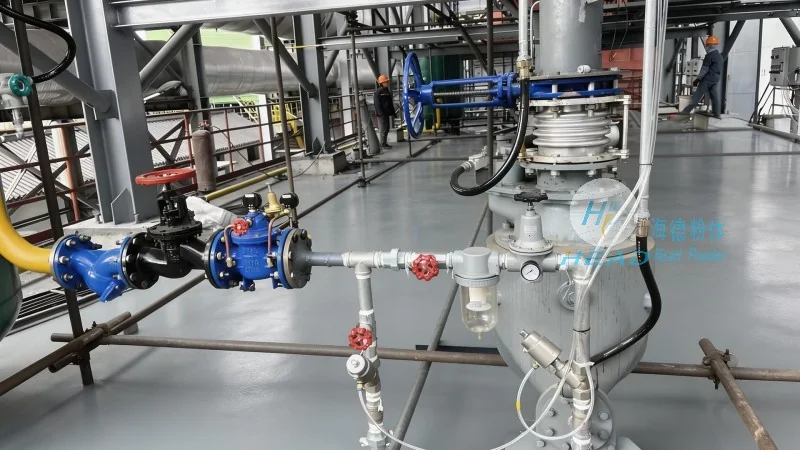
Implementing limestone pneumatic conveying equipment offers several advantages over traditional bulk material handling methods. One of the key benefits is the ability to transport materials over long distances without the need for intermediate storage or transfer points. This reduces the risk of material degradation and contamination, which is particularly important for limestone used in cement production or other industrial applications. The system also provides a closed-loop operation, preventing dust emissions and ensuring environmental compliance. Additionally, pneumatic conveying systems can handle a wide range of particle sizes and moisture contents, making them versatile for various limestone types. The automated control of the system allows for precise regulation of material flow, enhancing process efficiency and reducing labor costs. Furthermore, the equipment is relatively compact compared to other bulk handling solutions, saving space in industrial facilities. These advantages make limestone pneumatic conveying equipment a preferred choice for many industries.
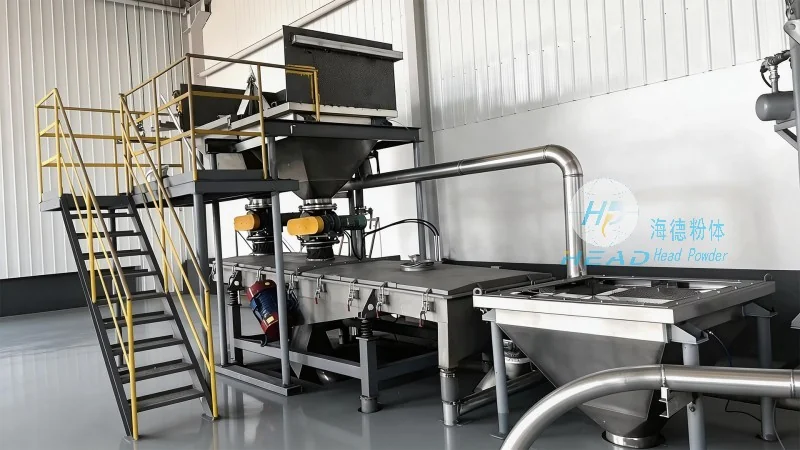
Limestone pneumatic conveying systems are widely used in various industrial sectors that require the transport of bulk powders. The most common applications include the cement industry, where limestone is a primary raw material for cement production. The system efficiently transports limestone from storage silos to the cement grinding mills. In the chemical industry, limestone is used as a raw material in the production of calcium carbonate and other chemicals. The pneumatic conveying system ensures a continuous and controlled supply of limestone to the processing units. Additionally, the equipment is used in the mining and quarrying industry for transporting limestone from the extraction site to processing plants. The system can also be applied in the food and pharmaceutical industries for handling limestone used as a filler or additive. The versatility of the limestone pneumatic conveying system makes it suitable for a wide range of applications, catering to the diverse needs of different industries.
Proper maintenance and operational considerations are essential to ensure the longevity and efficiency of limestone pneumatic conveying equipment. Regular inspection of the system components, such as the hopper, feeder, and pipeline, is necessary to detect any signs of wear or damage. The blower or compressor should be checked for proper air flow and pressure, as any issues can affect the conveying performance. The feeder mechanism should be maintained to ensure consistent material flow, preventing blockages or uneven distribution. Cleaning the pipeline and receiver regularly is important to prevent material buildup and maintain the system's efficiency. The system should be operated within the recommended air velocity and pressure ranges to avoid excessive energy consumption or damage to components. Additionally, monitoring the particle size distribution and moisture content of the limestone can help optimize the conveying process. By following these maintenance and operational guidelines, the limestone pneumatic conveying system can operate reliably and efficiently, providing consistent performance over its service life.

 Shandong Headpowder Engineering Co., Ltd.
 156-6277-7102(Manager Zhang)
  0531-83386006
  Zhangqiu District, Jinan City, Shandong Province, China
telephone
WeChatconsult
top