

What is Pneumatic Conveying for Battery Materials? An Introduction to the Working Principle of Powde
Understanding the working principles of pneumatic conveying systems is crucial for industries dealing with battery materials. This article provides a detailed overview of how these systems operate, focusing on the technology used to transport powders efficiently and safely. By exploring the fundamental mechanisms and components, readers can gain insights into the practical applications and benefits of pneumatic conveying in battery material handling.
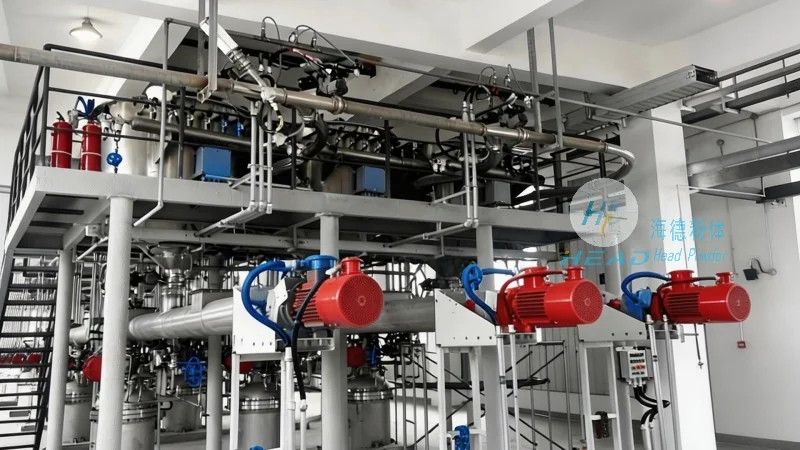
HeadPowder Engineering: A Leader in Powder Handling Solutions
Shandong HeadPowder Engineering Co., Ltd. specializes in the design, manufacturing, and implementation of advanced powder handling systems. With a strong commitment to innovation and quality, HeadPowder offers tailored solutions for various industrial applications, including those in the battery manufacturing sector. The company’s expertise lies in developing efficient and reliable pneumatic conveying systems that meet the stringent requirements of modern battery production processes.
Key Components of Pneumatic Conveying Systems
Pneumatic conveying systems consist of several critical components that work in tandem to transport powder materials. The primary elements include a conveying line, a source of air (either positive or negative pressure), and a hopper or feeder to introduce the material. The system’s design, whether it is a dilute-phase or dense-phase system, significantly impacts its performance and suitability for different material types. For battery materials, which often require precise control and minimal product degradation, the choice of system type is paramount.
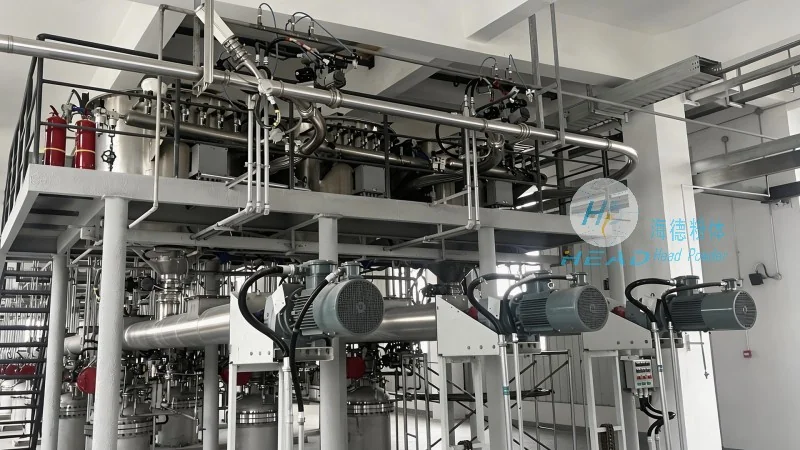
How Pneumatic Conveying Works: A Step-by-Step Explanation
The operation of a pneumatic conveying system involves a series of coordinated actions. Initially, the powder is fed from a hopper or silo into the conveying line. Simultaneously, air is introduced into the system, creating a flow that propels the powder particles through the pipeline. In positive-pressure systems, air is forced through the line, while negative-pressure systems draw air and material into the line. The velocity and pressure of the air determine the efficiency of material transport, ensuring that the powder moves smoothly without clogging or degradation.
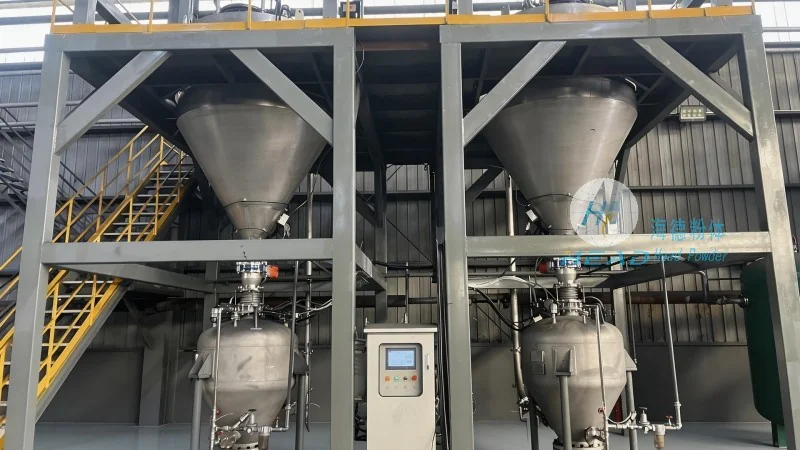
Benefits of Using Pneumatic Conveying for Battery Materials
Implementing pneumatic conveying systems in battery material handling offers numerous advantages. These include improved safety by eliminating manual handling of powders, enhanced product quality through reduced exposure to contaminants, and increased operational efficiency by automating the material transport process. Additionally, the systems are adaptable to various material characteristics, such as particle size, density, and moisture content, making them suitable for a wide range of battery materials. The ability to handle materials in a closed system also minimizes environmental impact and ensures compliance with industrial regulations.
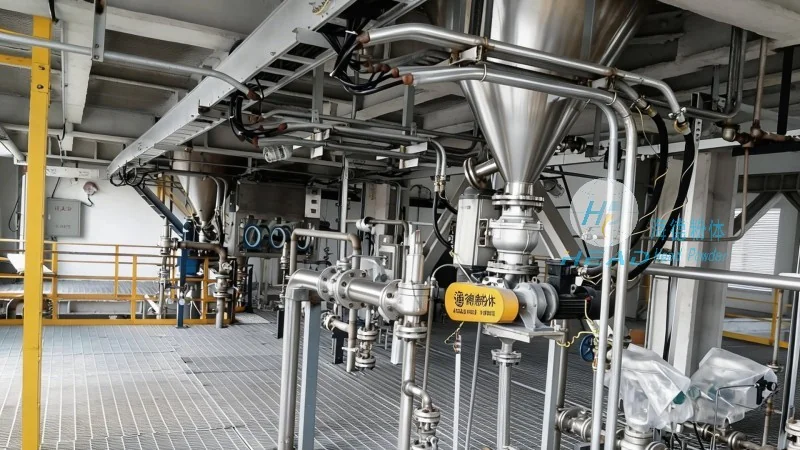
Applications in Battery Manufacturing
Pneumatic conveying is widely used in various stages of battery manufacturing, from raw material processing to component assembly. For instance, it is commonly employed to transport cathode and anode powders, which are critical components in lithium-ion batteries. The systems ensure that these powders are delivered to mixing and coating equipment with consistent quality and minimal variation. By maintaining a controlled environment, the conveying process helps in achieving uniform material properties, which are essential for the performance and longevity of the final battery products.
Customization and Integration with HeadPowder Solutions
HeadPowder Engineering provides customized pneumatic conveying solutions tailored to the specific needs of battery manufacturers. The company’s engineers work closely with clients to assess their production requirements, material characteristics, and operational constraints. Based on this analysis, they design and implement systems that optimize material flow, reduce downtime, and enhance overall productivity. The integration of these systems with existing production lines is seamless, ensuring minimal disruption to current operations while delivering immediate benefits.