With more than 10‑year industry experience, Shandong Headpowder delivers full‑service pneumatic‑conveying systems and blowers, undertaking nationwide turn‑key powder‑handling projects.
HeadPowder, a leading provider in the field of powder handling solutions, specializes in advanced pneumatic conveying technologies tailored for materials like chromium oxide. This article delves into the fundamental principles and practical applications of both negative pressure and positive pressure systems, offering a comprehensive understanding of how these technologies enhance material transport efficiency and safety in industrial settings.
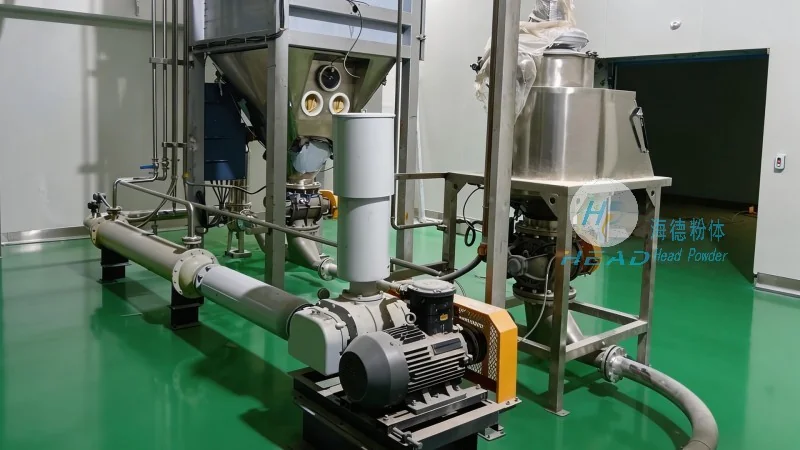
Negative pressure, or suction, pneumatic conveying systems operate by creating a vacuum at the material inlet, drawing particles into a pipeline using a fan or blower. This method is particularly effective for handling fine powders and materials that are prone to dust generation. The system typically includes a hopper, a rotary valve for material feed, a vacuum pump, and a filter to capture any released particles. The design ensures minimal pressure differentials, making it suitable for applications where the material source is at a higher elevation than the destination. HeadPowder’s expertise in negative pressure systems involves optimizing the vacuum source, selecting appropriate filter media, and ensuring the pipeline layout minimizes pressure losses, thereby maximizing conveying distances and material throughput.
In contrast, positive pressure systems generate pressure within the pipeline, pushing material from a source to a destination. This method is ideal for handling bulkier or more abrasive materials, as it can maintain higher flow rates and handle larger particles without clogging. The system comprises a blower or compressor, a material feed hopper, and a pipeline network. Positive pressure systems are often preferred in applications where the material needs to be transported over longer distances or to multiple destinations, as they can maintain consistent pressure and flow. HeadPowder’s positive pressure solutions focus on selecting the right type of blower (e.g., centrifugal or positive displacement) based on the material’s characteristics, ensuring the pipeline is sized appropriately to prevent pressure drop and maintain optimal conveying performance.

Chromium oxide, with its specific physical properties such as particle size, density, and moisture content, requires specialized pneumatic conveying solutions. Both negative and positive pressure systems must be tailored to address these characteristics. For instance, negative pressure systems may be preferred for fine chromium oxide powders to prevent dust dispersion, while positive pressure systems can handle coarser particles with higher flow rates. HeadPowder’s engineers conduct thorough material analysis to determine the most suitable system configuration, considering factors like material flowability, dust control requirements, and environmental regulations. This approach ensures that the chosen system not only meets operational efficiency goals but also complies with safety and environmental standards.
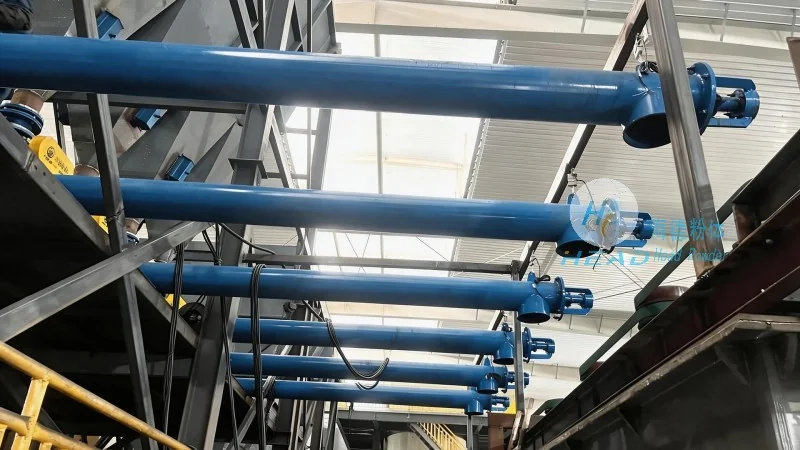
The versatility of pneumatic conveying systems makes them applicable across various industries. In the chemical and metallurgical sectors, chromium oxide is often used as a pigment or catalyst, and efficient transport is critical for production continuity. HeadPowder has implemented successful negative pressure systems for a chemical plant in Shandong, China, where the system reduced dust emissions by 70% and increased material throughput by 25% compared to traditional bucket elevators. Similarly, a positive pressure system was deployed for a metallurgical facility, enabling the transport of bulk chromium oxide over a 500-meter distance with minimal material degradation. These case studies highlight the adaptability of HeadPowder’s solutions to diverse operational needs and the tangible benefits they bring to industrial processes.
Both negative and positive pressure pneumatic conveying systems offer distinct advantages for chromium oxide transport, with the optimal choice depending on specific operational requirements. HeadPowder’s comprehensive approach, combining technical expertise, material analysis, and system optimization, ensures that clients receive tailored solutions that enhance efficiency, safety, and cost-effectiveness. As industrial demands evolve, the company continues to innovate, integrating advanced technologies such as variable frequency drives and real-time monitoring to further improve the performance and reliability of pneumatic conveying systems. With a strong presence in Shandong, China, HeadPowder remains committed to providing high-quality powder handling solutions that meet the evolving needs of the industry.

 Shandong Headpowder Engineering Co., Ltd.
 156-6277-7102(Manager Zhang)
  0531-83386006
  Zhangqiu District, Jinan City, Shandong Province, China
telephone
WeChatconsult
top