With more than 10‑year industry experience, Shandong Headpowder delivers full‑service pneumatic‑conveying systems and blowers, undertaking nationwide turn‑key powder‑handling projects.
HeadPowder, a leading enterprise in the field of industrial material handling solutions, specializes in the design, manufacturing, and installation of advanced pneumatic conveying systems for various applications. With a strong commitment to quality and innovation, the company has established itself as a trusted partner for clients seeking efficient and reliable systems for transporting diatomite and other fine powders. This article provides an in-depth look at the classification and key components that constitute a typical diatomite pneumatic conveying system, highlighting the technical aspects and functional elements that ensure optimal performance.
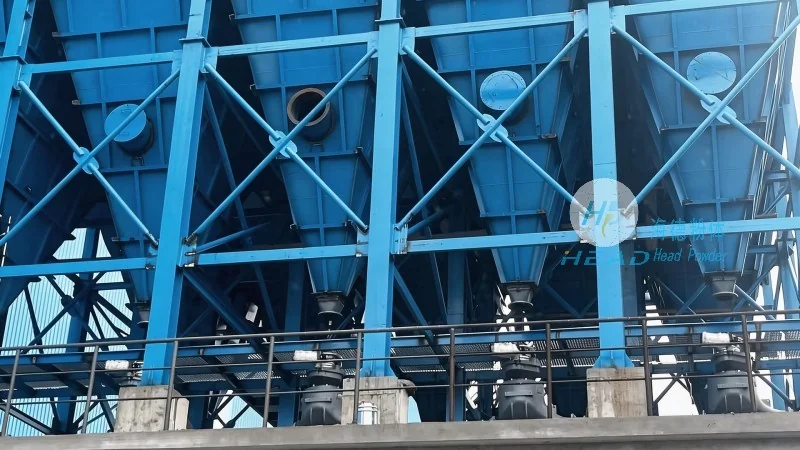
Diatomite, a natural sedimentary rock composed primarily of fossilized diatoms, is widely used in industries such as filtration, catalysis, and cosmetics due to its high porosity and surface area. The efficient transportation of diatomite from storage to processing units is crucial for maintaining production efficiency and product quality. Pneumatic conveying systems offer a non-contact, dust-free, and flexible method for moving diatomite, making them an ideal choice for modern industrial operations. The classification of these systems is based on several factors, including the conveying principle, material handling capacity, and operational environment.
There are primarily two main categories of pneumatic conveying systems: dilute-phase and dense-phase. Dilute-phase systems operate by suspending the material in a high-velocity air stream, allowing for long-distance transport with minimal pressure drops. This type is suitable for low to medium capacity applications and is commonly used in industries where the material is relatively dry and free-flowing. Dense-phase systems, on the other hand, use lower air velocities and higher material concentrations, resulting in slower but more controlled transport. These systems are ideal for handling abrasive or sensitive materials like diatomite, as they reduce the risk of particle degradation and equipment wear.
Within these categories, sub-classifications exist based on the direction of material flow and the type of air supply. For instance, pressure systems use compressed air to push the material through the pipeline, while vacuum systems use suction to draw the material from the source. The choice between pressure and vacuum depends on the specific application requirements, such as the distance between the source and destination, the material's properties, and the need for dust control. Additionally, the system can be classified as a positive displacement system, where a pump or blower creates a continuous flow of air, or a non-displacement system, which relies on the pressure differential between the source and destination.
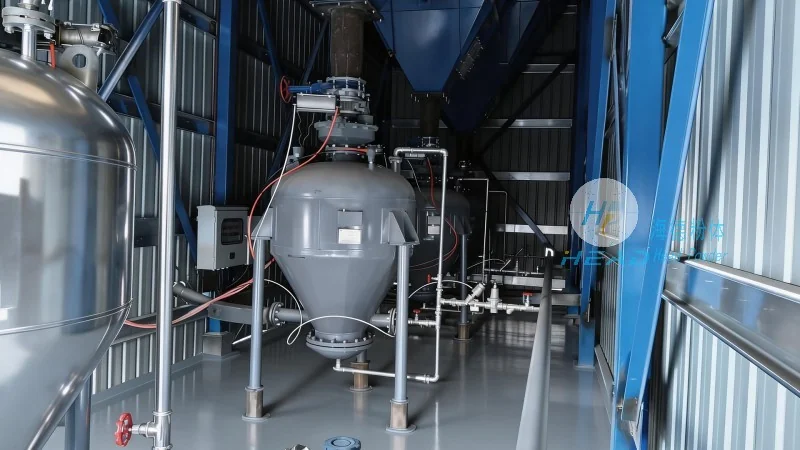
A diatomite pneumatic conveying system consists of several critical components that work in tandem to ensure efficient material transport. The main components include the material feed system, the conveying pipeline, the air supply unit, the control system, and the dust collection or separation equipment. Each component plays a vital role in the overall performance and reliability of the system.
The material feed system is responsible for introducing diatomite into the conveying line. This can be achieved through various mechanisms such as rotary valves, screw feeders, or pneumatic feeders. Rotary valves are commonly used for their ability to provide a continuous and controlled flow of material, preventing blockages and ensuring consistent feed rates. Screw feeders are suitable for handling bulk materials and can be adjusted to control the flow rate. Pneumatic feeders, on the other hand, use compressed air to push the material into the pipeline, which is particularly useful for fine powders that may be difficult to handle with mechanical feeders.
The conveying pipeline is the backbone of the system, responsible for transporting the diatomite from the source to the destination. The pipeline is typically made of materials such as stainless steel, PVC, or polyethylene, depending on the material's corrosiveness and the operating conditions. The choice of material affects the system's durability and resistance to wear and tear. The pipeline design, including the diameter and length, is critical for maintaining the desired air velocity and pressure drop. Properly sized pipelines ensure that the material is suspended effectively and that the system operates efficiently without excessive energy consumption.
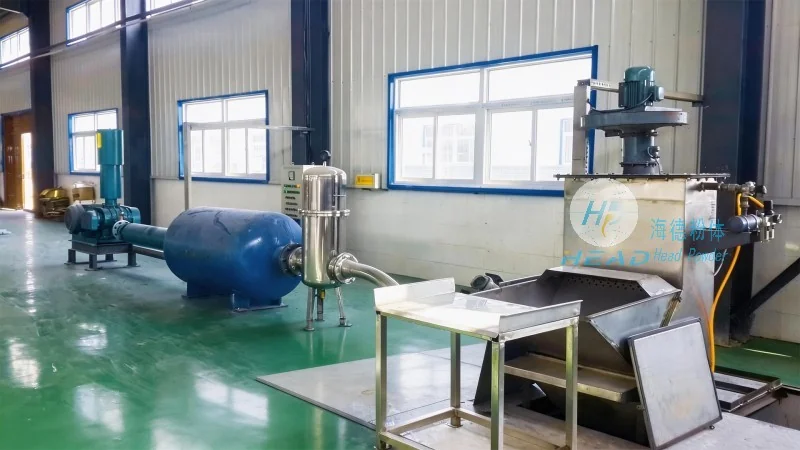
The air supply unit provides the necessary pressure or vacuum to move the material through the pipeline. This unit can be a blower, a compressor, or a vacuum pump, depending on the system type. For pressure systems, a positive displacement blower or a rotary lobe compressor is commonly used to generate the required pressure. These units are designed to handle the specific air volume and pressure needed for the conveying process. The air supply unit is typically equipped with filters and regulators to ensure clean and consistent air quality, preventing contamination of the diatomite and protecting the system components from wear.
The control system is responsible for monitoring and regulating the operation of the pneumatic conveying system. This includes sensors for measuring pressure, flow rate, and material level, as well as control valves and actuators that adjust the system parameters as needed. The control system ensures that the system operates within safe and efficient parameters, preventing overloading or underloading of the components. Modern control systems often include programmable logic controllers (PLCs) and human-machine interfaces (HMIs) that allow for remote monitoring and adjustment, enhancing the system's flexibility and reliability.
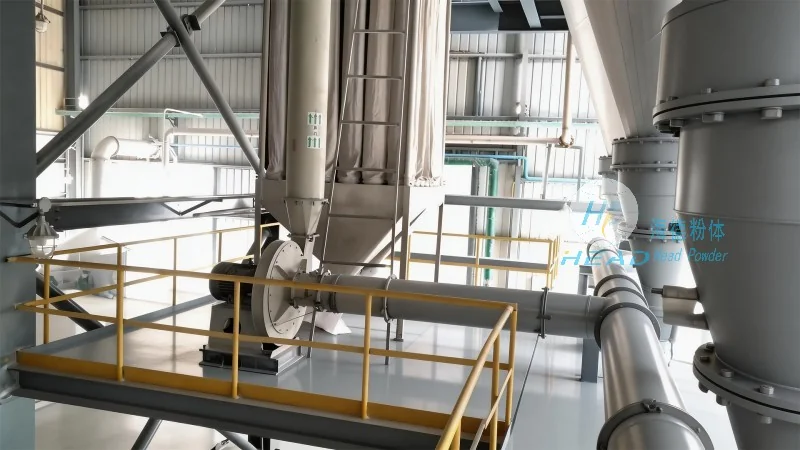
The dust collection or separation equipment is essential for maintaining a clean and safe working environment. This component is typically a cyclone separator or a baghouse filter, which removes the diatomite particles from the air stream before it is discharged or recirculated. The choice of dust collection equipment depends on the particle size and the required air quality. Cyclone separators use centrifugal force to separate the particles from the air, while baghouse filters use fabric bags to trap the particles. Properly designed dust collection systems prevent dust emissions and protect the environment and personnel from exposure to fine powders.
Proper operation and maintenance of a diatomite pneumatic conveying system are crucial for ensuring long-term performance and reliability. Regular maintenance, including cleaning of the pipeline, replacement of worn parts, and inspection of the air supply unit, is essential to prevent system downtime and reduce operational costs. The system should be designed to handle the specific properties of diatomite, such as its fineness and moisture content, to avoid issues like clogging or degradation. Additionally, the system should be equipped with safety features, such as pressure relief valves and emergency shut-off systems, to protect against potential hazards.
In conclusion, diatomite pneumatic conveying systems are a critical component in the efficient handling of diatomite in various industrial applications. The classification of these systems, based on the conveying principle and operational characteristics, allows for the selection of the most suitable system for specific needs. The key components, including the material feed system, conveying pipeline, air supply unit, control system, and dust collection equipment, work together to ensure efficient and reliable material transport. With proper design, operation, and maintenance, these systems can provide significant benefits in terms of productivity, safety, and environmental compliance.

 Shandong Headpowder Engineering Co., Ltd.
 156-6277-7102(Manager Zhang)
  0531-83386006
  Zhangqiu District, Jinan City, Shandong Province, China
telephone
WeChatconsult
top