With more than 10‑year industry experience, Shandong Headpowder delivers full‑service pneumatic‑conveying systems and blowers, undertaking nationwide turn‑key powder‑handling projects.
HeadPowder, a leading engineering company based in Shandong, China, specializes in advanced airflow conveying systems tailored for the lithium-ion battery material industry. This technology is crucial for efficiently handling powders and granules used in battery production, such as cathode and anode materials, ensuring precision and reliability in material transport.
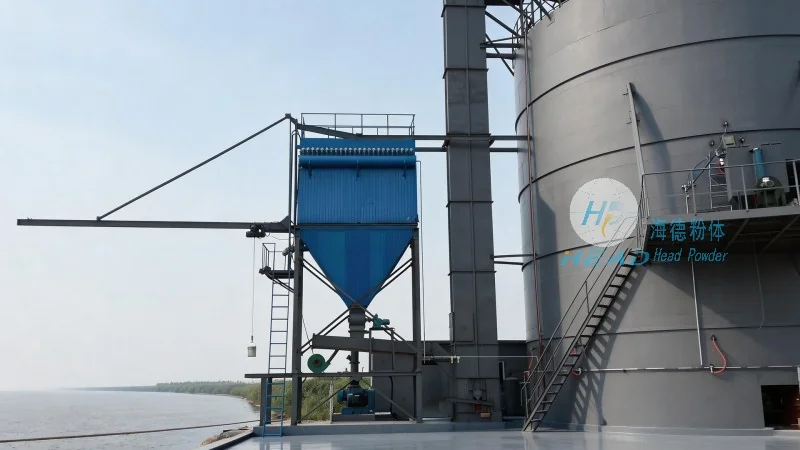
The core principle of airflow conveying involves using a stream of air to transport bulk materials through a pipeline. In the context of lithium-ion battery materials, this method is designed to handle fine powders and irregularly shaped particles with high efficiency. The system typically consists of a feeding hopper, a conveying pipeline, and a discharge outlet, all working in tandem to move materials from the source to the processing or packaging stage. Key advantages include non-contact material handling, which minimizes contamination and wear, and the ability to transport materials over long distances without the need for mechanical components like belts or buckets.
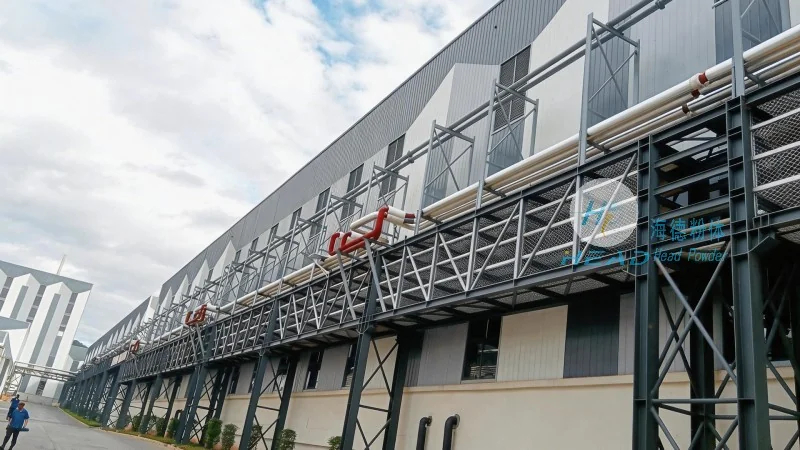
HeadPowder's airflow conveying systems are widely applied in various stages of lithium-ion battery material production. For instance, in the processing of cathode materials like lithium cobalt oxide (LCO) or lithium nickel manganese cobalt oxide (NMC), the technology ensures uniform and controlled transport of these powders to mixing and coating equipment. Similarly, for anode materials such as graphite or silicon-based powders, the system maintains consistent particle size distribution and prevents agglomeration during transport. The technology also supports the handling of additives and binders, which are essential for forming the electrode slurry. By integrating with automated material handling lines, the system enhances production throughput and reduces labor costs while maintaining strict quality control standards.
Compared to traditional mechanical conveying methods, HeadPowder's airflow conveying solutions offer several distinct benefits. First, the non-contact design eliminates the risk of material contamination, which is critical for battery materials where purity is paramount. Second, the system can handle a wide range of particle sizes and shapes, from fine powders to coarse granules, without the need for pre-screening or conditioning. Third, the technology provides flexible and scalable solutions, allowing manufacturers to adjust the conveying capacity based on production demands. Additionally, the system operates with low maintenance requirements, as it has fewer moving parts compared to mechanical conveyors, reducing downtime and operational costs. The use of advanced control systems enables real-time monitoring of material flow rates and pressure, ensuring optimal performance and preventing system failures.
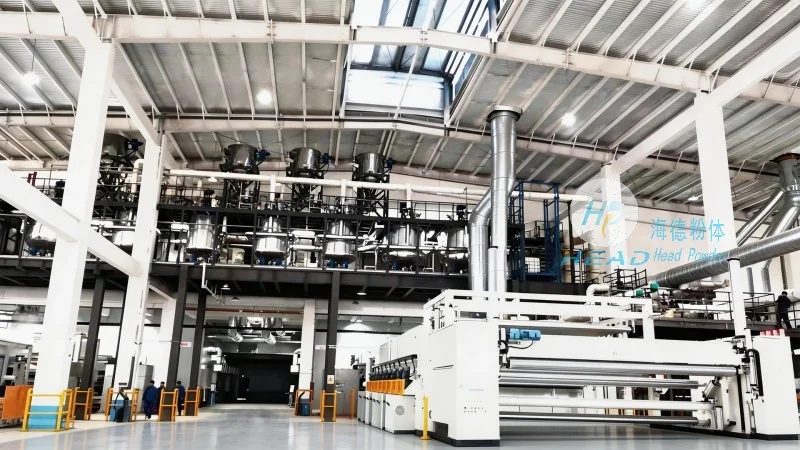
As the lithium-ion battery industry continues to grow, the demand for efficient and reliable material handling solutions is increasing. HeadPowder is at the forefront of developing advanced airflow conveying technologies that address emerging challenges in battery material processing. Future trends include the integration of IoT (Internet of Things) sensors for predictive maintenance, enhancing system efficiency and reducing operational costs. Additionally, the development of more energy-efficient air compressors and optimized pipeline designs will further improve the overall performance of the conveying systems. The company is also exploring the use of hybrid conveying systems that combine airflow with other methods, such as pneumatic and mechanical, to achieve higher throughput and better material handling capabilities. These advancements will support the scaling up of battery production and meet the growing global demand for electric vehicles and renewable energy storage solutions.

 Shandong Headpowder Engineering Co., Ltd.
 156-6277-7102(Manager Zhang)
  0531-83386006
  Zhangqiu District, Jinan City, Shandong Province, China
telephone
WeChatconsult
top