With more than 10‑year industry experience, Shandong Headpowder delivers full‑service pneumatic‑conveying systems and blowers, undertaking nationwide turn‑key powder‑handling projects.
Calcined ash, a byproduct of industrial processes such as coal combustion, presents unique handling challenges due to its fine particle size and abrasive nature. Efficient and reliable transportation of this material is essential for maintaining operational efficiency and environmental compliance. Pneumatic conveying technology has become a preferred solution for calcined ash handling, offering advantages over traditional methods like gravity or mechanical conveyors. This article explores the principles, practical applications, and evolving trends in calcined ash pneumatic conveying, with a focus on the expertise of Shandong HeadPowder Engineering Co., Ltd., a leading provider in the field.
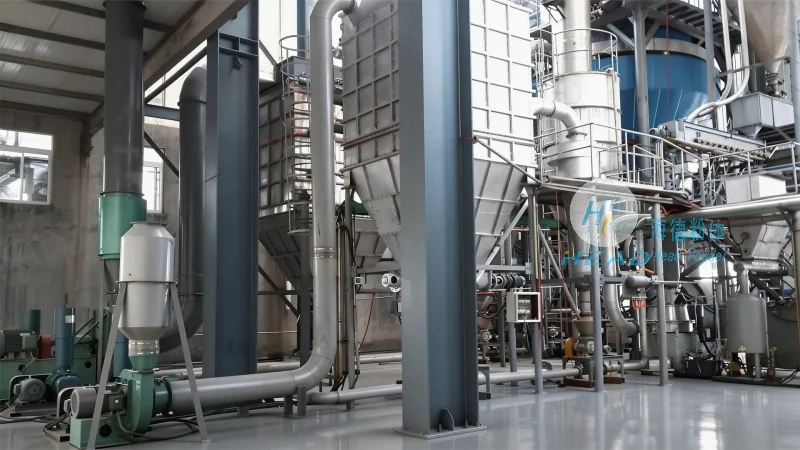
Pneumatic conveying relies on the movement of material particles suspended in a flowing gas stream, typically air or a mixture of air and other gases. The process is categorized into dilute phase and dense phase systems. Dilute phase systems use high-velocity air to transport particles in a dispersed state, suitable for long-distance and high-volume applications. Dense phase systems operate at lower velocities with higher gas-to-solid ratios, minimizing particle degradation and ensuring gentle handling of delicate materials like calcined ash. The choice between these systems depends on factors such as material characteristics, distance, and required flow rates.
For calcined ash, which often exhibits high temperature sensitivity and abrasive properties, dense phase conveying is often preferred. This method reduces the risk of particle attrition and maintains the material's integrity during transport. The conveying process typically involves a hopper for material storage, a feeder to control flow rate, a conveying line, and a receiver for material discharge. System design must account for the ash's specific gravity, moisture content, and particle size distribution to optimize performance and prevent blockages or wear.
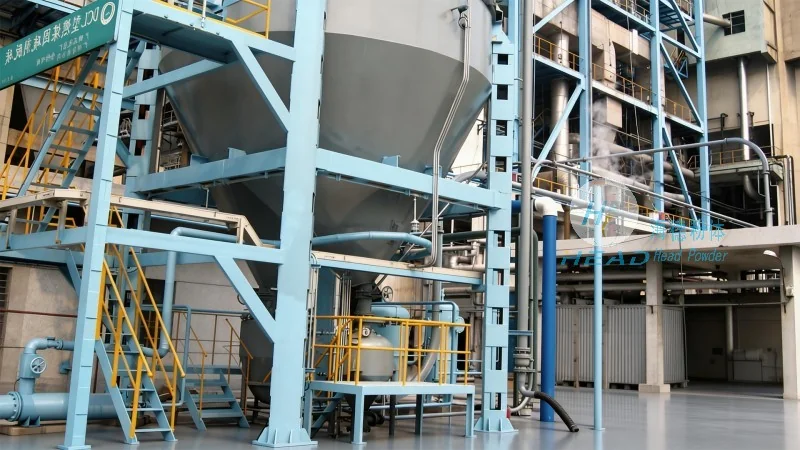
Calcined ash pneumatic conveying systems are widely utilized across sectors including power generation, cement production, and metallurgy. In power plants, these systems are critical for transporting fly ash from boilers to storage silos or for reusing ash as a raw material in cement manufacturing. The ability to handle large volumes efficiently reduces handling costs and minimizes environmental impact. In cement plants, the ash is often blended with clinker to produce supplementary cementitious materials, enhancing concrete strength and durability. The gentle handling provided by pneumatic conveyors ensures ash quality is preserved, which is vital for maintaining final cement properties.
In the metallurgical industry, calcined ash may be used as a flux or raw material in alloy production. Pneumatic conveying enables precise and controlled transport to processing units, where it can be further treated or incorporated into the production cycle. The flexibility of pneumatic systems allows integration with existing industrial infrastructure, making them a cost-effective solution for upgrading or expanding ash handling capabilities.
The field of calcined ash pneumatic conveying is continuously evolving, driven by the need for more efficient, reliable, and environmentally friendly solutions. Recent advancements focus on improving system efficiency, reducing energy consumption, and enhancing material handling capabilities. One key trend is the adoption of advanced control systems that optimize air pressure and flow rates in real-time, based on process parameters and material characteristics. These systems adapt to variations in ash feed rates, ensuring consistent conveying performance and minimizing energy waste.
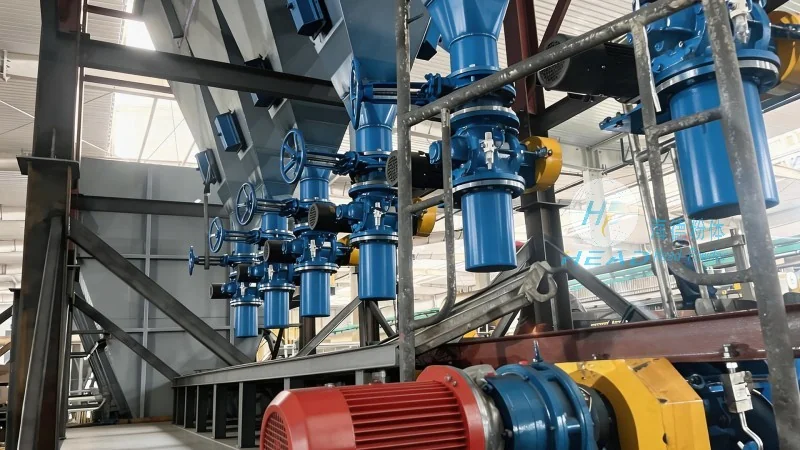
Another significant development is the integration of sensors and monitoring technologies into pneumatic conveying systems. Real-time monitoring of pressure, temperature, and flow rates allows operators to detect potential issues like blockages or inefficiencies promptly. This proactive approach reduces downtime and maintenance costs, improving overall system reliability. Additionally, the use of corrosion-resistant materials and advanced sealing technologies has extended the service life of conveying components, particularly in acidic or abrasive environments.
Future trends in calcined ash pneumatic conveying may include the adoption of sustainable energy sources, such as renewable gases or electric-powered systems, to reduce carbon footprint. The development of hybrid systems combining pneumatic conveying with other transport methods may also become more prevalent, offering tailored solutions for specific industrial needs. As industrial processes evolve, the demand for innovative and efficient calcined ash handling solutions will remain high, with companies like Shandong HeadPowder Engineering Co., Ltd. playing a pivotal role in advancing these technologies.

 Shandong Headpowder Engineering Co., Ltd.
 156-6277-7102(Manager Zhang)
  0531-83386006
  Zhangqiu District, Jinan City, Shandong Province, China
telephone
WeChatconsult
top