With more than 10‑year industry experience, Shandong Headpowder delivers full‑service pneumatic‑conveying systems and blowers, undertaking nationwide turn‑key powder‑handling projects.
Efficient and reliable transportation of polyethylene pellets is a critical aspect of industrial operations, particularly in manufacturing and processing facilities. The design and selection of pneumatic conveying systems for polyethylene pellets require careful consideration of material properties, flow characteristics, and operational requirements. This article provides an overview of the design calculation process and equipment selection for polyethylene pellet pneumatic conveying systems, highlighting the expertise of Shandong HeadPowder Engineering Co., Ltd. (hereinafter referred to as HeadPowder).
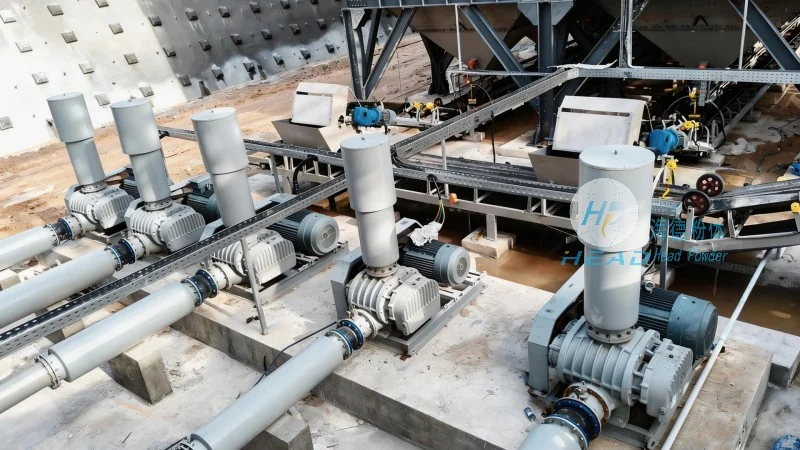
The design of a pneumatic conveying system for polyethylene pellets begins with a thorough analysis of the material's physical and chemical properties. Polyethylene pellets typically have a density ranging from 0.91 to 0.96 g/cm³, a particle size distribution that may vary from 1 to 10 mm, and a relatively low moisture content. These characteristics influence the selection of the conveying method—such as dilute-phase or dense-phase systems—and the necessary equipment. The design process involves several key steps, including determining the required conveying capacity, selecting the appropriate air velocity, calculating the pressure drop across the system, and evaluating the power consumption.
First, the required conveying capacity is determined based on the production rate and the desired throughput of the polyethylene pellets. This is typically expressed in terms of mass flow rate (kg/h or ton/h). The capacity calculation considers factors like the number of production lines, the batch size, and the downtime for maintenance. For example, a facility producing 50 tons of polyethylene pellets per hour may require a conveying system with a capacity of at least 50 ton/h to maintain continuous operation.
Next, the air velocity is selected based on the particle size and density of the polyethylene pellets. The minimum air velocity required to prevent particle deposition and ensure stable flow is calculated using the Ergun equation or other empirical formulas. For polyethylene pellets with an average diameter of 3 mm and a density of 0.94 g/cm³, the minimum air velocity might be around 15-20 m/s in a dilute-phase system. Higher velocities can be used to increase the conveying capacity but may lead to higher energy consumption and potential wear on the system components.
Following the air velocity selection, the pressure drop across the conveying system is calculated. This includes the pressure drop due to friction in the pipeline, the acceleration of particles, and the pressure loss at bends, valves, and other fittings. The total pressure drop is a critical parameter as it determines the required power of the air compressor and the overall system efficiency. For a typical polyethylene pellet pneumatic conveying system, the pressure drop may range from 0.5 to 2 bar, depending on the system length and configuration.
Finally, the power consumption of the system is estimated. This involves calculating the power required by the air compressor to generate the necessary pressure and flow rate. The power calculation considers the compressor efficiency, the system pressure drop, and the air flow rate. For a system with a pressure drop of 1.5 bar and an air flow rate of 10 m³/min, the power consumption might be around 15-20 kW, depending on the compressor type and efficiency.
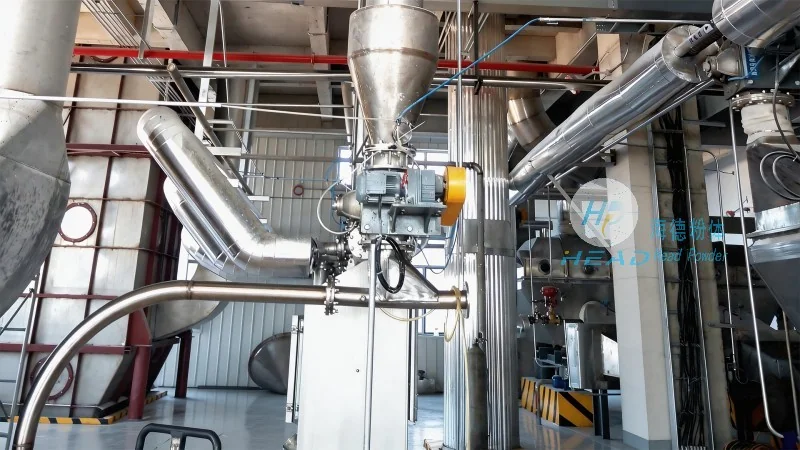
Once the design calculations are complete, the next step is to select the appropriate equipment for the pneumatic conveying system. The choice of equipment depends on the system type (dilute-phase or dense-phase), the conveying distance, and the material characteristics. Key equipment components include the material feeder, the air compressor, the conveying pipeline, the separation and filtration system, and the control system.
The material feeder is responsible for feeding the polyethylene pellets into the conveying system at a consistent rate. For polyethylene pellets, a screw feeder or a rotary valve feeder is commonly used. The screw feeder provides a continuous and controlled feed, while the rotary valve feeder offers a more precise control over the material flow. The selection of the feeder depends on the required conveying capacity and the particle size distribution of the pellets. For example, a screw feeder with a diameter of 150 mm and a length of 500 mm may be suitable for a system with a capacity of 50 ton/h.
The air compressor is the heart of the pneumatic conveying system, responsible for generating the necessary pressure and flow rate of air. The type of compressor selected depends on the system pressure and flow rate requirements. For polyethylene pellet systems, a rotary screw compressor or a centrifugal compressor is commonly used. The rotary screw compressor is preferred for its high efficiency and low noise level, while the centrifugal compressor is suitable for high flow rates and low pressure applications. The compressor's capacity is determined based on the required air flow rate and pressure, and its efficiency is a critical factor in reducing operational costs.
The conveying pipeline is a crucial component of the system, as it transports the polyethylene pellets and air mixture. The pipeline material is typically selected based on the material's compatibility with polyethylene and the system pressure. Stainless steel or PVC pipes are commonly used for polyethylene pellet conveying systems. The pipeline diameter is determined based on the air velocity and the conveying capacity. For example, a 100 mm diameter pipeline may be used for a system with a capacity of 50 ton/h and an air velocity of 18 m/s.
The separation and filtration system is essential for removing the polyethylene pellets from the air stream and preventing dust emissions. This system typically includes a cyclone separator, a bag filter, and a dust collector. The cyclone separator uses centrifugal force to separate the pellets from the air, while the bag filter captures the remaining fine particles. The dust collector is responsible for collecting the dust and preventing it from being released into the environment. The selection of the separation equipment depends on the system pressure and the required filtration efficiency. For example, a cyclone separator with a diameter of 500 mm and a bag filter with a filtration efficiency of 99.9% may be used for a system with a pressure drop of 1.5 bar.
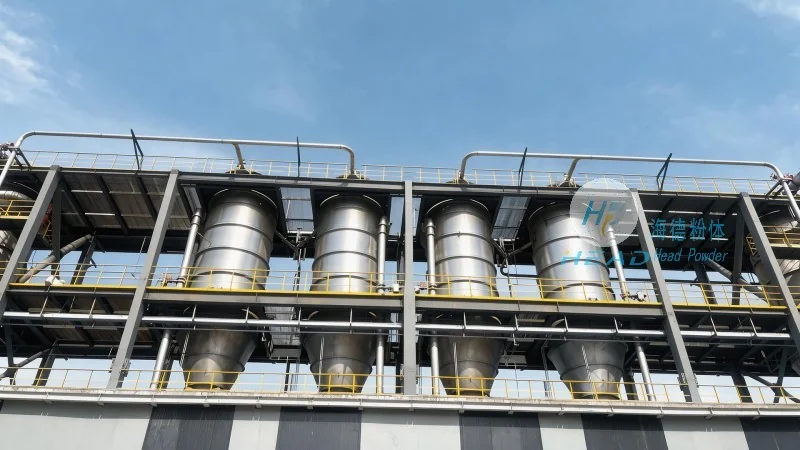
The control system is responsible for monitoring and controlling the operation of the pneumatic conveying system. This includes sensors for measuring the pressure, flow rate, and temperature, as well as controllers for adjusting the feeder speed and compressor output. The control system ensures that the system operates within the design parameters and prevents overloading or underloading. The selection of the control system depends on the system complexity and the required level of automation. For example, a programmable logic controller (PLC) may be used for a system with multiple feeders and compressors.
Pneumatic conveying systems for polyethylene pellets offer several advantages over traditional methods such as belt conveyors or bucket elevators. One of the main advantages is the ability to transport the material in a closed system, which reduces dust emissions and improves safety. The closed system also prevents contamination from external sources, which is critical for polyethylene pellets used in food or medical applications. Another advantage is the flexibility of the system, as it can be easily modified to accommodate changes in production capacity or material characteristics.
The efficiency of the pneumatic conveying system is also a significant advantage. The system can transport polyethylene pellets over long distances with minimal energy consumption compared to other methods. The pressure drop across the system is relatively low, which reduces the power required by the air compressor. Additionally, the system can be designed to operate at different speeds, allowing for adjustments in the conveying capacity as needed.
Reliability is another key advantage of polyethylene pellet pneumatic conveying systems. The system components are designed to withstand the abrasive nature of polyethylene pellets, which reduces the risk of equipment failure and downtime. The system also includes safety features such as pressure relief valves and emergency stop buttons, which ensure the safety of the operators and the facility. The maintenance of the system is relatively simple, as most components are easily accessible and can be replaced without major disassembly.
Cost-effectiveness is a critical factor in the selection of a pneumatic conveying system for polyethylene pellets. The initial investment for a pneumatic conveying system is higher than for traditional methods, but the long-term operational costs are lower due to the reduced energy consumption and lower maintenance requirements. The system also has a longer service life, which reduces the need for frequent replacements and repairs. Additionally, the system can be designed to minimize the use of space, which is beneficial for facilities with limited floor space.

 Shandong Headpowder Engineering Co., Ltd.
 156-6277-7102(Manager Zhang)
  0531-83386006
  Zhangqiu District, Jinan City, Shandong Province, China
telephone
WeChatconsult
top