

Design Considerations for Quartz Sand Powder Pneumatic Conveying System Solutions
When designing a pneumatic conveying system for quartz sand powder, several critical factors must be considered to ensure efficiency, reliability, and cost-effectiveness. The system's performance is directly influenced by the material's properties, such as particle size, moisture content, and flowability, as well as the operational environment and desired throughput. This article outlines key design considerations that professionals in the field should address when developing solutions for quartz sand powder handling.
HeadPowder: Your Expert Partner in Pneumatic Conveying Solutions
Shandong HeadPowder Engineering Co., Ltd., operating under the brand name HeadPowder, specializes in providing comprehensive engineering solutions for material handling systems. With a focus on quartz sand powder applications, our team of experienced engineers leverages advanced technology and industry best practices to deliver tailored systems that meet the unique requirements of each project. HeadPowder is committed to excellence in design, manufacturing, and installation, ensuring that our clients receive reliable and efficient pneumatic conveying solutions.
Key Design Considerations for Quartz Sand Powder Pneumatic Conveying
The success of a quartz sand powder pneumatic conveying system hinges on meticulous planning and attention to detail. The first step in the design process involves a thorough analysis of the material characteristics. Quartz sand particles typically have a specific particle size distribution, ranging from fine to coarse, which affects the system's air flow requirements and equipment selection. Moisture content is another critical factor, as excessive moisture can lead to caking or blockages in the conveying line, necessitating the use of drying equipment or specialized ductwork. Flowability, measured by parameters like angle of repose and bulk density, also plays a role in determining the system's capacity and the type of feeder required.
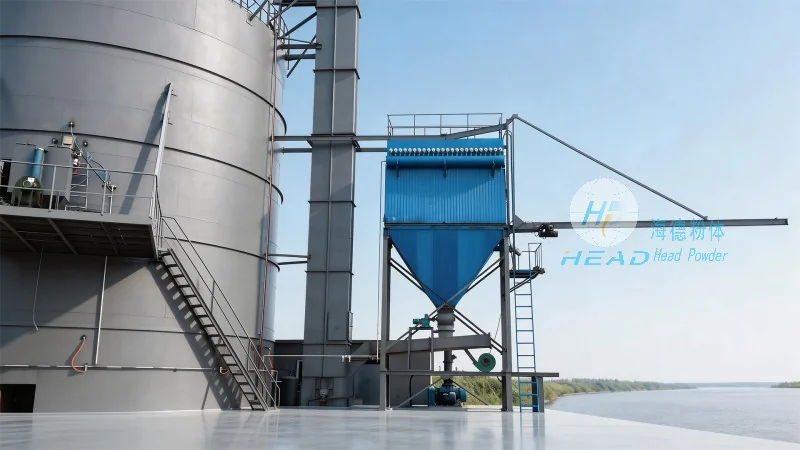
System layout and configuration are equally important. The choice between positive pressure and negative pressure systems depends on factors such as the distance to be covered, the number of transfer points, and the need for dust control. Positive pressure systems, where air is forced through the material, are often preferred for long-distance conveying or when multiple pick-up points are involved. Negative pressure systems, which draw material into the system, are suitable for shorter distances and applications where dust containment is a priority. The design must also consider the number of transfer points, the need for horizontal and vertical sections, and the integration of any auxiliary equipment, such as cyclones for separation or filters for air purification.
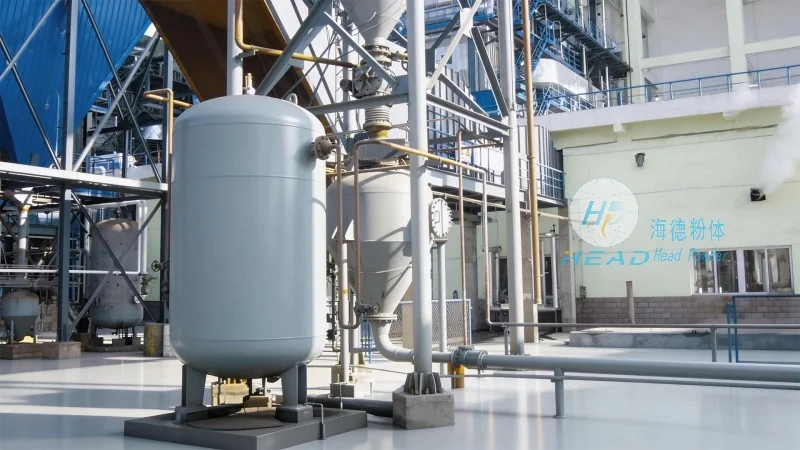
Equipment selection is a critical aspect of system design. The primary components include the feeder, which must handle the quartz sand powder's flow characteristics without causing blockages or uneven discharge. Common feeders for this application include rotary valves, star feeders, and pressure vessels, each with its own advantages and limitations. The conveying line itself, typically made of stainless steel or other corrosion-resistant materials, must be sized appropriately to maintain the desired air velocity, which is crucial for preventing particle deposition and ensuring smooth material flow. The air compressor or blower, which provides the necessary pressure or vacuum, must be selected based on the system's total pressure drop and required airflow rate. Additional components, such as pulse jet filters, cyclone separators, and dust collection systems, are essential for maintaining air quality and ensuring compliance with environmental regulations.
Control and monitoring systems are vital for optimizing system performance and preventing downtime. Modern pneumatic conveying systems often incorporate advanced control panels that allow operators to adjust parameters such as air pressure, flow rate, and feeder speed in real-time. Sensors and monitoring devices, including pressure transducers, flow meters, and level indicators, provide critical data on system performance, enabling early detection of issues like blockages or pressure drops. Automated control systems can also be integrated to maintain consistent material flow and adjust to changes in the material's properties, enhancing overall system reliability.
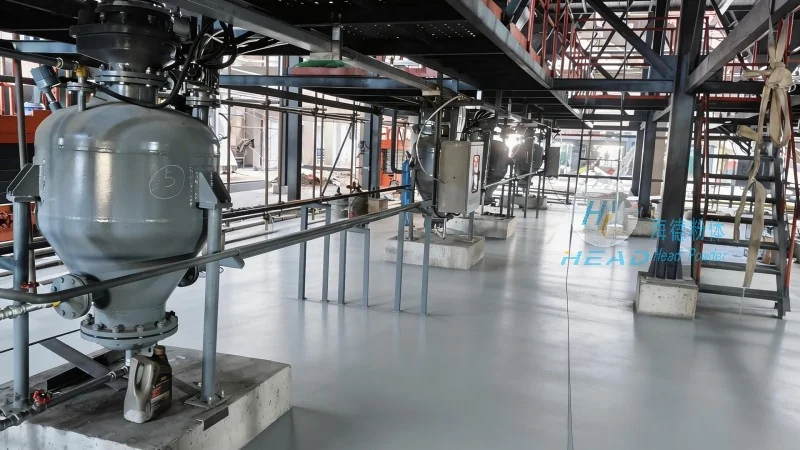
Installation and maintenance considerations are also essential for long-term system performance. Proper installation, including the alignment of ductwork and the secure mounting of equipment, is crucial to minimize vibration and ensure smooth operation. Regular maintenance, such as cleaning of filters, checking for wear on components, and lubricating moving parts, is necessary to prevent system failures and extend the equipment's lifespan. Training operators on proper system operation and maintenance procedures is also important to ensure that the system operates at peak efficiency and remains reliable over time.
Our Location and Commitment to Quality
HeadPowder, Shandong HeadPowder Engineering Co., Ltd., is headquartered in Shandong, China. Our facility is equipped with state-of-the-art design and manufacturing capabilities, allowing us to develop and produce high-quality pneumatic conveying systems tailored to the specific needs of quartz sand powder applications. Our commitment to quality is evident in our adherence to international standards and our focus on customer satisfaction. We work closely with clients to understand their requirements and provide customized solutions that meet their operational goals and budget constraints.