With more than 10‑year industry experience, Shandong Headpowder delivers full‑service pneumatic‑conveying systems and blowers, undertaking nationwide turn‑key powder‑handling projects.
Microsilica powder, also known as silica fume, is a fine powder with a high surface area, commonly used in construction, refractory materials, and other industrial applications. The efficient and reliable transportation of microsilica powder from production sites to processing or storage facilities is crucial for maintaining production efficiency and product quality. Among various conveying methods, pneumatic conveying stands out as a preferred solution due to its unique advantages and technical features. This article provides an in-depth look at the different microsilica powder conveying methods and highlights the key benefits and characteristics of pneumatic conveying systems.
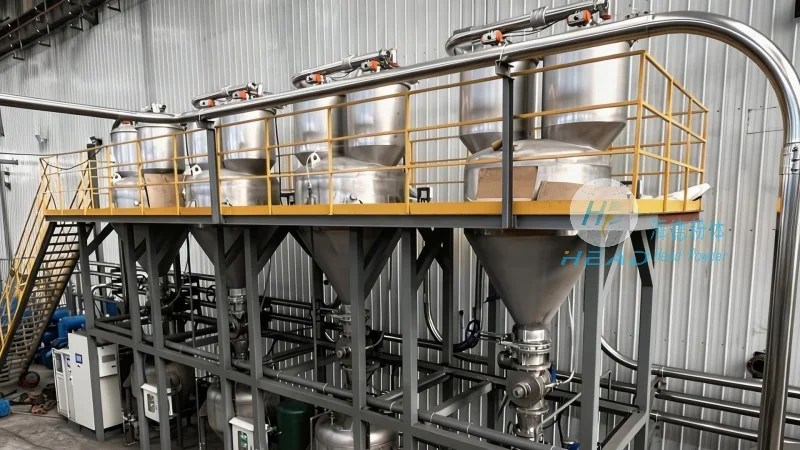
Shandong HeadPowder Engineering Co., Ltd., a leading manufacturer in the field, specializes in the design, production, and supply of advanced microsilica powder handling equipment. With years of experience and a commitment to innovation, the company offers tailored solutions that meet the specific needs of clients in various industries. The company's headquarters is located in Shandong, China, where it leverages local resources and expertise to develop high-quality products that enhance operational performance and safety.
When considering microsilica powder conveying, several methods are available, each with its own set of advantages and limitations. Traditional methods such as belt conveyors and screw conveyors are widely used but may face challenges with fine powders like microsilica, including dust generation, material degradation, and blockages. In contrast, pneumatic conveying systems offer a more effective and efficient solution by utilizing air to transport the powder through a pipeline network. This method is particularly suitable for microsilica powder due to its fine particle size and high moisture content, which can cause issues with other conveying technologies.
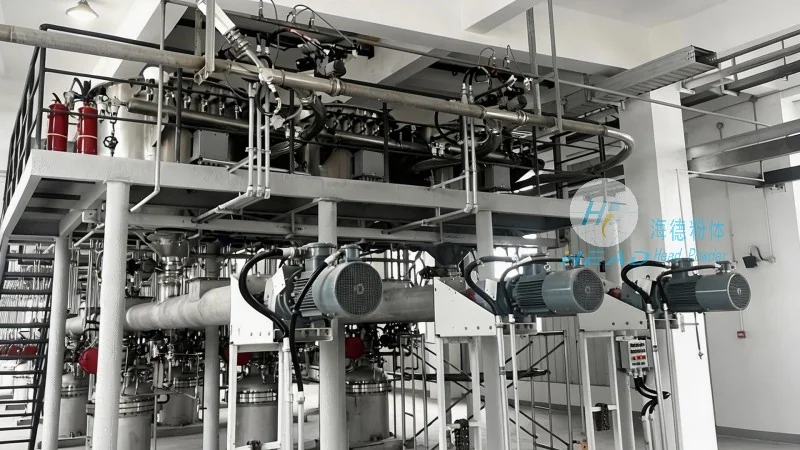
The primary advantage of pneumatic conveying for microsilica powder is its ability to handle fine powders without the need for mechanical components that can cause wear and tear or clogging. The system operates by creating a vacuum or pressure differential to move the powder through the pipeline, ensuring a continuous and controlled flow. This reduces the risk of dust exposure and improves overall safety in the workplace. Additionally, pneumatic conveying systems can be designed to handle varying flow rates and particle sizes, making them versatile for different production scales and applications.
Another key feature of pneumatic conveying is its energy efficiency compared to other methods. By using air as the transport medium, the system minimizes the need for mechanical components that consume significant energy. This not only reduces operational costs but also contributes to a more sustainable and environmentally friendly operation. The system's design allows for easy integration with existing production lines, minimizing downtime and ensuring a smooth transition to new conveying technologies.
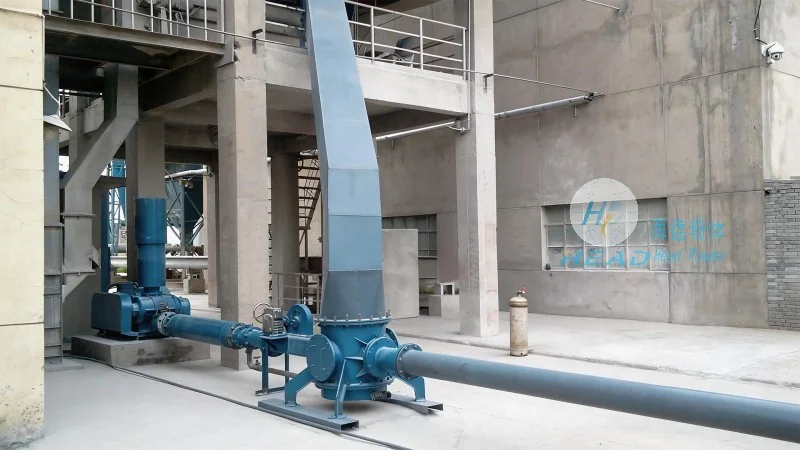
Shandong HeadPowder Engineering Co., Ltd. has developed advanced pneumatic conveying systems that incorporate state-of-the-art technology to enhance performance and reliability. The company's solutions include positive pressure, negative pressure, and hybrid systems, each tailored to specific operational requirements. For example, positive pressure systems are ideal for long-distance conveying and high-volume applications, while negative pressure systems are suitable for short-distance and low-volume operations. The company's engineers work closely with clients to assess their specific needs and recommend the most appropriate system configuration.
Furthermore, pneumatic conveying systems offer better control over the powder's moisture content and temperature, which are critical factors for maintaining product quality. The enclosed pipeline system prevents moisture absorption from the air, ensuring that the microsilica powder remains dry and free-flowing. This is particularly important for applications where the powder's properties, such as its reactivity and strength, are directly affected by moisture levels. The system's ability to maintain consistent moisture levels also reduces the risk of product degradation and ensures that the final product meets the required specifications.
From an operational perspective, pneumatic conveying systems provide greater flexibility and adaptability compared to traditional methods. The ability to adjust flow rates and pressure settings allows for real-time control over the conveying process, enabling quick responses to changes in production demand. This flexibility is especially valuable in dynamic industrial environments where production schedules may vary. Additionally, the system's compact design and modular components make it easier to install and maintain, reducing the overall cost of ownership.
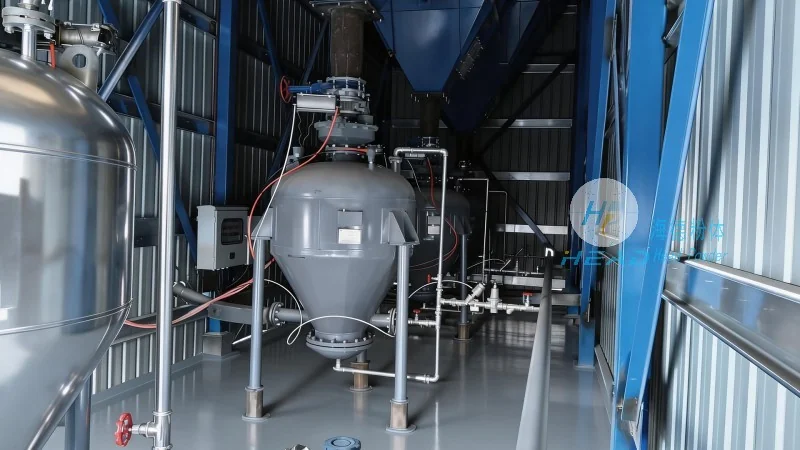
When evaluating microsilica powder conveying options, it is essential to consider factors such as the powder's properties, the required conveying distance, and the desired flow rate. Pneumatic conveying systems are particularly effective for microsilica powder due to their ability to handle fine particles and maintain product integrity. However, the choice of system (positive or negative pressure) and design (e.g., dilute or dense phase) will depend on the specific application and operational constraints. Shandong HeadPowder Engineering Co., Ltd. provides comprehensive technical support and consultation to help clients select the most suitable conveying system for their needs.
In conclusion, pneumatic conveying is a highly effective method for transporting microsilica powder, offering numerous advantages over traditional mechanical systems. The technology's ability to handle fine powders, maintain product quality, and improve operational efficiency makes it a preferred choice for many industries. With its commitment to innovation and quality, Shandong HeadPowder Engineering Co., Ltd. continues to provide advanced solutions that meet the evolving needs of the microsilica powder handling industry.

 Shandong Headpowder Engineering Co., Ltd.
 156-6277-7102(Manager Zhang)
  0531-83386006
  Zhangqiu District, Jinan City, Shandong Province, China
telephone
WeChatconsult
top