With more than 10‑year industry experience, Shandong Headpowder delivers full‑service pneumatic‑conveying systems and blowers, undertaking nationwide turn‑key powder‑handling projects.
Wood powder pneumatic conveying is a critical technology in material handling, particularly for transporting fine powders like wood flour. This method utilizes air as the medium to move particles through a pipeline system, offering advantages such as dust control, reduced material degradation, and the ability to handle materials in a closed environment. The process involves several key components and principles that work together to ensure efficient and reliable material transport.
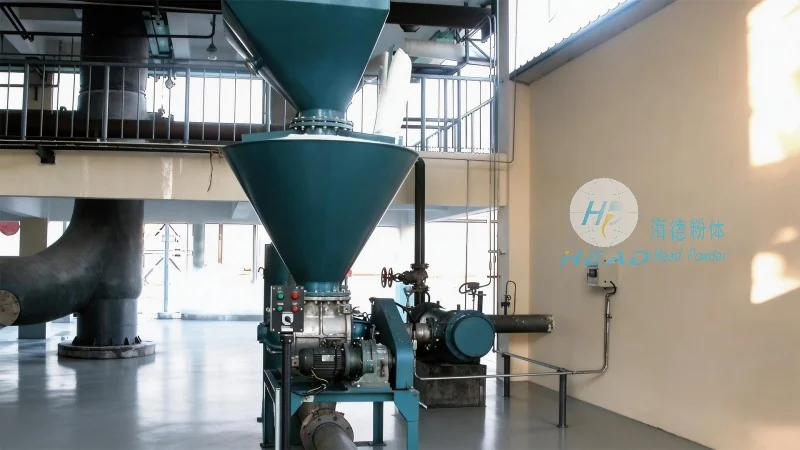
At Shandong HeadPowder Engineering Co., Ltd., we specialize in the design, manufacturing, and implementation of pneumatic conveying systems tailored for wood powder applications. Our expertise lies in understanding the unique properties of wood powders, including their moisture content, particle size distribution, and flow characteristics, which are essential for optimizing system performance. By leveraging advanced engineering solutions, we ensure that our systems meet the specific needs of our clients, whether for industrial production, research, or other applications.
The core components of a pneumatic conveying system for wood powder include the hopper, feeder, air compressor, pipeline, and receiver. Each component plays a vital role in the overall operation. The hopper serves as the storage vessel, holding the wood powder and providing a consistent feed to the system. The feeder, typically a rotary valve or screw feeder, controls the flow rate of the powder into the pipeline, ensuring a steady supply. The air compressor generates the necessary pressure or vacuum to move the material through the system. The pipeline, often made of stainless steel or other corrosion-resistant materials, transports the powder and air mixture. Finally, the receiver collects the conveyed material, separating it from the air before discharge.
For wood powder, the choice of materials for the pipeline and components is crucial due to the potential for moisture and abrasive properties. Stainless steel is commonly used for its durability and resistance to corrosion, while specialized coatings or linings may be applied to protect against wear from the fine particles. The design of the hopper and feeder also considers the tendency of wood powders to agglomerate or settle, ensuring consistent feeding and preventing blockages.
The fundamental principle behind pneumatic conveying is the use of air to create a flow of material. There are two main types of pneumatic conveying: pressure and vacuum systems. In pressure systems, the air compressor supplies compressed air to the pipeline, pushing the material forward. The air velocity must be sufficient to overcome the gravitational and frictional forces acting on the particles. Conversely, vacuum systems use a vacuum pump to create a negative pressure, drawing the material into the pipeline. Both systems rely on the balance between air velocity and particle size to maintain a stable flow.
For wood powder, the particle size and density affect the required air velocity and system pressure. Finer particles require higher air velocities to prevent settling or clogging, while larger particles may need lower velocities to avoid excessive wear on the system components. The system design must account for these variables to ensure efficient and safe operation. Additionally, the moisture content of the wood powder can impact the conveying efficiency, as higher moisture levels may lead to agglomeration and reduced flow rates.
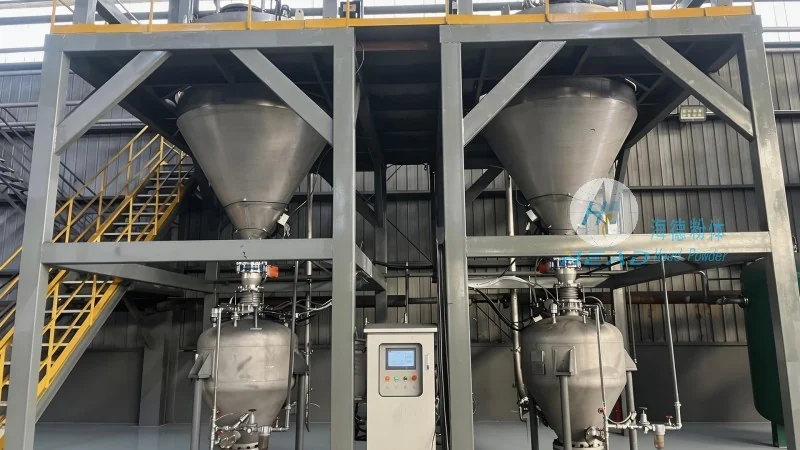
Compared to traditional mechanical conveying methods, pneumatic conveying offers several advantages for wood powder handling. One of the primary benefits is the ability to handle materials in a closed system, which minimizes dust emissions and improves workplace safety. This is particularly important for wood powders, which can be respiratory irritants if released into the air. The closed system also prevents contamination from external sources and maintains the quality of the material by protecting it from moisture and air exposure.
Another advantage is the reduced risk of material degradation. Mechanical conveying, such as screw conveyors, can cause friction and heat generation, which may affect the properties of wood powders, especially if they are used in applications requiring specific particle characteristics. Pneumatic conveying, by contrast, uses minimal mechanical contact, preserving the integrity of the powder. This is crucial for applications where the powder's size, shape, or chemical properties must remain unchanged.
Efficiency and flexibility are also key benefits. Pneumatic systems can transport wood powder over long distances and to multiple destinations, with the ability to change the route or destination without significant modifications. This flexibility is valuable in industrial settings where material flow needs to adapt to changing production schedules or product lines. Additionally, the system can handle varying flow rates, allowing for adjustments based on production demands.
Wood powder pneumatic conveying is widely used in various industries that require the handling of fine wood-based materials. In the woodworking industry, it is used for transporting sawdust, wood flour, and other wood waste products from processing equipment to storage or recycling facilities. The automotive and furniture manufacturing sectors utilize wood powders in composite materials, where consistent particle size and quality are essential for product performance.
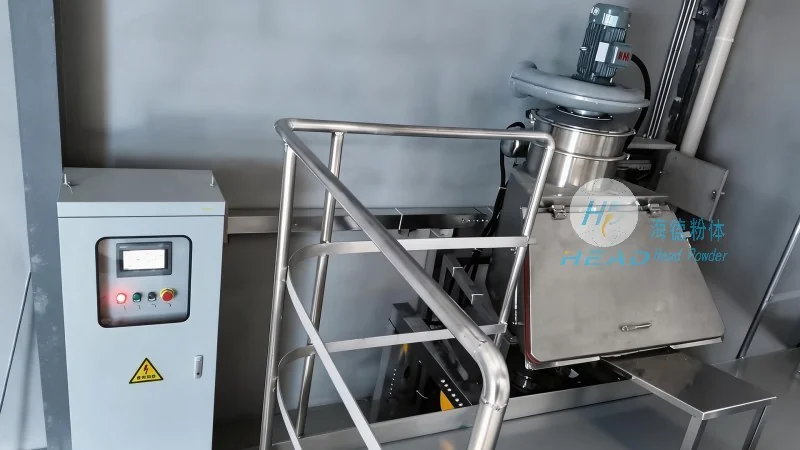
In the pharmaceutical and food industries, wood powders may be used as filler or binder in certain products, and pneumatic conveying ensures that these materials are handled hygienically and without contamination. The electronics industry also benefits from this technology when using wood-based composites in the production of components, as it maintains the material's purity and prevents dust accumulation in sensitive equipment.
Research and development facilities often employ pneumatic conveying systems for testing and processing wood powders, allowing for precise control over material flow and properties. The ability to handle small quantities and adjust parameters makes it ideal for laboratory-scale applications. Additionally, in the agricultural sector, wood powders may be used as animal feed supplements or soil amendments, and pneumatic conveying facilitates their transport from storage to processing or application sites.
Shandong HeadPowder Engineering Co., Ltd. offers customized pneumatic conveying solutions tailored to the specific requirements of each client. Our engineers work closely with clients to assess their material handling needs, process flow, and operational constraints to design a system that maximizes efficiency and minimizes costs. The customization may include adjustments to the system components, such as the type of air compressor, pipeline diameter, or feeding mechanism, based on the characteristics of the wood powder and the application.
Integration with existing systems is another key aspect of our services. Many industrial facilities already have established material handling infrastructure, and our systems can be designed to interface with these existing components, such as storage silos, processing equipment, or packaging lines. This integration ensures a seamless transition and minimizes downtime during installation. We also provide maintenance and support services to ensure the long-term reliability and performance of the conveying system.
Wood powder pneumatic conveying is a sophisticated and efficient method for handling fine wood-based materials, offering significant advantages over traditional mechanical systems. By leveraging the principles of air movement and particle transport, these systems provide a reliable, safe, and hygienic solution for various industrial applications. At Shandong HeadPowder Engineering Co., Ltd., we are committed to providing high-quality pneumatic conveying systems that meet the evolving needs of our clients, ensuring that wood powder handling remains efficient, effective, and sustainable.

 Shandong Headpowder Engineering Co., Ltd.
 156-6277-7102(Manager Zhang)
  0531-83386006
  Zhangqiu District, Jinan City, Shandong Province, China
telephone
WeChatconsult
top