With more than 10‑year industry experience, Shandong Headpowder delivers full‑service pneumatic‑conveying systems and blowers, undertaking nationwide turn‑key powder‑handling projects.
HeadPowder, a leading engineering company based in Shandong, China, specializes in advanced dust collection and material handling solutions. The company's core offerings include pulse jet dust collectors and pneumatic conveying systems, which are designed to enhance industrial efficiency and environmental compliance.
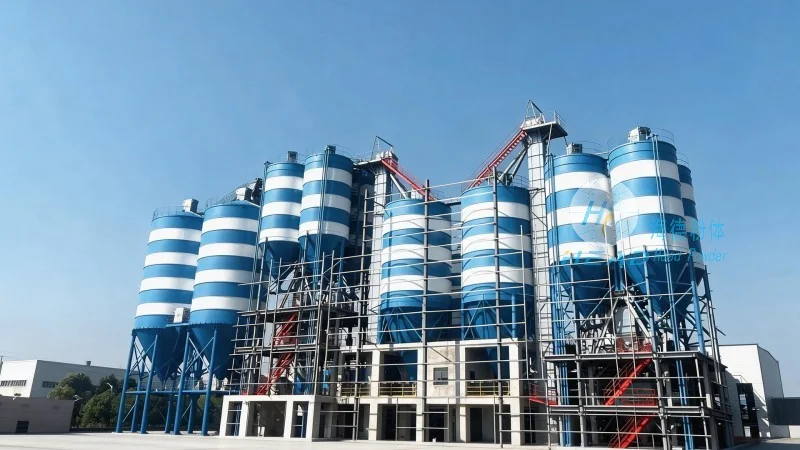
HeadPowder Engineering Co., Ltd. is a professional manufacturer and supplier dedicated to providing high-quality industrial equipment. With a focus on innovation and precision engineering, the company serves a wide range of industries, including manufacturing, mining, and chemical processing. HeadPowder's headquarters is located in Shandong, China, where the company operates its research and development facilities, ensuring continuous improvement of its products.
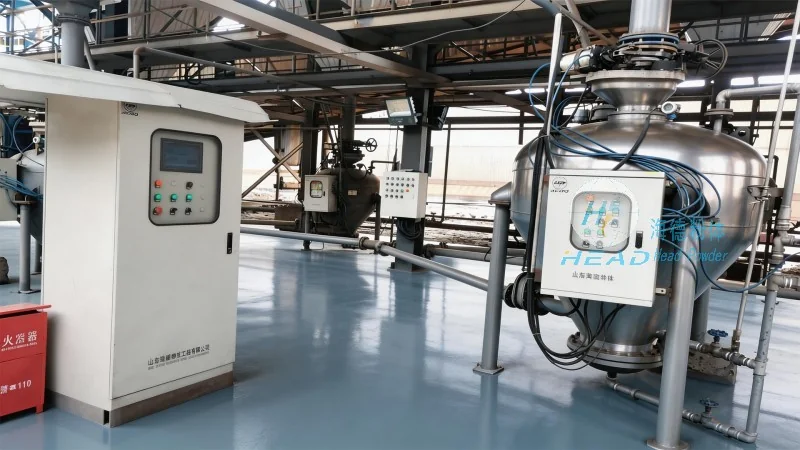
The pulse jet dust collector is a critical component in industrial air filtration systems, designed to remove particulate matter from exhaust gases. This system operates by using compressed air to create a high-velocity pulse that dislodges accumulated dust from the filter media. The collected dust is then discharged into a hopper for disposal. The structure of a pulse jet dust collector typically includes a housing, filter bags, a valve system, and a control unit. The housing is constructed from durable materials to withstand high temperatures and pressure, while the filter bags are made of synthetic fibers that offer high filtration efficiency and long service life. The valve system, often controlled by an automated timer or pressure sensor, ensures that the cleaning pulses are applied at optimal intervals, minimizing downtime and maximizing filtration performance. The control unit monitors the system's operation, adjusting the pulse frequency and pressure as needed to maintain consistent air quality. HeadPowder's pulse jet dust collectors are engineered to meet stringent environmental standards, making them suitable for applications in industries such as cement, steel, and food processing. The system's modular design allows for easy installation and maintenance, reducing operational costs and increasing overall reliability.
A pneumatic conveying system is a method of transporting bulk materials through a pipeline using air or other gas as the conveying medium. This technology is widely used in industries that require the efficient and safe transfer of powders, granules, and other particulate materials. The system typically consists of a material feed hopper, a conveying line, a dust collector, and a discharge outlet. The material is fed into the hopper, where it is then drawn into the conveying line by a vacuum or pressure source. The conveying medium (air or gas) is introduced at the appropriate velocity to ensure that the material is transported smoothly without clogging. The system's design includes features such as airlocks and cyclones to prevent material loss and maintain system efficiency. HeadPowder's pneumatic conveying systems are designed with flexibility in mind, allowing for both positive and negative pressure operations. This adaptability makes the systems suitable for a variety of applications, including material handling in pharmaceutical, food, and chemical industries. The components, such as the air compressor and filter, are selected to ensure low maintenance and high performance, contributing to the overall efficiency of the system. The modular construction of the conveying line enables easy expansion or modification to accommodate changing production needs, providing long-term value to the user.
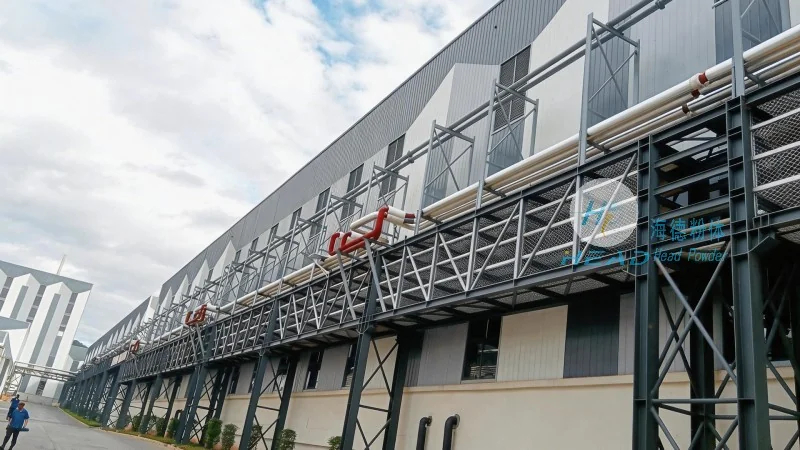
Both the pulse jet dust collector and the pneumatic conveying system rely on well-established technical principles to deliver superior performance. The pulse jet dust collector utilizes the principle of reverse air cleaning, where a high-pressure pulse is applied to the filter bags to dislodge dust, ensuring that the filtration efficiency remains high even under heavy loading conditions. This method is more effective than traditional shaking or rapping mechanisms, as it minimizes the risk of filter bag damage and reduces the frequency of cleaning cycles. The pneumatic conveying system, on the other hand, operates based on the principle of fluidization, where the material is suspended in the conveying medium and transported through the pipeline. This principle allows for the efficient transfer of materials over long distances with minimal energy consumption. The advantages of these systems include high efficiency, low maintenance, and the ability to handle a wide range of materials. HeadPowder's products are designed to maximize these advantages, ensuring that they meet the specific needs of each application. The company's commitment to quality and innovation has made its products a trusted choice in the industry, providing reliable solutions for dust control and material handling.

 Shandong Headpowder Engineering Co., Ltd.
 156-6277-7102(Manager Zhang)
  0531-83386006
  Zhangqiu District, Jinan City, Shandong Province, China
telephone
WeChatconsult
top