With more than 10‑year industry experience, Shandong Headpowder delivers full‑service pneumatic‑conveying systems and blowers, undertaking nationwide turn‑key powder‑handling projects.
Quicklime, also known as calcium oxide, is a vital industrial material used extensively in construction, chemical manufacturing, and environmental treatment. The efficient handling and transportation of quicklime are essential for maintaining production efficiency and ensuring product quality. Pneumatic conveying systems have become a highly effective solution for moving quicklime from storage to processing units. This article provides a detailed overview of the operation process and working principle of a quicklime material pneumatic conveying line, highlighting the expertise of Shandong HeadPowder Engineering Co., Ltd. in this field.
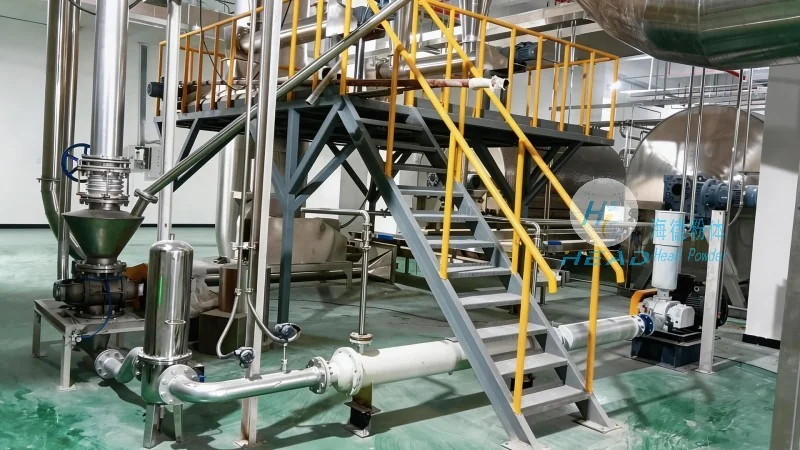
Pneumatic conveying, or air conveying, is a method of transporting bulk materials through a pipeline using compressed air. Unlike traditional mechanical conveying systems that rely on belts or buckets, pneumatic systems utilize air pressure to move materials. This technology is particularly suitable for handling dusty, light, or abrasive materials like quicklime, as it minimizes material degradation and reduces contamination risks. The system typically includes a hopper, a rotary airlock, a conveying line, and a receiver, all connected to a compressed air source.
Shandong HeadPowder Engineering Co., Ltd., a leading manufacturer based in China, specializes in designing and manufacturing customized pneumatic conveying solutions for diverse industrial applications. With years of experience, HeadPowder has developed advanced systems that optimize quicklime handling while ensuring safety, efficiency, and durability. The company's engineers collaborate closely with clients to understand specific requirements—such as material characteristics, production capacity, and operational environment—to design a tailored solution that meets their needs.
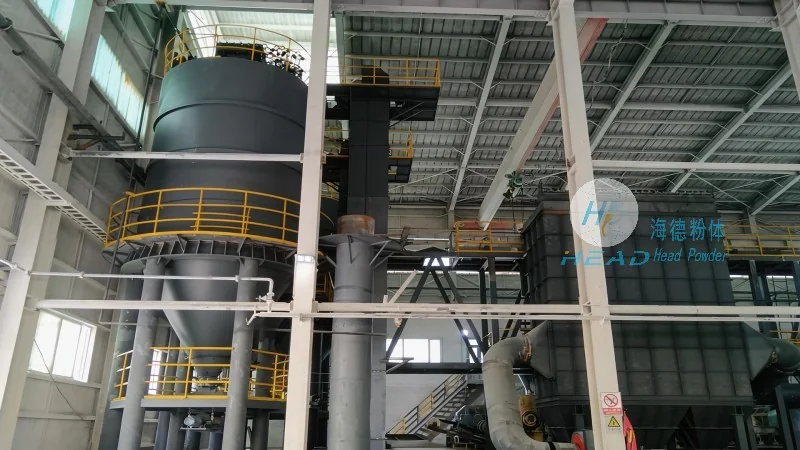
The operation of a quicklime pneumatic conveying line involves sequential steps for smooth, continuous material transfer. The process starts with loading quicklime into the hopper. The hopper is equipped with a feeder (e.g., rotary airlock or vibratory feeder) to control material flow into the conveying line. Once material is in the hopper, the rotary airlock opens, allowing controlled quicklime entry into the pipeline. Simultaneously, compressed air is introduced, creating a pressure differential that propels the material forward. The material travels through the conveying line (including bends, elbows, or vertical sections) to reach the receiver or processing unit. At the receiving end, material is discharged into a storage bin or directly into the next step. The system operates continuously, with compressed air maintaining a consistent flow rate for uninterrupted transport.
The working principle of a pneumatic conveying system for quicklime is based on fluidization and air pressure. Compressed air is introduced into the pipeline at a specific pressure, creating an air flow that lifts and transports quicklime particles. Air velocity is critical: it must be high enough to overcome gravitational force but not cause excessive wear on the pipeline or components. The system uses positive pressure (air pushed into the line) and negative pressure (air drawn out) to move material. In a typical positive pressure system, air is blown into the pipeline, pushing material forward. The receiver is vented to the atmosphere to allow air escape, preventing pressure buildup. The rotary airlock at hopper and receiver ends controls material flow, preventing backflow and maintaining system pressure.
Several key components are integral to the system's proper function. The hopper serves as the storage container, designed with a sloped bottom to facilitate material flow into the feeder. The rotary airlock, at inlet/outlet, acts as a valve to control material flow, using a rotating drum with slots to allow material passage while preventing air escape. The conveying line is typically made of stainless steel or corrosion-resistant materials to withstand quicklime's abrasiveness and compressed air effects. Bends and elbows guide material without blockages or excessive pressure drops. The receiver is the final container, often equipped with a discharge valve or hopper for further processing.
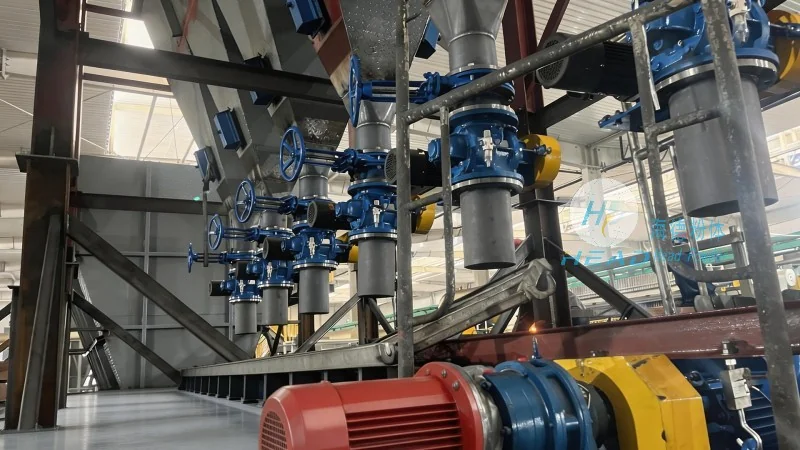
Implementing a pneumatic conveying system for quicklime offers numerous advantages over traditional methods. First, it provides a dust-free, enclosed environment, reducing respiratory risks from quicklime dust and enhancing workplace safety. Second, it minimizes material degradation, preserving quicklime quality and reactivity—critical for applications like cement production or chemical synthesis. Third, the system is flexible and easily integrated into existing production lines, scalable to accommodate capacity changes or varying material characteristics. Fourth, it is energy-efficient compared to mechanical systems, using the plant's existing air supply. Finally, the enclosed design reduces spillage and contamination, maintaining a clean production environment.
Shandong HeadPowder Engineering Co., Ltd. continues to innovate in pneumatic conveying technology, providing reliable and efficient solutions for quicklime handling. By leveraging their expertise and advanced engineering, HeadPowder ensures systems meet high performance, safety, and durability standards. The company's commitment to customer satisfaction and quality has made them a trusted partner for industries relying on quicklime materials. As demand for efficient material handling grows, HeadPowder remains at the forefront of developing cutting-edge systems that optimize production processes and enhance operational efficiency.

 Shandong Headpowder Engineering Co., Ltd.
 156-6277-7102(Manager Zhang)
  0531-83386006
  Zhangqiu District, Jinan City, Shandong Province, China
telephone
WeChatconsult
top