With more than 10‑year industry experience, Shandong Headpowder delivers full‑service pneumatic‑conveying systems and blowers, undertaking nationwide turn‑key powder‑handling projects.
The system is designed for the efficient and reliable transportation of ammonium bicarbonate, a widely used chemical in agricultural and industrial applications. As a key component in fertilizer production and other processes, the pneumatic conveying system ensures that the material is moved from storage to processing units with minimal loss and optimal control. This technology is particularly valuable for handling materials that are prone to dust, require low pressure operation, and need to maintain product integrity throughout the transfer process.
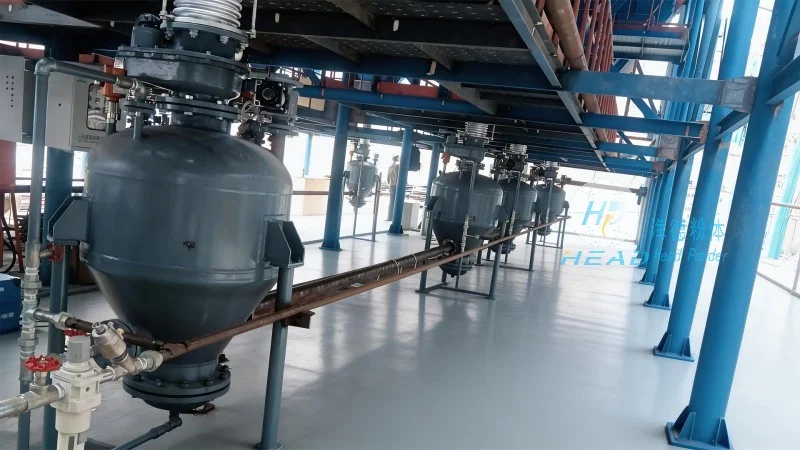
HeadPowder, a leading engineering firm based in Shandong, China, specializes in the design, manufacturing, and installation of advanced material handling systems. With years of experience in the industry, the company has developed a reputation for delivering high-quality solutions tailored to the specific needs of clients. The company’s headquarters is located in Shandong, China, and it serves a diverse clientele across various sectors, including agriculture, chemical manufacturing, and food processing.
The pneumatic conveying system for ammonium bicarbonate typically consists of several key components, each playing a critical role in the overall operation. These components include a hopper for material storage, a feeder to control the flow rate, a conveying line (often with multiple sections), a receiver for the discharged material, and a blower or air compressor to generate the necessary airflow. Additionally, the system may incorporate filters, cyclones, and other equipment to ensure that the material is conveyed without excessive wear on the system components and to maintain a clean working environment.
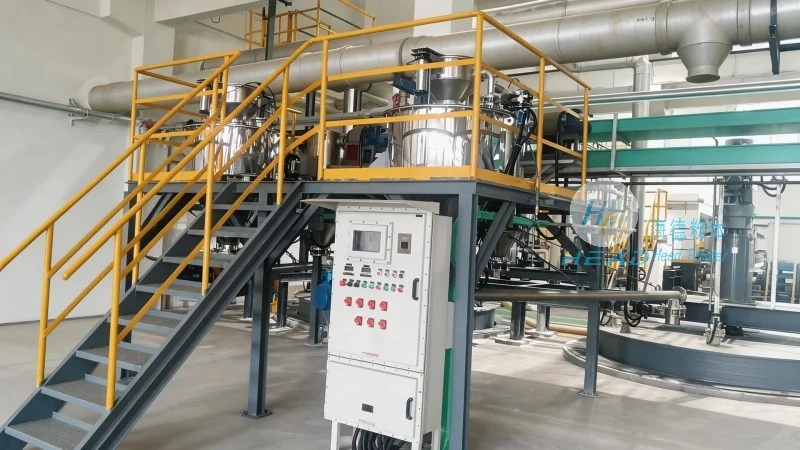
The operation of the ammonium bicarbonate pneumatic conveying system begins with the loading of the material into the hopper. The feeder then regulates the flow of the material into the conveying line, ensuring a consistent and controlled feed rate. The blower generates a stream of air that is introduced into the conveying line, creating a low-pressure environment that pulls the material particles along with the air stream. As the material travels through the system, it is transported to the receiver, where the air and material are separated. The separated material is then collected for further processing, while the air is either filtered and recirculated or vented to the atmosphere, depending on the system design and safety requirements.
The core principle of the pneumatic conveying system is the use of air to transport solid particles. In this system, the ammonium bicarbonate particles are entrained in the air stream and carried through the conveying line. The air velocity is maintained at a level that is sufficient to keep the particles suspended but not so high as to cause excessive pressure drop or wear on the system components. The system operates under low pressure, which is ideal for handling materials that are sensitive to high pressures or that require gentle handling to prevent degradation. The separation of material and air at the receiver is achieved through a combination of gravity and centrifugal forces, where the heavier material settles out and the lighter air is discharged.
There are several advantages to using a pneumatic conveying system for ammonium bicarbonate. First, the system provides a continuous and automated material transfer process, reducing the need for manual handling and minimizing the risk of human error. Second, the low-pressure operation ensures that the material is handled gently, preserving its quality and preventing degradation. Third, the system is compact and can be integrated into existing facilities, making it a cost-effective solution for many applications. Finally, the system is highly flexible, allowing for changes in material flow rates and transfer distances without significant modifications to the equipment.
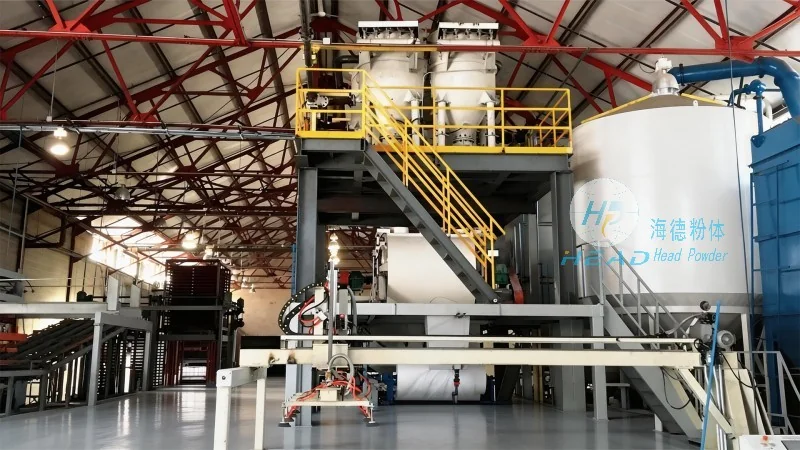
The ammonium bicarbonate pneumatic conveying system is used in a variety of industries, including agriculture, where it is used to transport fertilizer to storage and processing facilities. It is also used in chemical manufacturing, where it is used to move raw materials to reactors and other processing equipment. Additionally, the system is used in food processing and other industries where ammonium bicarbonate is used as a leavening agent or other additive. The system is particularly well-suited for applications where the material needs to be handled in a clean and dust-free environment, as the system is designed to minimize dust generation and maintain a clean working space.
Like any industrial system, the ammonium bicarbonate pneumatic conveying system requires regular maintenance to ensure optimal performance and safety. Regular inspections of the hopper, feeder, and conveying line are necessary to check for wear and tear, and to ensure that the system is operating within the recommended parameters. The blower and air compressor should be checked regularly for proper operation and to ensure that they are not overheating. The filters and cyclones should be cleaned or replaced as needed to maintain efficient material separation and to prevent dust buildup. Safety considerations are also important, as the system operates with pressurized air and moving parts. Proper training for operators and regular safety checks are essential to prevent accidents and ensure that the system is used safely.

 Shandong Headpowder Engineering Co., Ltd.
 156-6277-7102(Manager Zhang)
  0531-83386006
  Zhangqiu District, Jinan City, Shandong Province, China
telephone
WeChatconsult
top