With more than 10‑year industry experience, Shandong Headpowder delivers full‑service pneumatic‑conveying systems and blowers, undertaking nationwide turn‑key powder‑handling projects.
The system designed by Shandong HeadPowder Engineering Co., Ltd. is specifically engineered for the efficient and safe transportation of sodium hydroxide (NaOH) material. As a leading provider in the field, HeadPowder specializes in creating customized pneumatic conveying solutions tailored to the unique demands of industrial applications. This system integrates advanced technology and robust engineering to ensure reliable operation, minimal downtime, and optimal material handling performance.
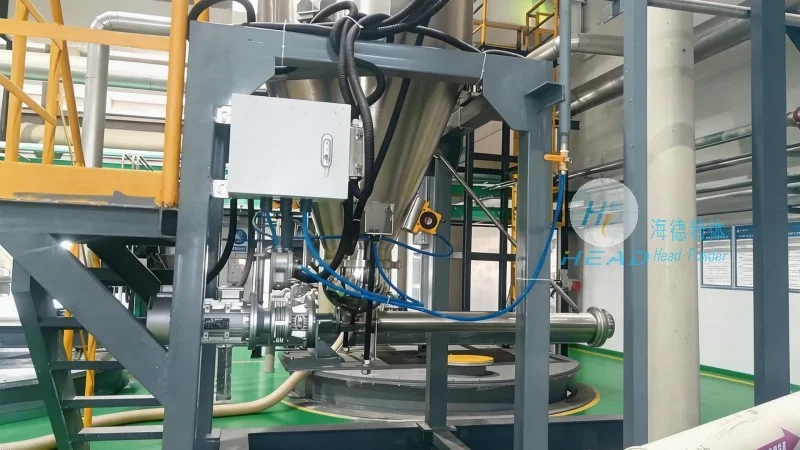
The pneumatic conveying system for sodium hydroxide consists of several critical components that work in tandem to facilitate material transport. These include a material hopper for storage and feeding, a rotary valve or feeder to control the flow rate, a conveying line (often equipped with pressure vessels or ducts), a dust collection system, and a receiving hopper or silo. Each component plays a vital role in maintaining the system's efficiency and safety. The material hopper ensures a consistent supply of sodium hydroxide, while the feeder regulates the amount of material entering the conveying line. The conveying line, typically made of corrosion-resistant materials such as stainless steel, is designed to withstand the chemical properties of sodium hydroxide and prevent degradation over time. The dust collection system is essential for maintaining air quality and complying with environmental regulations, as sodium hydroxide dust can be hazardous if inhaled. The receiving hopper collects the material at the destination, ensuring a smooth transition to downstream processes.
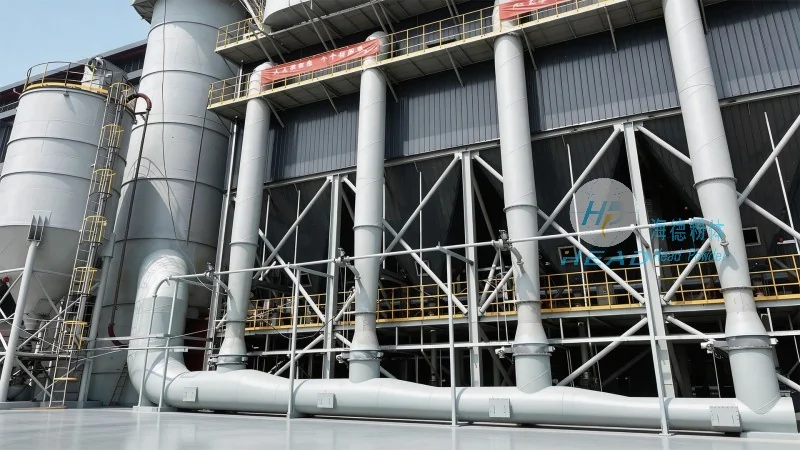
The operation of the sodium hydroxide pneumatic conveying system follows a systematic process to ensure efficient material transport. The process begins with the loading of sodium hydroxide into the material hopper. The rotary valve or feeder then starts, controlling the flow rate based on the system's requirements. Compressed air or another gas is introduced into the conveying line, creating a flow that pulls the material through the system. The material is carried by the air stream, moving from the hopper to the receiving hopper at the destination. The system continuously monitors pressure and flow rates to maintain optimal performance. If any issues arise, such as blockages or pressure drops, the system's control mechanisms automatically adjust or alert operators for intervention. This step-by-step process ensures that the sodium hydroxide is transported safely and efficiently, minimizing the risk of spills or material loss.
The working principle of the pneumatic conveying system relies on the fundamental concept of fluidization and pneumatic transport. When compressed air is introduced into the conveying line, it creates a low-pressure environment that draws the sodium hydroxide particles into the air stream. The air flow velocity is carefully controlled to ensure that the material is fully suspended and transported without causing excessive wear on the system components. The system uses either a dilute-phase or dense-phase conveying method, depending on the specific application and material characteristics. Dilute-phase conveying is suitable for longer distances and lower material loads, while dense-phase conveying is ideal for shorter distances and higher material concentrations. The choice of method depends on factors such as the material's density, particle size, and the required throughput. The system's design ensures that the air and material mixture is handled smoothly, with minimal separation of particles and air, thus maintaining the integrity of the sodium hydroxide during transport.
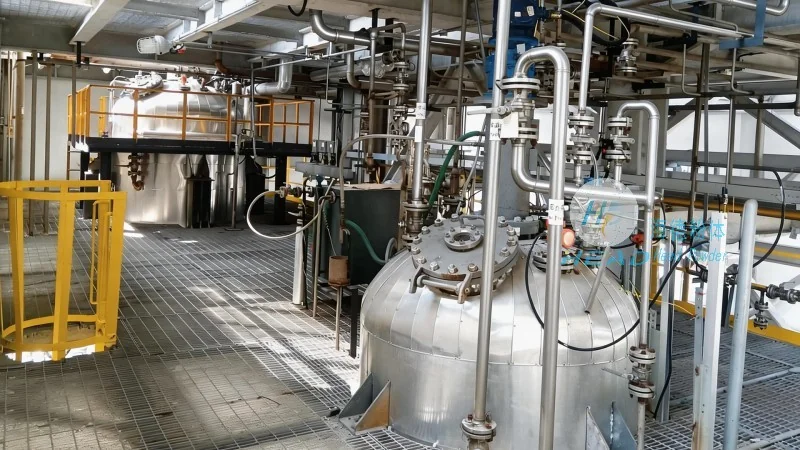
Implementing a pneumatic conveying system for sodium hydroxide offers numerous advantages for industrial operations. One of the primary benefits is the reduction in manual handling, which minimizes the risk of accidents and exposure to hazardous materials. The system also enhances operational efficiency by automating the material transport process, reducing downtime and increasing production throughput. Additionally, the use of corrosion-resistant materials ensures the system's longevity and reduces maintenance costs over time. The dust collection system not only improves air quality but also helps in maintaining compliance with environmental regulations, which is crucial for industrial facilities. Furthermore, the system's flexibility allows for easy integration with existing production lines, making it a cost-effective solution for upgrading or expanding material handling capabilities. By leveraging advanced engineering and technology, the system provides a reliable and sustainable method for transporting sodium hydroxide, contributing to overall operational excellence.

 Shandong Headpowder Engineering Co., Ltd.
 156-6277-7102(Manager Zhang)
  0531-83386006
  Zhangqiu District, Jinan City, Shandong Province, China
telephone
WeChatconsult
top