With more than 10‑year industry experience, Shandong Headpowder delivers full‑service pneumatic‑conveying systems and blowers, undertaking nationwide turn‑key powder‑handling projects.
Phenolic resin, a critical material in numerous industrial sectors, often requires specialized material handling solutions for its transportation. Pneumatic conveying systems have become a preferred method for moving phenolic resin due to their ability to transport bulk materials in a dust-free, controlled environment. This article explores the operating process and working principle of pneumatic conveying systems designed for phenolic resin materials, emphasizing technical efficiency and operational reliability.
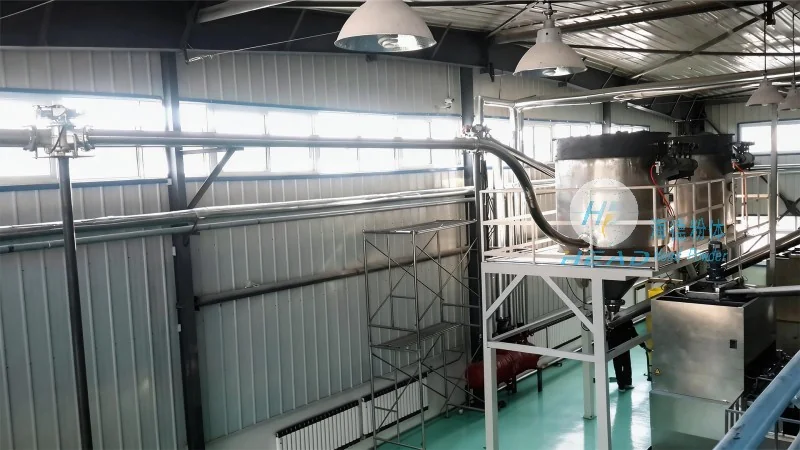
Pneumatic conveying, or air-based material transport, utilizes compressed air to move solid particles through a pipeline. For phenolic resin—which is typically a fine powder or granular substance—this method offers distinct advantages over mechanical systems. These include reduced dust generation, lower maintenance costs, and the capacity to handle materials over extended distances. The system is particularly suited for applications where hygiene, safety, and material integrity are paramount, such as in the production of composites, adhesives, and other phenolic-based products.
The pneumatic conveying system for phenolic resin materials comprises several essential components that collaborate to ensure efficient material transport. These include a material feed hopper, which stores the phenolic resin and regulates the discharge rate; an air compressor, which generates the necessary pressure to move the material; a conveying line, typically constructed from stainless steel or other corrosion-resistant materials to accommodate the chemical properties of phenolic resin; and a discharge device, which delivers the material to the target location. The system may also feature filters and cyclones to separate air from the material and prevent dust accumulation, along with control valves to adjust air pressure and flow rates.
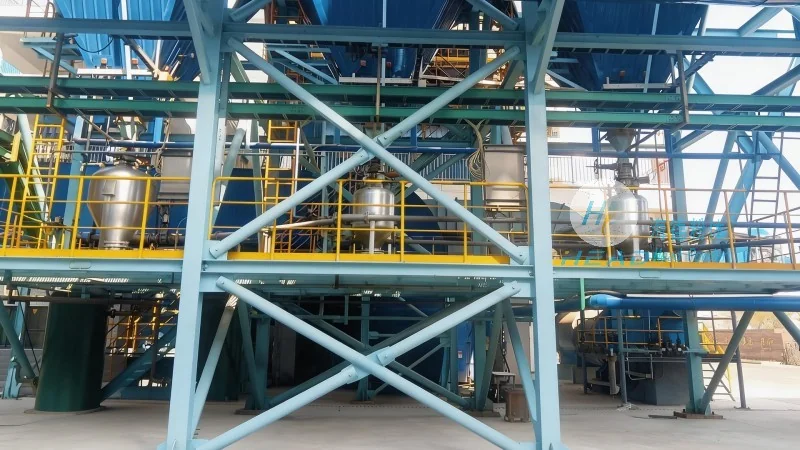
The operation of the pneumatic conveying system for phenolic resin materials follows a systematic workflow to ensure consistent and reliable material transport. The process initiates with the loading of phenolic resin into the feed hopper. The hopper is equipped with a feeder, such as a rotary valve or screw conveyor, which controls the material discharge rate. Simultaneously, the air compressor activates and produces compressed air, which is then directed into the conveying line. The compressed air creates a pressure differential that draws the phenolic resin particles into the pipeline. As the material travels through the conveying line, it is propelled by the air flow toward the discharge point. The system may employ different conveying modes, such as dilute phase or dense phase, based on material characteristics and distance requirements. Dilute phase conveying is ideal for short distances and fine powders, while dense phase conveying is used for longer distances and bulkier materials, offering better flow control and reducing blockage risks.
The working principle of the pneumatic conveying system for phenolic resin materials centers on the interaction between solid particles and air flow. In dilute phase conveying, the material is suspended in the air stream as a dilute mixture. The air velocity is maintained above the minimum fluidization velocity to keep particles in suspension, preventing settlement and blockages. The pressure drop along the conveying line is a critical factor, as it dictates the energy required for transport. The system is optimized to minimize pressure drop by selecting appropriate pipe diameters and air velocities, ensuring efficient material movement with minimal energy consumption. In dense phase conveying, the material is conveyed in a slurry-like state, with particles more closely packed and moving in plug flow. This mode is more energy-intensive but provides better control over material flow and is suitable for longer distances and bulkier materials. The working principle involves higher air pressures and lower velocities to maintain the dense phase, ensuring particles remain in contact with pipe walls and reducing segregation or degradation risks.
Pneumatic conveying systems offer several benefits when handling phenolic resin materials. A primary advantage is the dust-free operation, which is vital for maintaining product quality and ensuring workplace safety. Unlike mechanical systems, which generate dust and require additional control measures, pneumatic conveying minimizes dust, reducing respiratory risks and contamination. Another benefit is reduced maintenance, as the system has fewer moving parts (e.g., belts or chains) prone to wear. The system is also flexible, allowing adjustments to flow rates and distances without major modifications. Additionally, it can handle a wide range of material characteristics, including fine powders and sticky substances, making it suitable for diverse phenolic resin applications.
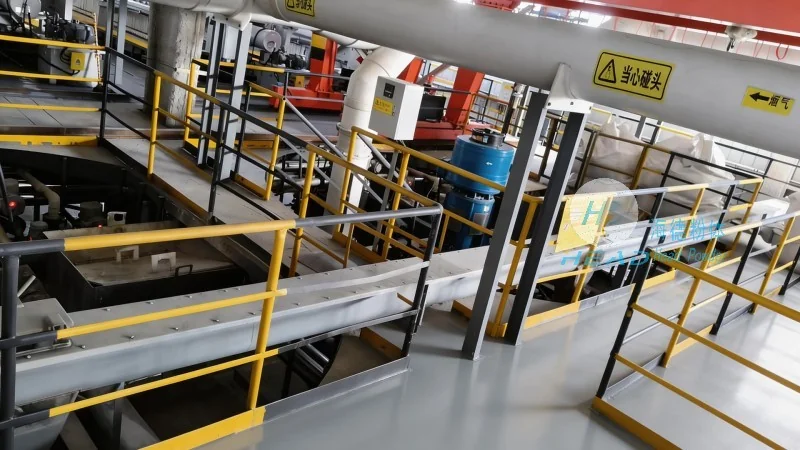
The pneumatic conveying system for phenolic resin materials is widely utilized in industrial applications, including phenolic composite manufacturing, adhesive production, and coating applications. In composite production, the system transports phenolic resin powders to mixing and molding equipment, ensuring consistent material feed. In adhesive manufacturing, it delivers resin to mixing tanks, where it is combined with other ingredients to form the final product. In coating processes, the system moves resin to coating lines, applying it to substrates for protective or decorative finishes. The system's ability to handle fine powders and preserve material integrity makes it an ideal choice for these applications, supporting high-quality end products.
In summary, the pneumatic conveying system for phenolic resin materials is a highly efficient and reliable solution for material handling in industrial settings. The operating process, which involves loading, air compression, and material transport, is engineered to optimize flow and minimize energy use. The working principle, based on particle-air interaction, ensures consistent and controlled transport. The advantages of this system—including dust-free operation, low maintenance, and flexibility—make it a preferred choice for phenolic resin handling. As demand for phenolic resin products grows, the use of pneumatic conveying systems will remain essential for efficient and safe material transport across various industrial sectors. Shandong HeadPowder Engineering Co., Ltd., a leading provider of material handling solutions, specializes in designing and manufacturing such systems tailored to client needs, with headquarters in Shandong, China.

 Shandong Headpowder Engineering Co., Ltd.
 156-6277-7102(Manager Zhang)
  0531-83386006
  Zhangqiu District, Jinan City, Shandong Province, China
telephone
WeChatconsult
top