With more than 10‑year industry experience, Shandong Headpowder delivers full‑service pneumatic‑conveying systems and blowers, undertaking nationwide turn‑key powder‑handling projects.
HeadPowder, a leading engineering company based in Shandong, China, specializes in the design and implementation of advanced pneumatic conveying systems tailored for the handling of lithium-ion battery raw material powders. This article provides a detailed overview of the operational process and underlying principles of such systems, highlighting the technical aspects and practical applications essential for efficient material transport in the battery manufacturing industry.
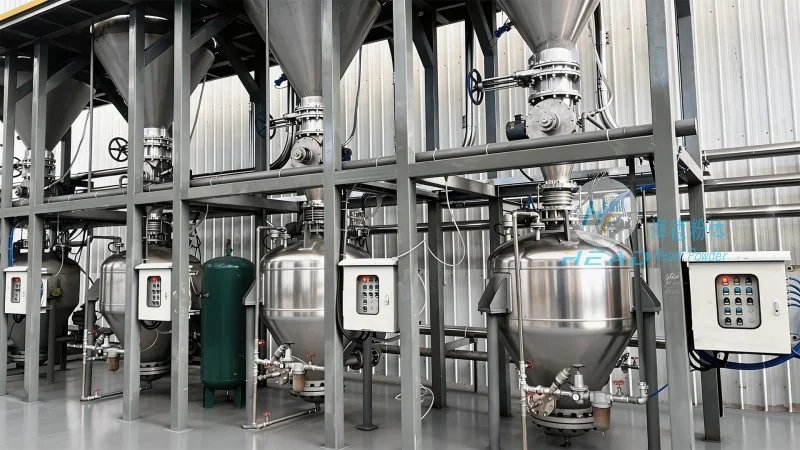
Pneumatic conveying systems utilize air or gas as the primary medium to transport bulk powders, including those used in lithium-ion battery production. These systems are designed to move materials from one location to another without the need for mechanical components like belts or buckets, offering advantages such as reduced contamination, improved safety, and enhanced process control. The core components of a typical pneumatic conveying system include a material feed hopper, a conveying line (often equipped with pressure vessels or vacuum pumps), and a discharge outlet. The system operates by creating a pressure differential that propels the powder particles through the pipeline, ensuring reliable and continuous material transfer.
Each component of a pneumatic conveying system plays a critical role in the overall performance and efficiency of the operation. The material feed hopper is responsible for storing and feeding the raw material powder into the system, ensuring a consistent flow rate. The conveying line, which may be either positive pressure or negative pressure (vacuum) type, is where the actual transport of the powder occurs. Positive pressure systems use compressed air to push the material through the line, while negative pressure systems use vacuum to pull the material. The choice between these two types depends on factors such as the material characteristics, distance to be conveyed, and system layout. Additionally, the system may include accessories like cyclones, filters, and silos to manage dust, separate particles, and store the conveyed material.
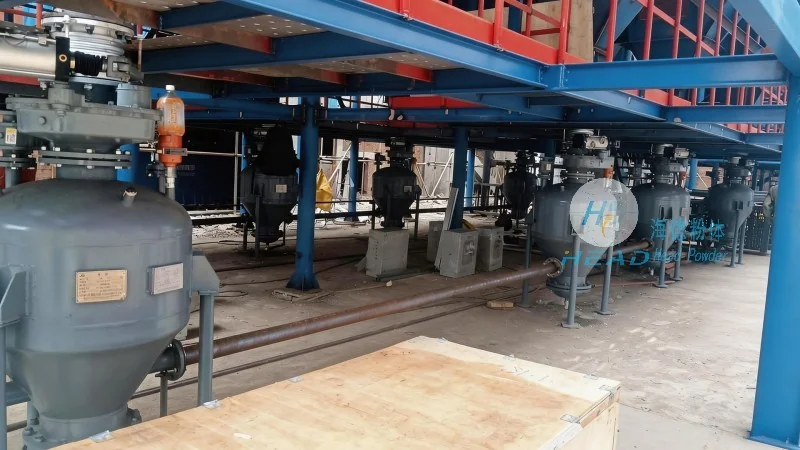
The operation of a pneumatic conveying system for lithium-ion battery raw materials typically follows a series of well-defined steps. First, the raw material powder is loaded into the feed hopper. The system then initiates the conveying process by activating the air or gas source, creating the necessary pressure or vacuum. The powder is then drawn or pushed through the conveying line, traveling from the feed point to the discharge outlet. During this process, the material may encounter various components such as bends, expansions, or restrictions, which are designed to maintain the flow and prevent blockages. The discharge outlet is where the material is deposited, either into a storage silo or directly into the next processing stage of the battery manufacturing line. After the material has been successfully conveyed, the system may undergo a cleaning cycle to remove any residual powder from the pipeline, ensuring that the system is ready for the next batch of material.
The working principle of pneumatic conveying systems is based on the fundamental physics of fluid dynamics and particle motion. In a positive pressure system, compressed air is introduced into the conveying line, creating a high-pressure environment that forces the powder particles to move along the pipeline. The air and powder mixture travels at a velocity sufficient to keep the particles suspended and prevent them from settling or clogging the line. The pressure drop along the length of the pipeline is carefully managed to maintain a stable flow rate and prevent excessive energy consumption. In a negative pressure system, a vacuum pump creates a low-pressure environment at the discharge end, drawing the powder particles through the line. The vacuum is maintained at a level that ensures the powder is entrained by the air stream and transported efficiently. The interaction between the air flow and the powder particles is governed by the particle size, density, and shape, as well as the air velocity and pressure differential. Proper design of the system ensures that these parameters are optimized to achieve the desired conveying efficiency and minimize energy usage.
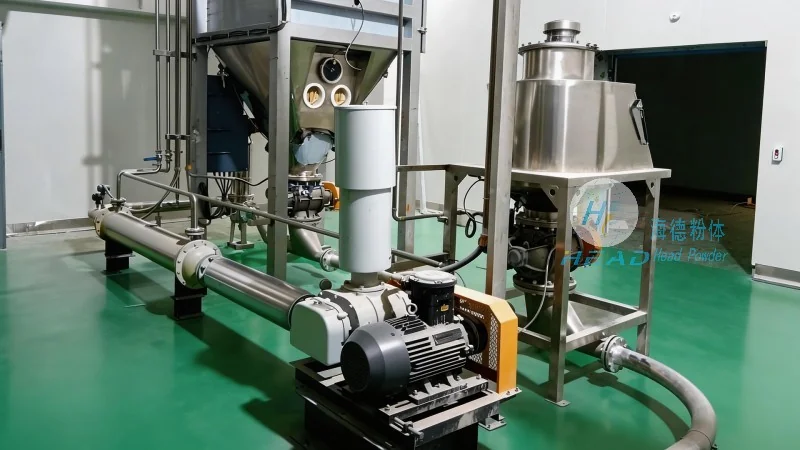
Pneumatic conveying systems offer several key benefits for the handling of lithium-ion battery raw materials. These include reduced risk of contamination, as the material is enclosed within the pipeline, preventing exposure to external elements. The systems also enhance safety by eliminating the need for manual handling of powders, which can be hazardous. Additionally, pneumatic conveying provides precise control over the material flow rate and pressure, allowing for consistent and reliable processing. In the context of lithium-ion battery manufacturing, these systems are commonly used to transport materials such as lithium carbonate, nickel oxide, cobalt oxide, and other precursors from storage silos to mixing and processing equipment. The ability to handle these materials efficiently and safely is critical to maintaining the quality and consistency of the final battery products.
HeadPowder Engineering Co., Ltd., with its headquarters in Shandong, China, has extensive experience in designing and implementing pneumatic conveying systems for lithium-ion battery raw materials. By understanding the operational process and working principles of these systems, manufacturers can optimize their material handling processes, improve efficiency, and ensure the quality of their battery products. The advanced engineering solutions provided by HeadPowder contribute to the overall success of lithium-ion battery production, supporting the growing demand for clean energy technologies worldwide.

 Shandong Headpowder Engineering Co., Ltd.
 156-6277-7102(Manager Zhang)
  0531-83386006
  Zhangqiu District, Jinan City, Shandong Province, China
telephone
WeChatconsult
top