With more than 10‑year industry experience, Shandong Headpowder delivers full‑service pneumatic‑conveying systems and blowers, undertaking nationwide turn‑key powder‑handling projects.
HeadPowder, a leading provider of pneumatic conveying solutions, specializes in the efficient and reliable transport of dry bulk powders. This article explores the operation process and working principle of pneumatic conveying systems, highlighting the technical aspects and practical applications that make this method a preferred choice in various industries.
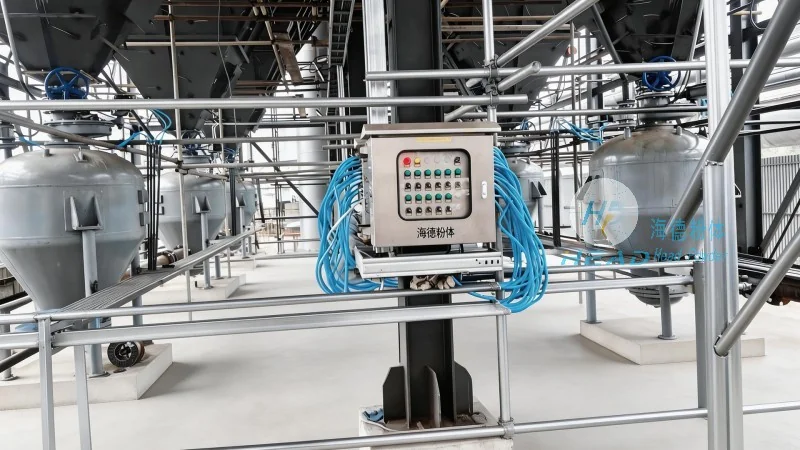
Pneumatic conveying, also known as air conveying, is a technology used to transport dry bulk materials such as powders, granules, and fine particles through a pipeline using a flow of air. This method is widely adopted in industries like food processing, pharmaceuticals, chemicals, and minerals due to its ability to handle delicate materials without degradation, minimal product contamination, and the flexibility to transport materials over long distances or vertical heights.
HeadPowder Engineering Co., Ltd., headquartered in Shandong, China, has been at the forefront of developing advanced pneumatic conveying systems tailored to meet the specific needs of clients across different sectors. The company’s expertise lies in designing, manufacturing, and installing customized solutions that ensure optimal performance, energy efficiency, and compliance with industry standards.
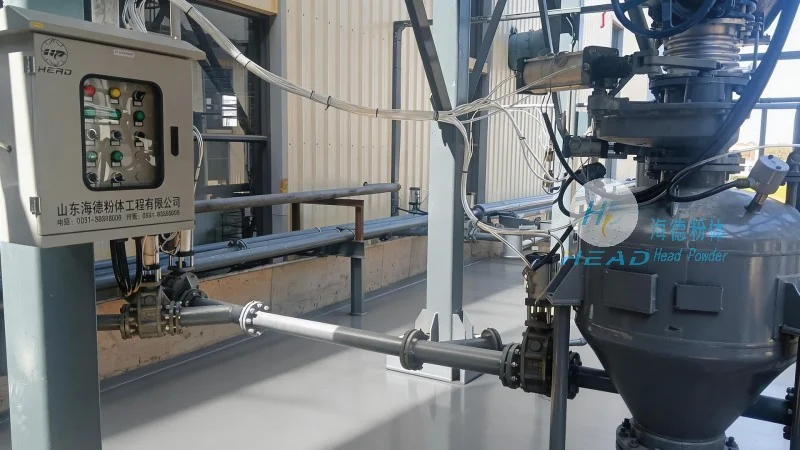
The fundamental working principle of pneumatic conveying systems revolves around the interaction between the material being conveyed and the air flow. There are two primary types of pneumatic conveying: pressure and vacuum systems. In pressure systems, air is compressed and introduced into the conveying line at a higher pressure than the ambient environment, pushing the material forward. Conversely, vacuum systems use a vacuum pump to create a lower pressure in the line, drawing the material into the pipeline.
During the conveying process, the material is suspended in the air stream and transported through the pipeline. The air velocity must be sufficient to keep the particles in suspension, preventing them from settling or causing blockages. Key factors influencing the performance include the particle size, density, and flowability of the material, as well as the air velocity and pressure within the system.
The operation process of a pneumatic conveying system typically involves several sequential steps, each critical to ensuring smooth and efficient material transport. The first step is the loading of the material into the system. This can be done using a hopper or a feeder that feeds the material into the conveying line. The material is then introduced into the pipeline, where it is mixed with the air flow.
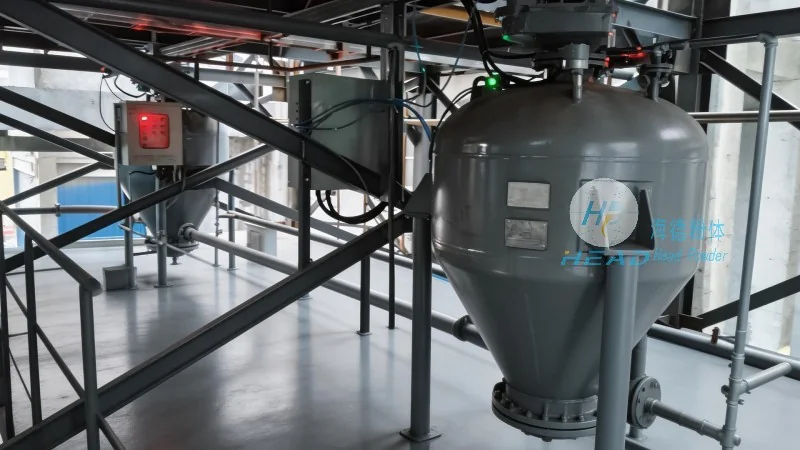
Once the material is in the pipeline, it is transported to the discharge point. The discharge can be controlled using various mechanisms, such as a rotary valve or a pressure relief valve, to regulate the flow and prevent overloading. After the material is discharged, the system may undergo a cleaning cycle to remove any residual material from the pipeline, ensuring that the system is ready for the next batch of material.
A pneumatic conveying system consists of several key components, each playing a vital role in the overall operation. The primary components include the air source, which provides the necessary air flow and pressure; the conveying line, which transports the material; the feeder or hopper, which loads the material into the system; and the discharge equipment, which removes the material from the pipeline.
The air source, typically a blower or a compressor, generates the air flow required for conveying. The blower can be either positive displacement or centrifugal, depending on the system requirements. The conveying line is usually made of metal or plastic, with appropriate fittings and valves to control the flow and direction of the material. The feeder or hopper is designed to feed the material at a consistent rate, ensuring that the system operates smoothly without fluctuations. The discharge equipment, such as a rotary valve or a gate valve, regulates the outflow of the material, preventing backflow and ensuring that the material is discharged accurately.
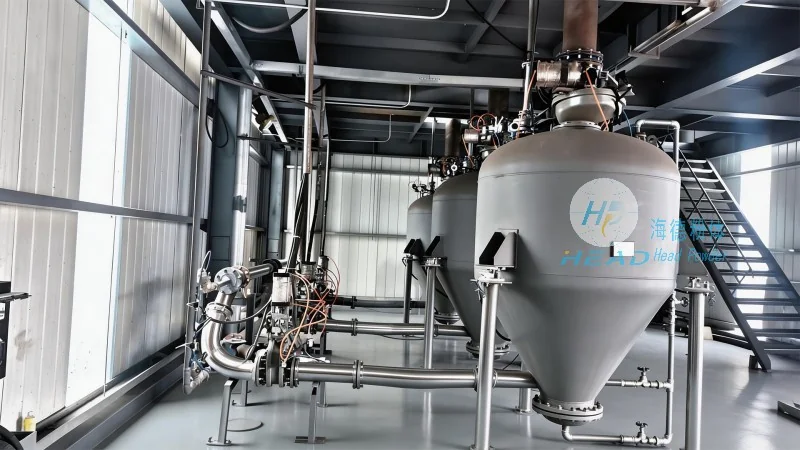
Pneumatic conveying offers several advantages over traditional material handling methods, making it an ideal choice for many industries. One of the main advantages is the ability to handle delicate materials without causing damage or degradation. The system can also transport materials over long distances or vertical heights, making it suitable for applications where traditional methods are not feasible. Additionally, pneumatic conveying systems are relatively compact and can be installed in a variety of locations, reducing the need for large storage areas.
HeadPowder Engineering Co., Ltd. has successfully implemented pneumatic conveying systems in various applications, including the transport of food powders, pharmaceuticals, and chemical products. The company’s customized solutions have helped clients improve their production efficiency, reduce material handling costs, and enhance product quality. By leveraging advanced technology and expertise, HeadPowder ensures that its clients receive reliable and efficient pneumatic conveying systems that meet their specific requirements.

 Shandong Headpowder Engineering Co., Ltd.
 156-6277-7102(Manager Zhang)
  0531-83386006
  Zhangqiu District, Jinan City, Shandong Province, China
telephone
WeChatconsult
top