With more than 10‑year industry experience, Shandong Headpowder delivers full‑service pneumatic‑conveying systems and blowers, undertaking nationwide turn‑key powder‑handling projects.
HeadPowder, a leading manufacturer in the field, specializes in the design and production of advanced conveying systems tailored for lithium-ion battery positive electrode materials. The company, based in Shandong, China, leverages decades of industry experience to deliver efficient and reliable solutions that meet the stringent requirements of modern battery production facilities. This article delves into the operation process and working principle of their material conveying lines, providing a comprehensive overview for industry professionals and potential clients.
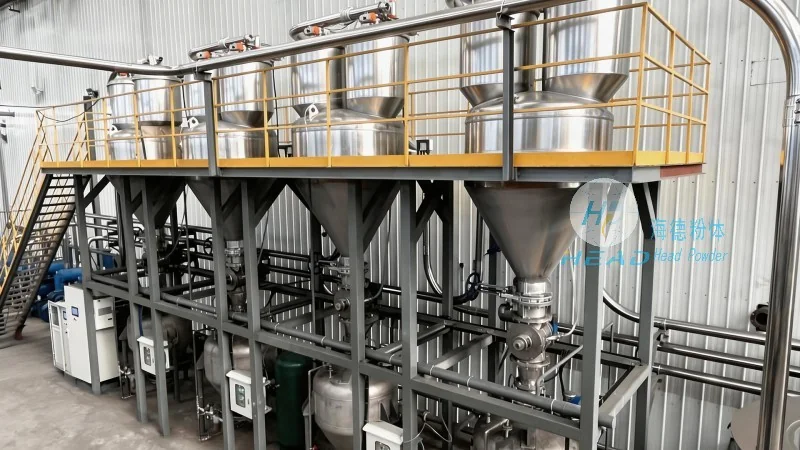
The lithium-ion battery positive electrode material conveying line typically consists of several integrated components, each playing a critical role in ensuring smooth material handling. These components include feed hoppers, conveyor belts or screw conveyors, pneumatic or mechanical transport systems, and storage silos. The system is engineered to handle various types of positive electrode materials, such as lithium cobalt oxide (LCO), lithium nickel manganese cobalt oxide (NMC), and lithium iron phosphate (LFP), with precision and minimal material loss. HeadPowder’s systems are designed to accommodate different material properties, ensuring compatibility with diverse production needs.
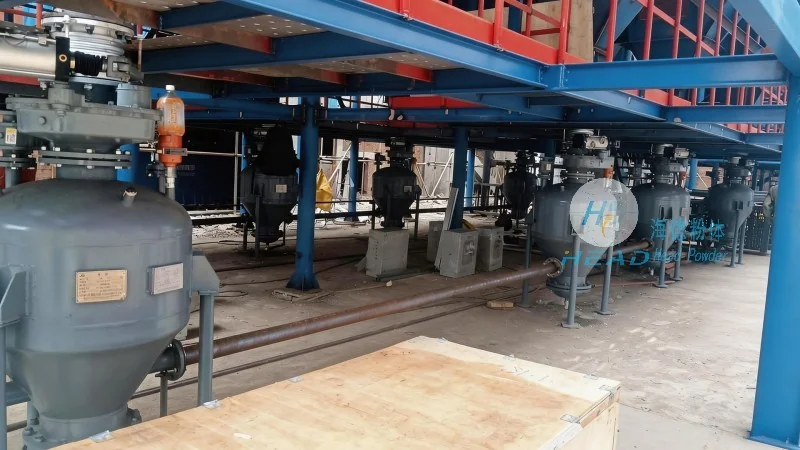
The operation of the conveying line follows a systematic workflow that ensures materials are transported from storage to processing units efficiently. The process begins with material loading into the feed hopper, where bulk materials are introduced from storage silos or raw material containers. The feed hopper is equipped with level sensors and flow control mechanisms to regulate the material feed rate, preventing overloading or underflow. Once the material is in the hopper, it is transferred to the primary conveyor system—often a belt conveyor or a screw conveyor—depending on the material characteristics and required transport distance. The conveyor system moves the material through the line, guiding it to intermediate storage or directly to the processing equipment, such as mixing or coating machines. At each stage, the system incorporates safety features, including emergency stop buttons and overload protection, to ensure operational safety. The final stage involves delivering the material to the processing unit, where it is integrated into the battery manufacturing process. The entire operation is monitored by a centralized control system, allowing for real-time adjustments and maintenance alerts.
The working principle of the conveying line combines mechanical transport mechanisms with advanced control systems to achieve precise material handling. The mechanical components, such as conveyors and feeders, utilize gravity, friction, or pneumatic pressure to move materials along the line. For example, belt conveyors use motor-driven rollers to pull the belt, transporting materials in a continuous flow. Screw conveyors, on the other hand, use rotating screws to push materials forward, suitable for granular or powdery materials. Pneumatic systems may also be employed for fine powders, using compressed air to create a flow of material through pipes. The control system, typically based on PLC (Programmable Logic Controller) technology, coordinates the operation of all components. It receives input from sensors (e.g., level, temperature, and flow sensors) and adjusts the speed of conveyors, the feed rate from hoppers, and other parameters to maintain optimal performance. The system also includes diagnostic tools to detect malfunctions, such as blockages or overloads, and triggers alerts for maintenance personnel. This integration of mechanical and control technologies ensures the conveying line operates with high efficiency and minimal downtime.
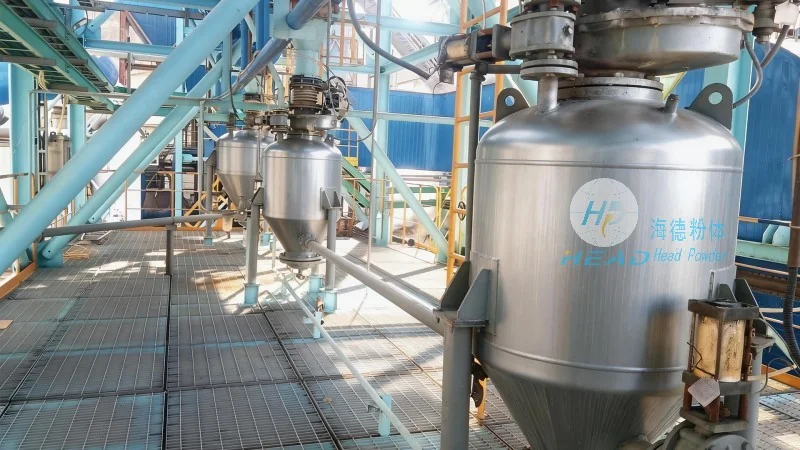
HeadPowder’s lithium-ion battery positive electrode material conveying lines offer several advantages that enhance production efficiency and product quality. The systems are designed for high throughput, allowing for continuous material flow that supports high-volume battery production. They also minimize material loss and contamination, which is critical for maintaining the purity of positive electrode materials. The modular design of the systems enables easy integration with existing production lines, reducing installation time and costs. Additionally, the systems are scalable, allowing manufacturers to expand their capacity as production needs grow. These conveying lines are widely used in battery manufacturing facilities, particularly in the production of lithium-ion batteries for electric vehicles, energy storage systems, and consumer electronics. The reliability and efficiency of HeadPowder’s solutions contribute to improved overall production performance and cost-effectiveness in the battery industry.

 Shandong Headpowder Engineering Co., Ltd.
 156-6277-7102(Manager Zhang)
  0531-83386006
  Zhangqiu District, Jinan City, Shandong Province, China
telephone
WeChatconsult
top