With more than 10‑year industry experience, Shandong Headpowder delivers full‑service pneumatic‑conveying systems and blowers, undertaking nationwide turn‑key powder‑handling projects.
HeadPowder, a leading manufacturer based in Shandong, China, specializes in industrial powder handling solutions. The Negative Pressure Vacuum Powder Conveying System Equipment is a key product designed to efficiently transport bulk powders over long distances with minimal pressure loss and high reliability. This system is widely used in various industries such as pharmaceuticals, food processing, and chemical manufacturing, where precise and clean material transfer is critical.
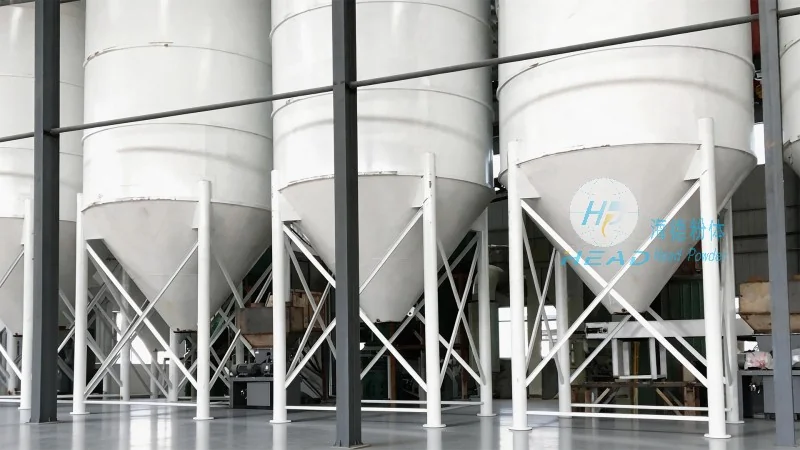
The Negative Pressure Vacuum Powder Conveying System is engineered to handle a wide range of powders, including fine powders, granules, and even sticky or cohesive materials. It operates on the principle of creating a negative pressure (vacuum) in the conveying line, which draws the material from the source to the destination. The system typically consists of a vacuum pump, conveying pipes, a filter system, and a control panel, all integrated to ensure smooth and continuous operation.
1. Vacuum Pump: The core component that generates the negative pressure required for material suction. It can be a rotary vane pump, roots blower, or other types depending on the system capacity and application. The pump maintains a consistent vacuum level throughout the conveying process, ensuring stable material flow.
2. Conveying Pipes: Made from materials like stainless steel or food-grade plastic, the pipes are designed to withstand the vacuum and pressure differentials while preventing material leakage and contamination. The pipe network connects the material source (e.g., silos, hoppers) to the discharge point (e.g., storage tanks, processing units).
3. Filter System: Essential for maintaining air quality and protecting the vacuum pump from dust and particulate matter. The filter captures fine particles, preventing them from entering the pump and ensuring long-term operational efficiency.
4. Control Panel: Equipped with sensors and controls that monitor system parameters such as vacuum pressure, flow rate, and pressure differentials. The panel allows operators to adjust settings, start/stop the system, and receive alerts for any anomalies, ensuring safe and efficient operation.
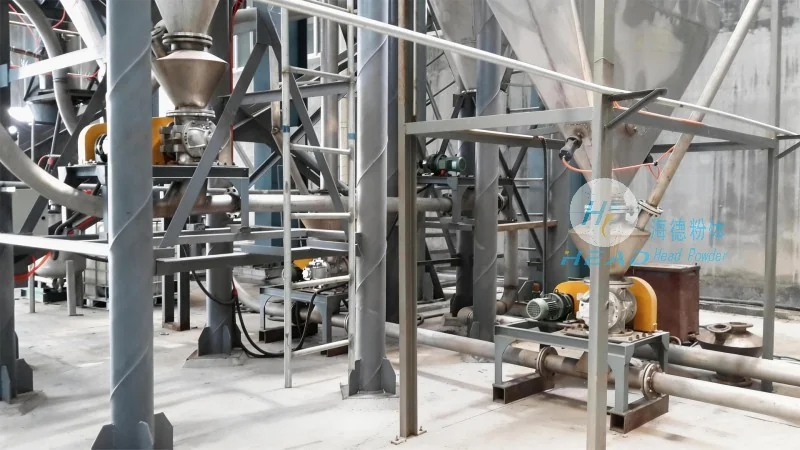
The operation of the Negative Pressure Vacuum Powder Conveying System follows a systematic sequence to ensure reliable material transfer:
The working principle of the Negative Pressure Vacuum Powder Conveying System is based on the fundamental physics of fluid dynamics and pressure differentials. Here's a detailed breakdown:
1. Negative Pressure Creation: The vacuum pump removes air from the conveying pipes, reducing the internal pressure below atmospheric pressure. This creates a pressure gradient where the pressure at the source (e.g., the hopper) is higher than the pressure inside the pipe.
2. Material Inflow: Due to the pressure difference, the powder particles are drawn into the pipe. The particles are carried by the air flow, which acts as a carrier medium. The air velocity is sufficient to keep the particles suspended and prevent clogging.
3. Continuous Flow: The vacuum pump continuously maintains the negative pressure, ensuring a steady flow of material. The system can handle long-distance conveying (up to several hundred meters) without significant pressure loss, as the vacuum is maintained throughout the entire pipe network.
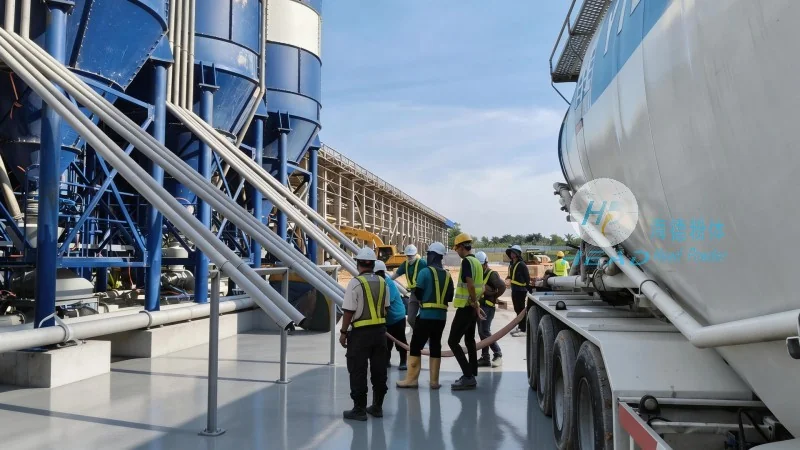
4. Energy Efficiency: Unlike positive pressure systems that require compressing air, negative pressure systems use the vacuum pump to create suction, which is generally more energy-efficient for long-distance conveying, especially when handling fine powders.
The Negative Pressure Vacuum Powder Conveying System offers several advantages over traditional conveying methods:
The Negative Pressure Vacuum Powder Conveying System is widely applied in industries where bulk powder handling is essential. Some common applications include:
Proper maintenance and safety measures are crucial for the long-term performance and reliability of the Negative Pressure Vacuum Powder Conveying System:
The Negative Pressure Vacuum Powder Conveying System by HeadPowder is a reliable and efficient solution for bulk powder handling. Its advanced design, combined with the company's expertise in engineering and manufacturing, ensures that the system meets the highest standards of performance, safety, and hygiene. Whether used in pharmaceutical, food, or chemical industries, this system provides a cost-effective and sustainable way to transport powders with precision and minimal environmental impact.

 Shandong Headpowder Engineering Co., Ltd.
 156-6277-7102(Manager Zhang)
  0531-83386006
  Zhangqiu District, Jinan City, Shandong Province, China
telephone
WeChatconsult
top