With more than 10‑year industry experience, Shandong Headpowder delivers full‑service pneumatic‑conveying systems and blowers, undertaking nationwide turn‑key powder‑handling projects.
For industrial applications involving the handling of crystalline powders, efficient and reliable conveying systems are essential to ensure smooth material flow and maintain product quality. The operation process and working principle of a crystal powder conveying system, as provided by Shandong HeadPowder Engineering Co., Ltd., involve a series of integrated steps designed to handle the unique properties of crystalline materials. This article outlines the key aspects of how such systems function, emphasizing the technical aspects and operational efficiency.
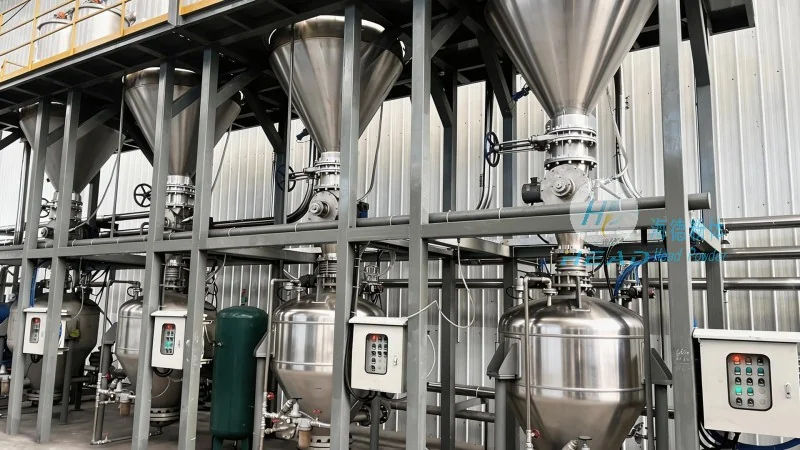
The crystal powder conveying system typically consists of several key components, including feed hoppers, conveying mechanisms (such as screw conveyors or pneumatic systems), control panels, and material handling accessories. Each component plays a critical role in the overall operation, ensuring that the crystalline powder is transported safely and effectively from the source to the destination. The system is engineered to accommodate the specific characteristics of crystalline powders, such as their particle size, density, and flowability, which can vary significantly depending on the material being handled.
The operation process of a crystal powder conveying system begins with the loading of the crystalline powder into the feed hopper. The hopper is designed to provide a uniform feed rate, preventing overloading or underloading that could affect the conveying efficiency. Once the powder is in the hopper, the conveying mechanism is activated. For screw conveyors, this involves the rotation of the screw, which pushes the powder forward through the conveyor tube. The speed of the screw and the design of the helical blades are carefully optimized to match the flow characteristics of the crystalline material, ensuring minimal friction and material degradation.
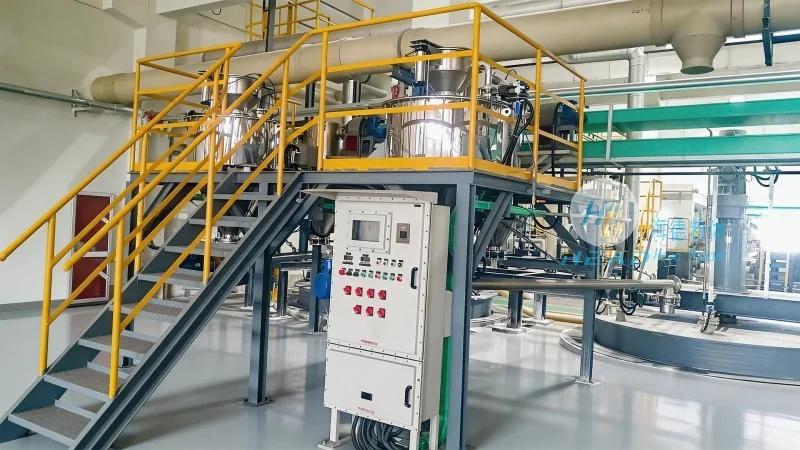
In pneumatic conveying systems, the operation process differs slightly. The crystalline powder is first introduced into a hopper equipped with a feeding valve. The system then uses compressed air to create a flow of air and powder mixture, which is directed through a pipeline to the discharge point. The pressure and velocity of the air are controlled to maintain a stable flow of the powder, preventing clogging or segregation of the particles. The control panel monitors the system parameters, such as pressure, flow rate, and temperature, to ensure optimal operation and to detect any anomalies that may require adjustment.
The working principle of a crystal powder conveying system is based on the principles of mechanical and fluid dynamics. For mechanical systems like screw conveyors, the operation relies on the shear and drag forces generated by the rotating screw. As the screw rotates, it lifts and moves the powder forward, creating a continuous flow. The design of the screw, including the pitch and diameter, is crucial in determining the conveying capacity and the pressure drop across the system. Proper maintenance of the screw and conveyor components is essential to prevent wear and tear, which could lead to reduced efficiency or material blockages.
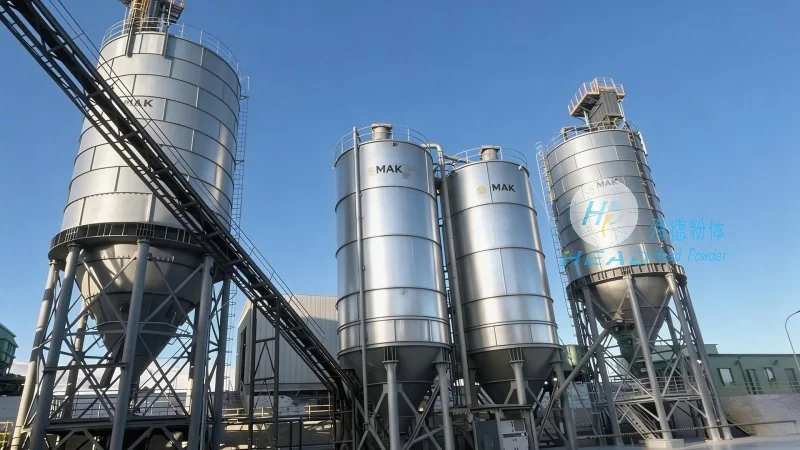
For pneumatic systems, the working principle involves the use of air as the conveying medium. The compressed air creates a pressure differential that propels the powder through the pipeline. The flow of the powder is governed by the velocity of the air and the particle size distribution of the crystalline material. The system must be designed to handle the specific aerodynamic properties of the powder, such as its density and terminal velocity, to ensure that the powder is transported without excessive pressure loss or particle degradation.
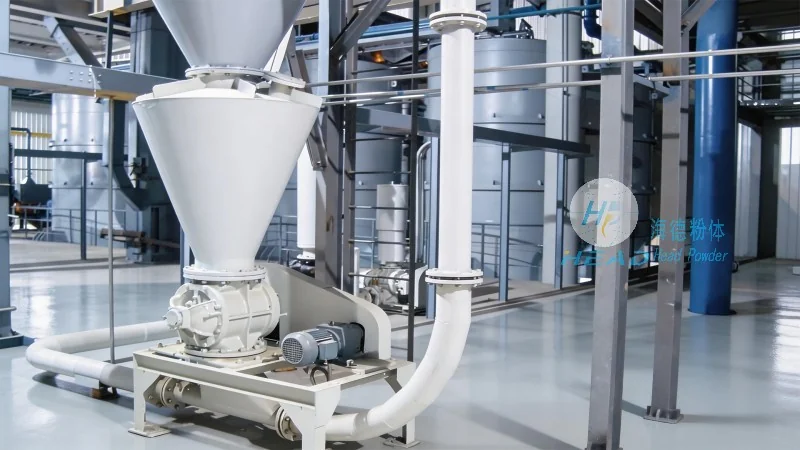
Several factors contribute to the optimal performance of a crystal powder conveying system. First, the material properties of the crystalline powder, such as its moisture content, particle size, and flowability, must be considered during the system design. The system should be tailored to handle these properties to prevent issues like caking, bridging, or segregation. Second, the system must be equipped with appropriate control mechanisms to regulate the flow rate and pressure, ensuring that the conveying process is stable and efficient. Regular maintenance and inspection of the components are also critical to maintain the system's performance and extend its operational life.
Shandong HeadPowder Engineering Co., Ltd., operating under the brand name headpowder, is a leading provider of specialized conveying systems for the handling of crystalline powders. With a focus on engineering excellence and customer satisfaction, the company designs and manufactures systems that meet the specific needs of various industrial applications. HeadPowder's expertise in material handling technology ensures that their crystal powder conveying systems are reliable, efficient, and tailored to the unique requirements of each client. The company's facilities are located in Shandong, China, where they leverage advanced manufacturing processes and quality control measures to deliver high-performance conveying solutions.

 Shandong Headpowder Engineering Co., Ltd.
 156-6277-7102(Manager Zhang)
  0531-83386006
  Zhangqiu District, Jinan City, Shandong Province, China
telephone
WeChatconsult
top