With more than 10‑year industry experience, Shandong Headpowder delivers full‑service pneumatic‑conveying systems and blowers, undertaking nationwide turn‑key powder‑handling projects.
HeadPowder, a leading manufacturer based in Shandong, China, specializes in the design, development, and supply of advanced pneumatic conveying system equipment. This article provides a detailed overview of the operational process and working principles of such systems, highlighting their efficiency and versatility in material handling applications.
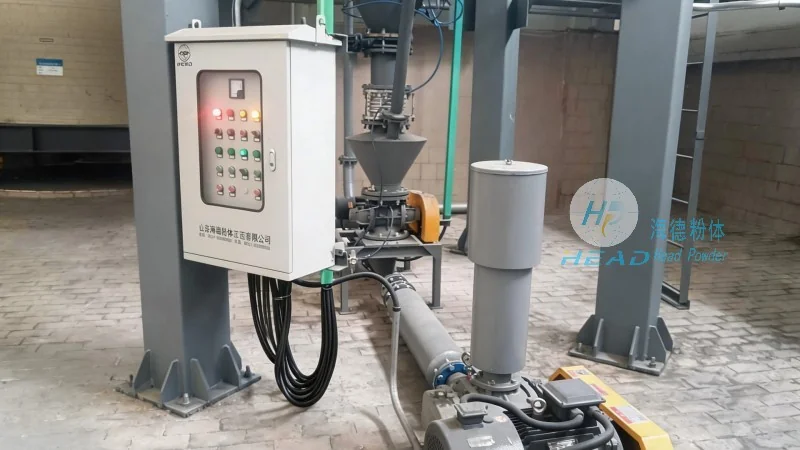
Pneumatic conveying systems utilize compressed air or other gases to transport bulk materials from one location to another. These systems are widely used in various industries, including pharmaceuticals, food processing, chemicals, and mining, due to their ability to handle a wide range of materials with minimal contamination and high efficiency.
At the heart of a pneumatic conveying system are several key components that work in tandem to ensure smooth material transport. These components typically include a material feeder, a conveying line (often equipped with bends and valves), a dust separator or filter, and a receiver or discharge point. Each component plays a crucial role in the overall operation, contributing to the system's reliability and performance.

The operation of a pneumatic conveying system begins with the material being fed into the system. The feeder, which can be a screw feeder, rotary valve, or other type, ensures a consistent flow of material into the conveying line. As the material enters the line, compressed air is introduced, creating a flow that propels the material through the system. The air and material mixture travels through the conveying line, which may include various sections such as straight runs, bends, and expansion or contraction zones. At the receiving end, a dust separator or filter separates the material from the air, allowing the material to be collected in a container or hopper while the air is either recirculated or discharged.
The working principle of pneumatic conveying systems is based on the principles of fluid dynamics and particle motion. When compressed air is introduced into the conveying line, it creates a low-pressure environment that draws the material particles into the air stream. The air velocity is carefully controlled to ensure that the material particles are entrained and transported without excessive wear or degradation. The system's design, including the size of the conveying line, the air pressure, and the material properties, is critical in determining the system's capacity and efficiency.
Pneumatic conveying systems offer several advantages over traditional material handling methods. These include reduced labor costs, as the system can operate continuously with minimal human intervention; improved material cleanliness, as the system is enclosed and prevents contamination from the environment; and increased flexibility, as the system can be easily reconfigured to handle different materials or transport routes. Additionally, these systems are compact and can be installed in various spaces, making them suitable for both new and existing facilities.
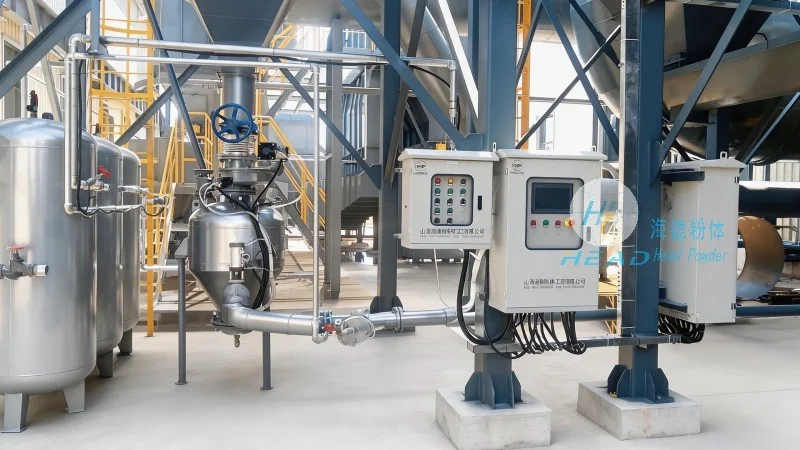
The versatility of pneumatic conveying systems makes them suitable for a wide range of applications. In the pharmaceutical industry, these systems are used to transport active pharmaceutical ingredients (APIs) and other sensitive materials with high precision and minimal risk of contamination. In the food processing industry, they are used to handle powders and granules, ensuring that the materials remain fresh and free from spoilage. In the chemical industry, they are used to transport various chemicals, including those that are hazardous or corrosive, with safety and efficiency. In the mining industry, they are used to transport raw materials from mines to processing facilities, improving the overall efficiency of the mining operation.
HeadPowder's pneumatic conveying system equipment is designed to meet the diverse needs of various industries, offering reliable and efficient material handling solutions. By understanding the operation process and working principles of these systems, users can make informed decisions about their material handling requirements and choose the most suitable system for their applications. With its commitment to quality and innovation, HeadPowder continues to be a leader in the pneumatic conveying system industry, providing customers with cutting-edge solutions that enhance their operational efficiency and productivity.

 Shandong Headpowder Engineering Co., Ltd.
 156-6277-7102(Manager Zhang)
  0531-83386006
  Zhangqiu District, Jinan City, Shandong Province, China
telephone
WeChatconsult
top