HeadPowder, a leading engineering company based in Shandong, China, specializes in the design and implementation of advanced material handling systems. This article focuses on the principle and working scene characteristics of pneumatic conveying lines specifically for barium carbonate (BaCO3) materials, highlighting the technical aspects and practical applications in industrial settings.
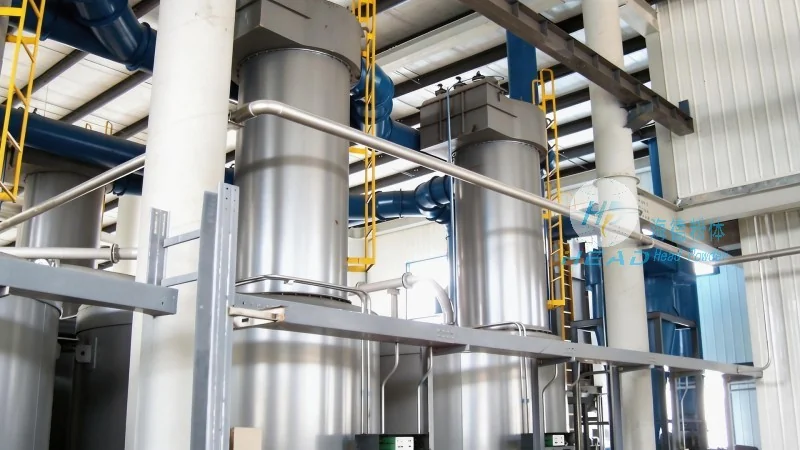
Understanding Pneumatic Conveying: The Core Principle
Pneumatic conveying systems utilize air or gas to transport bulk materials from one location to another. For barium carbonate, a fine powder with specific handling requirements, the choice of conveying method is critical to ensure efficiency, material integrity, and operational safety. The fundamental principle involves creating a pressure differential—either positive (pressure) or negative (vacuum)—to move the material through a pipeline. In the case of BaCO3, which is often sensitive to moisture and particle degradation, the system design must account for these characteristics to maintain product quality throughout the conveying process.
Key Working Scene Characteristics of BaCO3 Pneumatic Conveying Lines
The working scene characteristics of BaCO3 pneumatic conveying lines are tailored to the unique properties of the material and the specific industrial processes they support. These characteristics include:
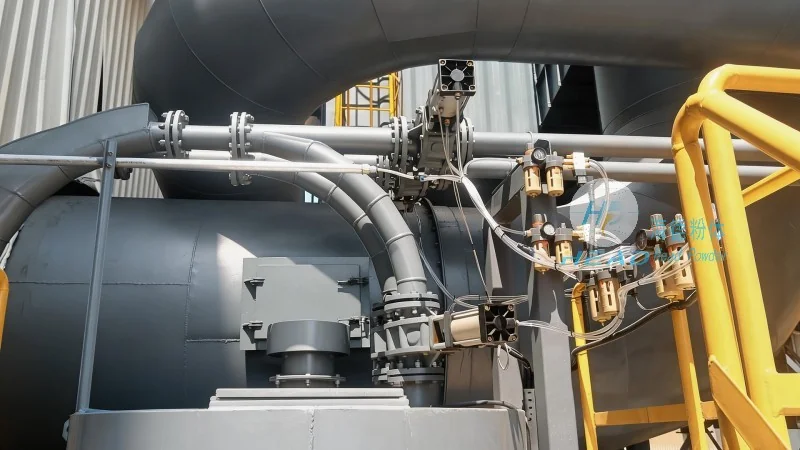
- Material Flow Control: Precise control of air flow and pressure is essential to manage the flow rate of BaCO3, preventing issues like blockages or uneven distribution. The system typically includes adjustable valves and pressure regulators to maintain consistent material transport.
- Particle Size and Consistency: BaCO3 is often processed as a fine powder with uniform particle size. The conveying line is designed to handle this consistency, minimizing the risk of agglomeration or clogging in the pipeline. Specialized equipment, such as cyclone separators or filter bags, may be integrated to ensure clean material transfer.
- Environmental Considerations: As a chemical powder, BaCO3 can generate dust during handling. The pneumatic system incorporates dust collection and filtration systems to comply with environmental regulations and maintain a safe working environment. This is particularly important in industries where air quality standards are strict.
- Integration with Production Lines: The conveying line is often integrated with existing production equipment, such as reactors, mixers, or packaging machines. This integration allows for seamless material transfer from raw material storage to processing or packaging stages, enhancing overall production efficiency.
Practical Applications and Industry Scenarios
BaCO3, commonly used in the production of pigments, ceramics, and pharmaceuticals, requires reliable material handling solutions to support its processing. The pneumatic conveying lines designed by HeadPowder are deployed in various industrial scenarios, including:
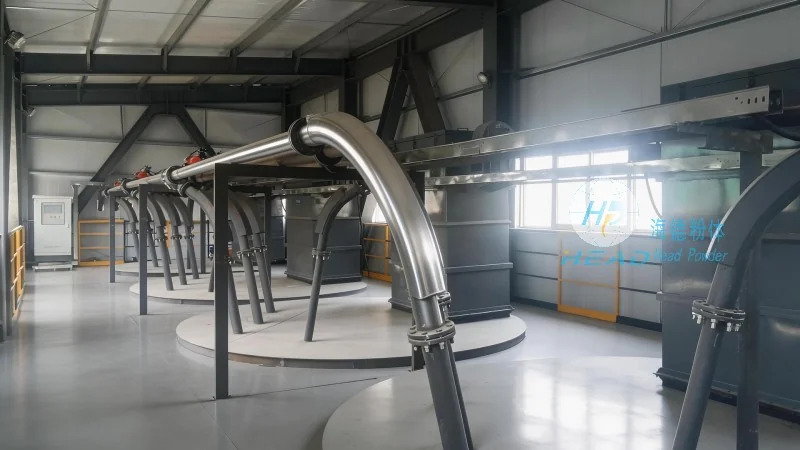
- Pigment Manufacturing: In the pigment industry, BaCO3 is used as a white pigment. The conveying line efficiently transports the powder from storage silos to mixing and grinding equipment, ensuring consistent pigment quality and reducing manual handling risks.
- Ceramic Production: For ceramic manufacturing, BaCO3 is used as a raw material in glazes and body formulations. The system handles the fine powder with precision, preventing contamination and maintaining the desired chemical composition in the final product.
- Pharmaceutical Processing: In the pharmaceutical sector, BaCO3 is used in the production of certain medications and as a filler. The pneumatic conveying line ensures hygienic and dust-free transfer, meeting stringent regulatory requirements for pharmaceutical materials.
Advantages of HeadPowder's Pneumatic Conveying Solutions
HeadPowder Engineering Co., Ltd. offers customized pneumatic conveying solutions tailored to the specific needs of BaCO3 applications. The advantages of their systems include:
- Efficiency and Reliability: The systems are designed for high throughput and minimal downtime, ensuring consistent material delivery to production lines.
- Material Integrity Preservation: By minimizing contact with external elements and using gentle handling techniques, the system preserves the quality and purity of BaCO3, which is critical for downstream processes.
- Space Optimization: Pneumatic conveying lines are often more compact than traditional bulk handling methods, making them suitable for facilities with limited space.
- Cost-Effectiveness: Over time, the automated system reduces labor costs and material loss, providing a long-term economic benefit for industrial operations.
Conclusion: Tailored Solutions for BaCO3 Handling
HeadPowder Engineering Co., Ltd., based in Shandong, China, provides expert solutions for pneumatic conveying of barium carbonate materials. By understanding the unique characteristics of BaCO3 and the specific requirements of industrial applications, their systems ensure efficient, safe, and reliable material handling. Whether in pigment, ceramic, or pharmaceutical production, the company's tailored pneumatic conveying lines support optimal performance and compliance with industry standards.

 Shandong Headpowder Engineering Co., Ltd.
 156-6277-7102(Manager Zhang)
  0531-83386006
  Zhangqiu District, Jinan City, Shandong Province, China