With more than 10‑year industry experience, Shandong Headpowder delivers full‑service pneumatic‑conveying systems and blowers, undertaking nationwide turn‑key powder‑handling projects.
Barium carbonate is a widely used chemical compound in various industrial applications, and the efficient handling of its powder form is crucial for production processes. The pneumatic conveying line for barium carbonate powder represents a sophisticated solution that ensures safe, reliable, and cost-effective material transport. This article delves into the fundamental principles behind such systems and explores the specific characteristics of working scenarios where they are applied.
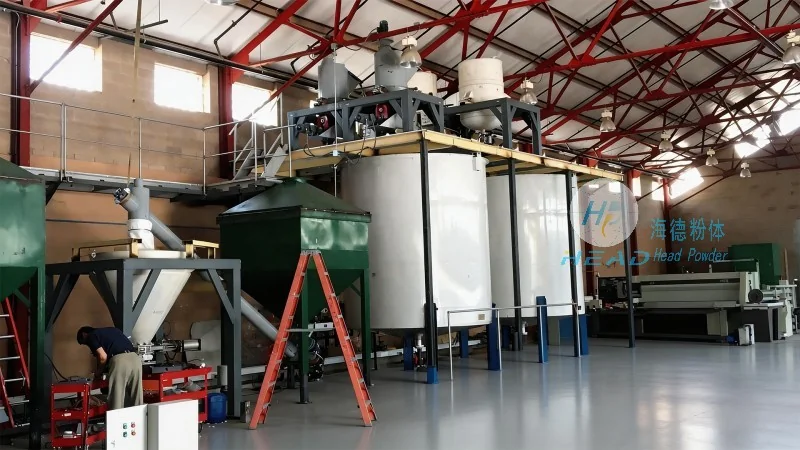
HeadPowder, formally known as Shandong HeadPowder Engineering Co., Ltd., is a leading provider of engineering solutions for powder handling and material transport. With a strong presence in China, particularly in Shandong province, the company specializes in designing and implementing advanced pneumatic conveying systems tailored to the needs of the chemical and industrial sectors. The company's expertise lies in optimizing material flow, enhancing operational efficiency, and ensuring compliance with safety standards in powder handling applications.
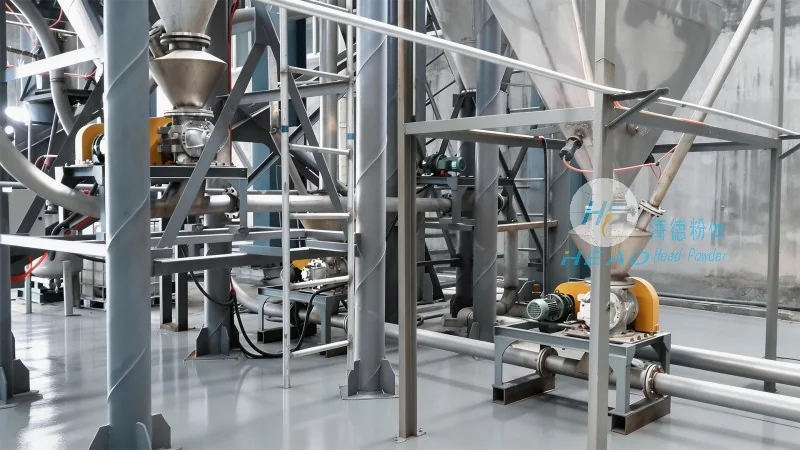
Pneumatic conveying systems operate on the principle of using air or gas to transport solid particles through a pipeline. In the case of barium carbonate powder, the system typically employs a positive pressure or negative pressure method to move the material from the source to the destination. The positive pressure system involves blowing air into the pipeline, creating a pressure differential that propels the powder forward. This method is often preferred for longer distances or when dealing with abrasive or sensitive powders like barium carbonate. The negative pressure system, on the other hand, sucks the powder into the pipeline using a vacuum, which is suitable for shorter distances or when the material is less dense. The choice of pressure type depends on factors such as the material's properties, the distance to be covered, and the required flow rate. The core components of a pneumatic conveying line include the hopper, feeder, conveying line, and receiver. The hopper stores the barium carbonate powder and feeds it to the feeder, which regulates the flow rate. The conveying line transports the powder, and the receiver collects the material at the end of the line. The system may also include additional components like filters, cyclones, or silencers to ensure proper operation and safety.
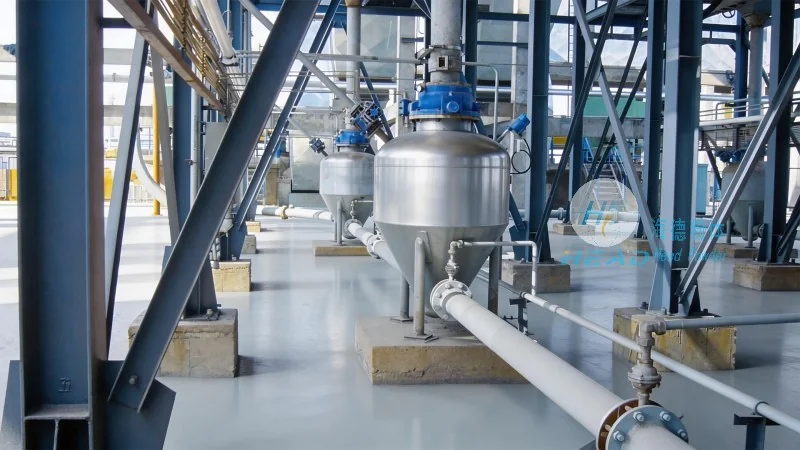
The working scenarios where barium carbonate powder pneumatic conveying lines are applied vary based on the specific industrial processes. One common application is in the production of barium carbonate-based products, such as barium sulfate or other chemical intermediates. In these processes, the powder needs to be transported from storage silos to processing units, such as reactors or mixers. The conveying line ensures that the material is delivered in a controlled manner, maintaining consistent quality and preventing contamination. Another scenario involves the handling of barium carbonate in pharmaceutical or food industries, where stringent safety and hygiene standards are required. The pneumatic system provides a dust-free and enclosed environment, reducing the risk of particle inhalation and cross-contamination. Additionally, in mining or mineral processing operations, barium carbonate may be used as a flux or additive, and the conveying line facilitates its transport from storage to the processing plant. The working scene characteristics also include considerations like the material's moisture content, particle size distribution, and flowability. For instance, if the barium carbonate powder is hygroscopic, the system may include drying or moisture control measures to prevent clumping or degradation. The system's design must also account for the potential for dust explosion hazards, as barium carbonate is a combustible powder under certain conditions. Therefore, explosion-proof components and proper ventilation are essential in such applications. The working scenarios may also involve multiple stages of conveying, such as from a storage silo to a blending unit and then to a packaging line. In these cases, the pneumatic conveying line is integrated with other processing equipment to form a seamless material flow system. The characteristics of the working scene, including the required flow rate, distance, and material properties, influence the selection of the conveying system's parameters, such as the air velocity, pipeline diameter, and pressure drop. Overall, the working scene characteristics highlight the importance of tailored engineering solutions to meet the specific demands of each application.

 Shandong Headpowder Engineering Co., Ltd.
 156-6277-7102(Manager Zhang)
  0531-83386006
  Zhangqiu District, Jinan City, Shandong Province, China
telephone
WeChatconsult
top