With more than 10‑year industry experience, Shandong Headpowder delivers full‑service pneumatic‑conveying systems and blowers, undertaking nationwide turn‑key powder‑handling projects.
HeadPowder, a leading enterprise in the field of pneumatic conveying technology, specializes in the design, manufacturing, and application of dry powder pneumatic conveying systems. This article delves into the fundamental principles of such systems and highlights the key working scene characteristics that define their effectiveness and versatility in various industrial applications.
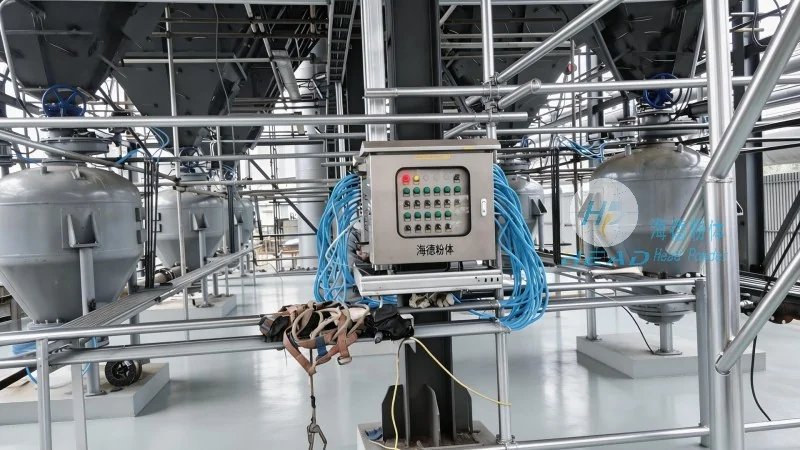
Dry powder pneumatic conveying systems are advanced industrial solutions used to transport dry powders and granular materials through a pipeline using compressed air or other gas as the conveying medium. These systems are widely adopted across multiple industries due to their efficiency, flexibility, and ability to handle a broad range of materials with minimal degradation. The core components of a typical dry powder pneumatic conveying system include a feeding unit, a conveying pipeline, a control system, and a discharge unit. Each component plays a critical role in ensuring the smooth and reliable operation of the system.
The operation of dry powder pneumatic conveying systems is based on the fundamental principle of fluidization and suspension of particles within a gas stream. When compressed air is introduced into the conveying pipeline, it creates a low-pressure zone that draws the dry powder from the feeding hopper into the pipeline. The particles are then suspended in the air stream and transported to the discharge point. The velocity of the air and the particle size, density, and flow rate are critical factors that determine the efficiency of the conveying process. Proper design of the system ensures that the air velocity is sufficient to maintain particle suspension without causing excessive pressure drop or energy consumption.
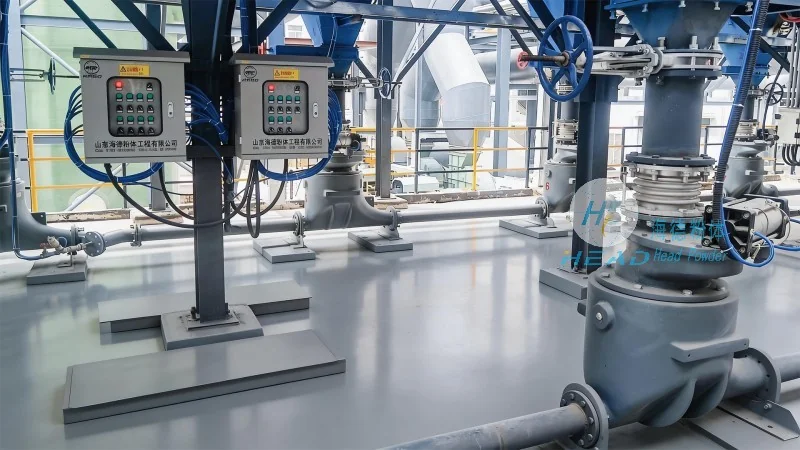
The working scene characteristics of dry powder pneumatic conveying systems are tailored to meet the specific requirements of different industrial environments. These characteristics include:
Dry powder pneumatic conveying systems are capable of handling a wide variety of dry powders, including fine powders, bulk powders, and granular materials. The system's design allows for the transport of materials with different physical properties, such as varying particle sizes, densities, and moisture content. This versatility makes the system suitable for applications in pharmaceuticals, food processing, chemical manufacturing, and mining industries.
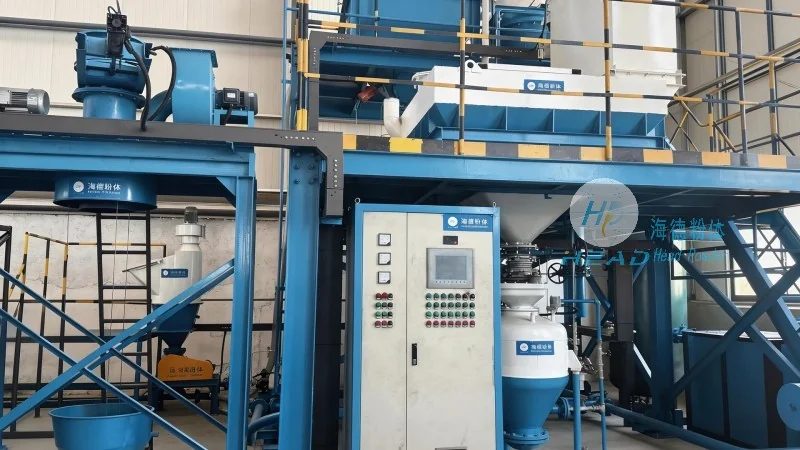
Compared to traditional mechanical conveying methods, dry powder pneumatic conveying systems offer a significant advantage in terms of material preservation. The absence of mechanical contact between the particles and the conveying components reduces the risk of particle attrition, agglomeration, or contamination. This is particularly important for sensitive materials like pharmaceutical powders, food ingredients, and high-value chemicals where maintaining product quality is paramount.
One of the notable working scene characteristics is the space efficiency and flexibility of the system. The pipeline layout can be customized to fit the available space in the industrial facility, allowing for the integration of the system into existing production lines without significant modifications. The modular design of the system enables easy expansion or reconfiguration to accommodate changing production needs. This flexibility is crucial for industries that require adaptability in their material handling processes.
Dry powder pneumatic conveying systems are designed with clean and hygienic operation in mind, especially for applications in the food and pharmaceutical industries. The system components are constructed from materials that are easy to clean and maintain, such as stainless steel. The enclosed pipeline design prevents dust leakage and contamination, ensuring compliance with industry standards and regulations. This characteristic is essential for maintaining product quality and safety in sensitive applications.
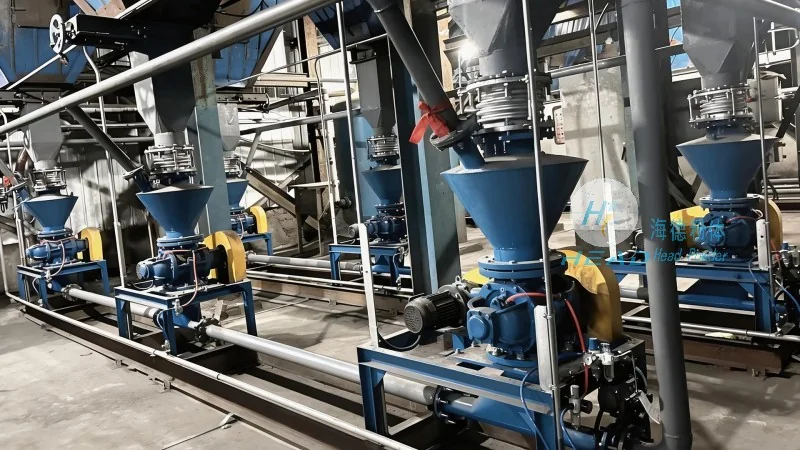
The working scene characteristics of dry powder pneumatic conveying systems make them suitable for a wide range of applications across various industries. For instance, in the pharmaceutical industry, these systems are used to transport active pharmaceutical ingredients (APIs) and excipients with high precision and minimal contamination. In the food processing industry, they are employed to convey ingredients like flour, sugar, and spices, ensuring the product remains fresh and free from contamination. In the chemical manufacturing sector, the systems handle various powders and granules, facilitating the efficient transfer of raw materials and finished products. The mining industry also benefits from these systems for transporting ore and other bulk materials over long distances with minimal energy consumption.
HeadPowder's dry powder pneumatic conveying systems are engineered to deliver reliable and efficient material handling solutions tailored to the diverse needs of modern industries. By understanding the principles of pneumatic conveying and leveraging the working scene characteristics, these systems provide a cost-effective and sustainable approach to transporting dry powders. With a strong commitment to quality and innovation, Shandong HeadPowder Engineering Co., Ltd. continues to be a trusted partner in providing advanced pneumatic conveying solutions that meet the evolving demands of industrial applications.

 Shandong Headpowder Engineering Co., Ltd.
 156-6277-7102(Manager Zhang)
  0531-83386006
  Zhangqiu District, Jinan City, Shandong Province, China
telephone
WeChatconsult
top