With more than 10‑year industry experience, Shandong Headpowder delivers full‑service pneumatic‑conveying systems and blowers, undertaking nationwide turn‑key powder‑handling projects.
HeadPowder, a leading engineering company based in Shandong, China, specializes in the design and manufacturing of advanced pneumatic conveying systems tailored for agricultural waste processing. This article delves into the working principle and key features of a corn stalk powder pneumatic conveying system, highlighting its efficiency and adaptability for modern agricultural applications.
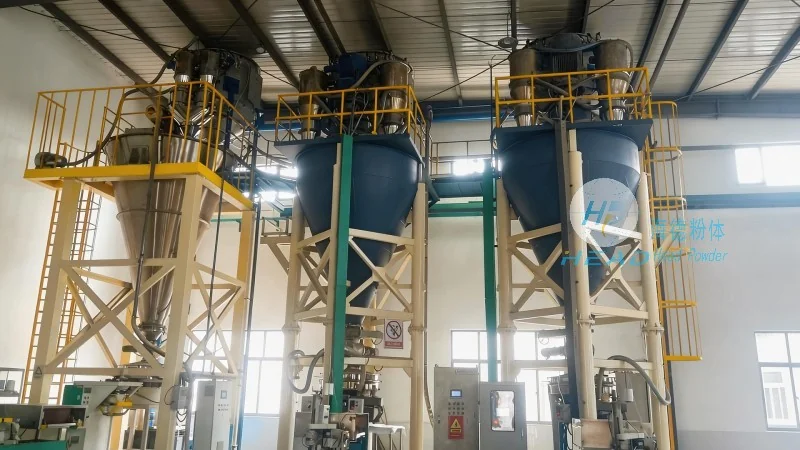
HeadPowder Engineering Co., Ltd. is headquartered in Shandong, China, where the company leverages local expertise and resources to develop cutting-edge solutions for material handling in the agricultural sector. Our commitment to innovation ensures that our systems meet the evolving needs of farmers and processing facilities, providing reliable and sustainable options for handling corn stalks and other biomass materials.
The corn stalk powder pneumatic conveying system operates on the principle of using compressed air to transport dry, powdery materials like corn stalks through a pipeline network. This method, known as pneumatic conveying, offers a highly efficient alternative to traditional mechanical conveying methods, such as belt conveyors or screw conveyors, which often struggle with the abrasive and fibrous nature of corn stalks.
At its core, the system consists of several key components: a material feed hopper, a rotary valve or feeder, a conveying pipeline, a pressure vessel or receiver, and a dust collection system. The process begins with the corn stalks being fed into the hopper, where they are broken down into smaller particles through a hammer mill or grinder. These particles are then pneumatically conveyed through the pipeline using compressed air, which is typically generated by a blower or compressor. The air and material mixture travels through the pipeline to the receiver, where the material is separated from the air and collected in a storage bin or processing unit.
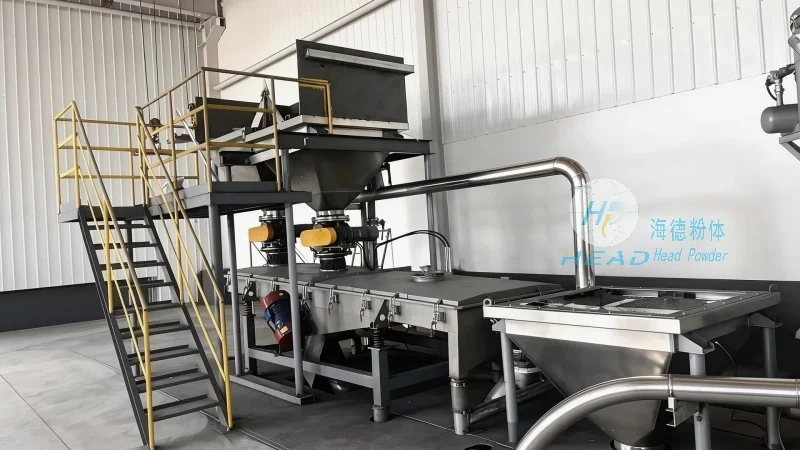
The system relies on the fundamental physics of fluid dynamics to move the corn stalk powder. By introducing compressed air into the pipeline, the air creates a low-pressure zone that draws the material particles along with it. The velocity of the air is carefully controlled to ensure that the material is conveyed without excessive wear on the pipeline or components. This controlled airflow minimizes material degradation and reduces the risk of blockages, which are common issues in traditional conveying systems.
One of the primary advantages of this system is its ability to handle the unique challenges posed by corn stalks. Unlike other materials, corn stalks are fibrous and can be abrasive, which can quickly wear out mechanical components. The pneumatic conveying system mitigates this issue by using flexible or abrasion-resistant pipelines and high-quality air separation equipment. This results in lower maintenance costs and longer service life for the system.
Another key feature is the system's flexibility in terms of layout and scale. It can be customized to fit the specific requirements of a processing facility, whether it's a small-scale farm operation or a large industrial plant. The modular design allows for easy expansion or modification as the facility's needs change over time.
The system also offers improved material handling efficiency compared to traditional methods. By eliminating the need for multiple transfer points and reducing material loss, the pneumatic conveying system ensures that more of the corn stalk powder reaches its intended destination. This not only increases productivity but also reduces waste and operational costs.
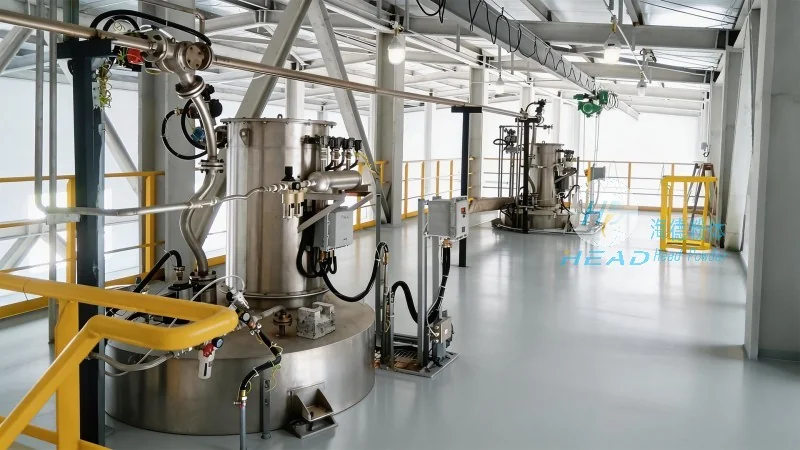
The corn stalk powder pneumatic conveying system is widely used in various agricultural and industrial applications. In the agricultural sector, it is commonly employed in the processing of corn stalks into biofuels, animal feed, or other value-added products. The system efficiently transports the processed powder from the grinding or drying stage to the storage or packaging area, streamlining the overall production process.
In industrial settings, the system can be used for the handling of other fibrous or powdery materials, such as wood chips, sawdust, or other biomass materials. Its adaptability makes it a versatile solution for a range of material handling challenges.
HeadPowder Engineering Co., Ltd. provides a robust and efficient corn stalk powder pneumatic conveying system that combines advanced technology with practical design. By leveraging the principles of pneumatic conveying, this system offers superior performance, lower maintenance requirements, and enhanced flexibility for agricultural and industrial applications. For businesses looking to optimize their material handling processes, the corn stalk powder pneumatic conveying system from HeadPowder is a reliable and effective solution.

 Shandong Headpowder Engineering Co., Ltd.
 156-6277-7102(Manager Zhang)
  0531-83386006
  Zhangqiu District, Jinan City, Shandong Province, China
telephone
WeChatconsult
top