With more than 10‑year industry experience, Shandong Headpowder delivers full‑service pneumatic‑conveying systems and blowers, undertaking nationwide turn‑key powder‑handling projects.
Denitration ash, also known as flue gas desulfurization (FGD) ash, is a byproduct generated during the process of removing nitrogen oxides from flue gases in power plants and industrial facilities. The efficient handling and transportation of this fine powder are critical for maintaining operational efficiency and ensuring environmental compliance. This article explores the concept of denitration ash powder material handling and delves into the underlying design principles that govern its effective management.
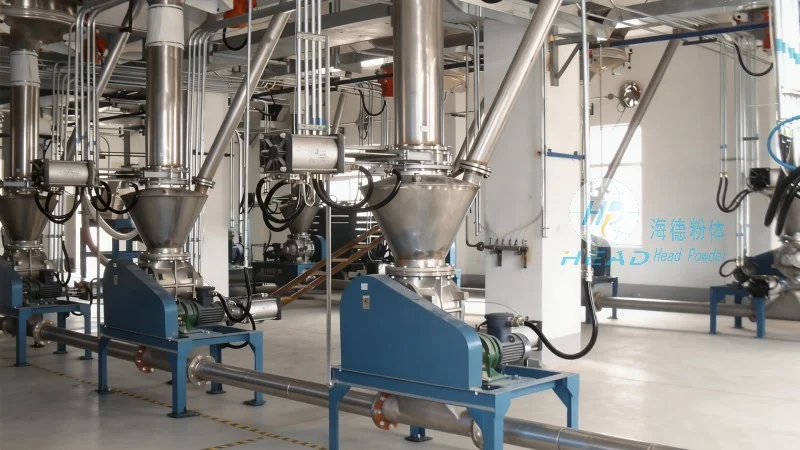
Denitration ash, produced through selective catalytic reduction (SCR) or other nitrogen oxide removal technologies, is characterized by its fine particle size and high moisture content. These properties make it challenging to handle, as it tends to agglomerate, clog equipment, and cause dust-related issues. Proper material handling systems must address these challenges to ensure safe and efficient processing. The primary goal of denitration ash handling is to transport the ash from the emission control equipment to storage or disposal sites while minimizing environmental impact and operational risks.
Shandong HeadPowder Engineering Co., Ltd., a leading provider of specialized material handling solutions, specializes in designing and implementing systems tailored to the unique needs of denitration ash management. With a focus on innovation and reliability, HeadPowder offers comprehensive solutions that address the complexities of ash handling, from collection and conveying to storage and disposal. The company’s expertise lies in understanding the physical and chemical properties of denitration ash and translating them into effective engineering solutions.
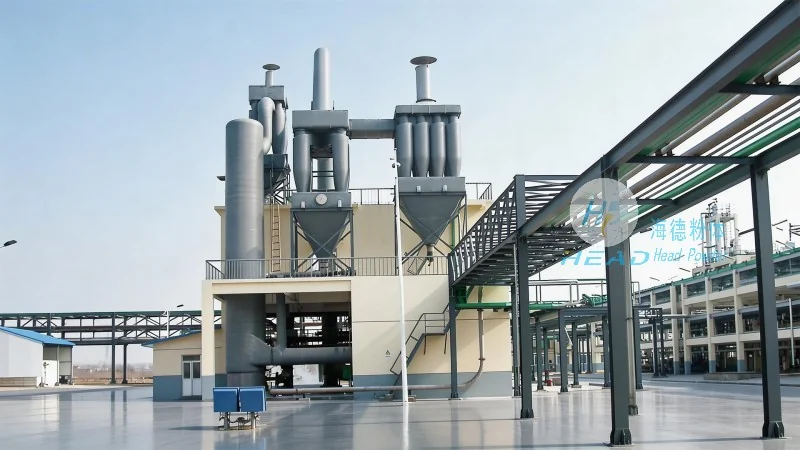
The design of denitration ash powder handling systems is guided by several critical principles to ensure optimal performance and safety. First, the system must be capable of handling the high moisture content and fine particle size of the ash without causing blockages or equipment wear. This often involves the use of specialized equipment such as rotary valves, screw conveyors, and pneumatic conveying systems. Second, the design must prioritize dust control and environmental compliance, as denitration ash is considered a hazardous waste in many regions. Enclosed systems, dust collection equipment, and proper ventilation are essential components to mitigate these risks. Third, the system should be designed for scalability and adaptability, allowing for future expansions or changes in ash production rates. This flexibility ensures that the investment in the handling system remains viable over the long term.
HeadPowder’s solutions typically incorporate a combination of equipment to handle denitration ash efficiently. Rotary valves are commonly used at the discharge point of the emission control equipment to control the flow of ash and prevent backflow. Screw conveyors are effective for horizontal or slight incline transport, as they can handle fine powders without clogging. For longer distances or vertical transport, pneumatic conveying systems are often employed. These systems use air pressure to move the ash through pipelines, reducing the need for mechanical components and minimizing maintenance requirements. Additionally, the use of wear-resistant materials in the construction of equipment is crucial to withstand the abrasive nature of denitration ash.

Once the denitration ash is transported to its destination, proper storage and disposal are essential. HeadPowder’s systems may include ash silos or storage tanks designed to accommodate large volumes of ash while maintaining stability and preventing leakage. The storage facilities are typically equipped with monitoring systems to track moisture levels and prevent spontaneous combustion, a common issue with high-moisture ash. For disposal, the ash may be used as a raw material in cement production or other industrial applications, reducing the environmental impact and providing a secondary economic benefit. The design of the storage and disposal system must align with local regulations and environmental standards to ensure compliance.
Denitration ash powder material handling is a complex process that requires careful consideration of the material’s properties and the design of the handling system. By adhering to key design principles and leveraging specialized equipment, facilities can achieve efficient, safe, and environmentally compliant ash management. Shandong HeadPowder Engineering Co., Ltd. plays a vital role in providing these solutions, with its expertise and commitment to innovation ensuring that clients receive systems tailored to their specific needs. The effective handling of denitration ash not only supports operational efficiency but also contributes to broader environmental goals by minimizing the impact of industrial emissions.

 Shandong Headpowder Engineering Co., Ltd.
 156-6277-7102(Manager Zhang)
  0531-83386006
  Zhangqiu District, Jinan City, Shandong Province, China
telephone
WeChatconsult
top