With more than 10‑year industry experience, Shandong Headpowder delivers full‑service pneumatic‑conveying systems and blowers, undertaking nationwide turn‑key powder‑handling projects.
Understanding the technology behind negative electrode material particle pneumatic conveying lines is crucial for industries dealing with lithium battery materials. These systems are engineered to efficiently transport fine powders, such as those used in lithium-ion battery production, with precision and reliability. This article will explore the fundamental concepts of these systems and delve into their design principles, highlighting the expertise of Shandong HeadPowder Engineering Co., Ltd., a leading provider in the field.
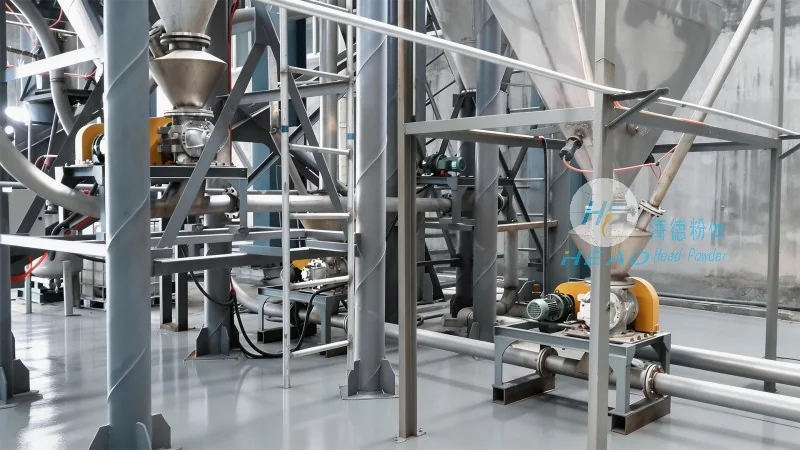
A negative electrode material particle pneumatic conveying line is a specialized system designed to move fine powders, typically used in the production of lithium battery negative electrodes, from one location to another. The primary function is to ensure the safe, efficient, and consistent transport of these materials, which are often sensitive to moisture and contamination. These systems are integral to the battery manufacturing process, as they facilitate the movement of raw materials and intermediate products through various stages of production.
The design of a negative electrode material particle pneumatic conveying line involves several critical components that work in tandem to achieve optimal performance. These components include the hopper or feed bin, which holds the material; the feeder, which controls the flow rate; the conveying pipeline, which transports the material; and the receiver or discharge hopper, where the material is deposited. Each component is carefully selected and integrated to ensure the system operates smoothly and meets the specific requirements of the application.
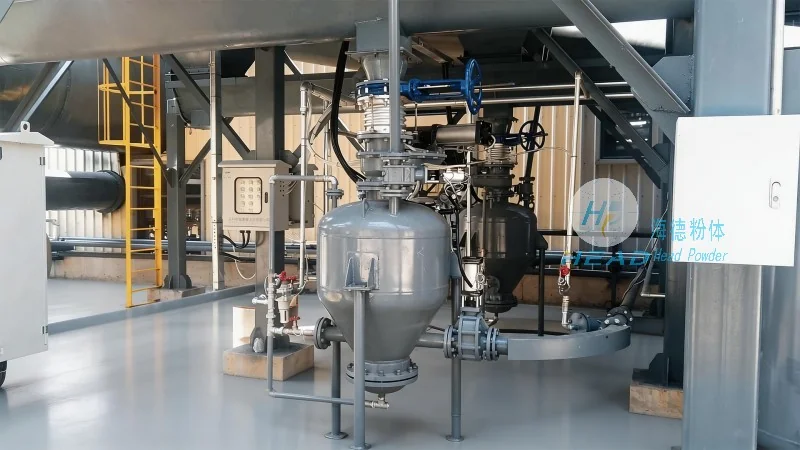
The design principles of a negative electrode material particle pneumatic conveying line focus on maximizing efficiency, minimizing material degradation, and ensuring safety. One of the core principles is the selection of appropriate air velocity and pressure to maintain the material in a suspended state without causing excessive wear on the system components. The system must also be designed to handle the specific properties of the negative electrode material, such as its particle size, density, and moisture content. Additionally, the design considers factors like system capacity, distance of transport, and the need for dust control and environmental compliance.
Shandong HeadPowder Engineering Co., Ltd., commonly known as HeadPowder, is a prominent manufacturer specializing in engineering solutions for powder handling and conveying systems. With a strong presence in China, particularly in Shandong, the company has developed extensive expertise in designing and manufacturing pneumatic conveying lines tailored to the needs of the battery industry. HeadPowder's team of engineers leverages advanced technology and years of experience to create customized solutions that enhance productivity, reduce operational costs, and ensure the highest standards of material quality. The company's commitment to innovation and customer satisfaction has made it a trusted partner for businesses seeking reliable and efficient material handling solutions.
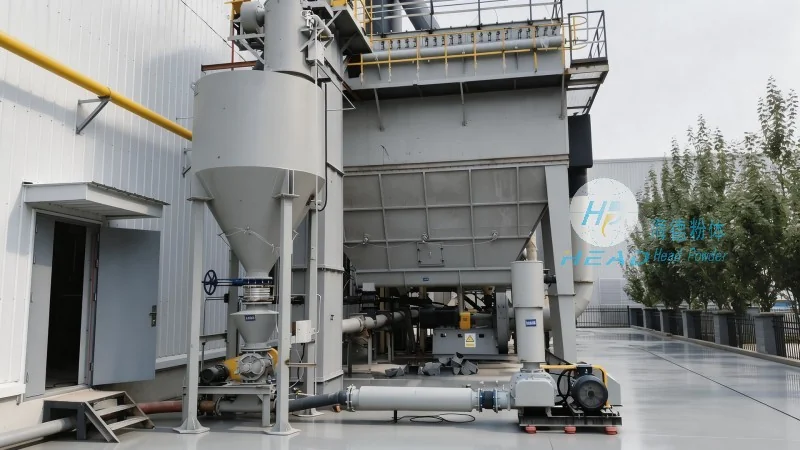
Compared to traditional methods like belt conveyors or bucket elevators, pneumatic conveying offers several advantages when handling negative electrode materials. These include the ability to transport materials over long distances with minimal maintenance, the prevention of cross-contamination between different batches of material, and the reduction of dust exposure for operators. The system also allows for precise control over the flow rate and pressure, ensuring consistent material delivery to downstream processes. Furthermore, pneumatic conveying can be integrated with other equipment, such as mixers and classifiers, to form a comprehensive material handling system that optimizes the entire production workflow.
In conclusion, negative electrode material particle pneumatic conveying lines are sophisticated systems that play a vital role in the production of lithium batteries. Their design principles are centered on efficiency, material integrity, and safety, making them indispensable in modern manufacturing environments. As the demand for high-performance batteries continues to grow, the importance of reliable and efficient material handling systems will only increase. Shandong HeadPowder Engineering Co., Ltd. remains at the forefront of this technology, providing tailored solutions that meet the evolving needs of the industry. By understanding the design principles and benefits of these systems, manufacturers can enhance their operational capabilities and stay competitive in the global market.

 Shandong Headpowder Engineering Co., Ltd.
 156-6277-7102(Manager Zhang)
  0531-83386006
  Zhangqiu District, Jinan City, Shandong Province, China
telephone
WeChatconsult
top