With more than 10‑year industry experience, Shandong Headpowder delivers full‑service pneumatic‑conveying systems and blowers, undertaking nationwide turn‑key powder‑handling projects.
Coking coal and limestone powder pneumatic conveying systems are essential in modern industrial processes, particularly for handling bulk materials. These systems utilize air or gas to transport solid particles through a pipeline network, offering a flexible and efficient method for material movement. The technology has evolved significantly over the years, adapting to the specific needs of various industries, including steel production, cement manufacturing, and chemical processing. Understanding the fundamentals of such systems is crucial for optimizing material handling operations and ensuring operational efficiency.
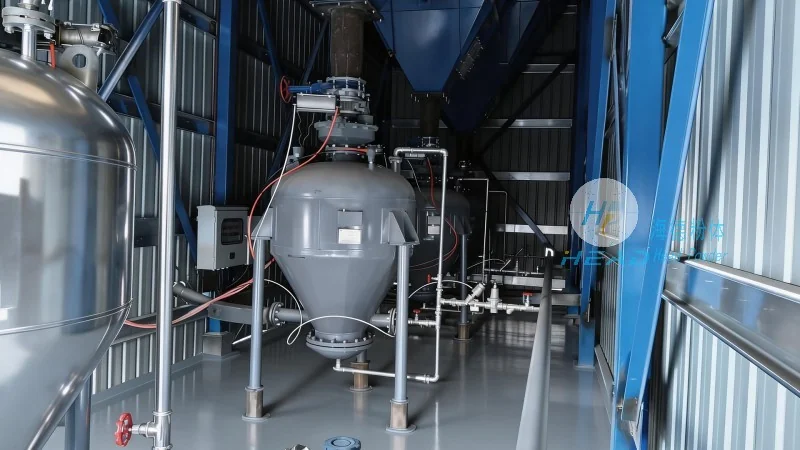
Pneumatic conveying systems are critical in modern industrial processes, particularly for handling bulk materials like coking coal and limestone powder. These systems utilize air or gas to transport solid particles through a pipeline network, offering a flexible and efficient method for material movement. The technology has evolved significantly over the years, adapting to the specific needs of various industries, including steel production, cement manufacturing, and chemical processing. Understanding the fundamentals of such systems is essential for optimizing material handling operations and ensuring operational efficiency.
At its core, a pneumatic conveying system operates by creating a pressure differential between the inlet and outlet of the pipeline. This differential is achieved through the use of a blower or compressor, which generates the necessary airflow to move the material. The system typically consists of a hopper for material storage, a feeder to control the flow rate, a pipeline network, and a receiver for the discharged material. The choice of system type—such as dilute-phase or dense-phase—depends on the material characteristics, such as particle size, density, and moisture content. For coking coal and limestone powder, which are often fine and abrasive, a well-designed system is crucial to prevent blockages and maintain consistent performance.
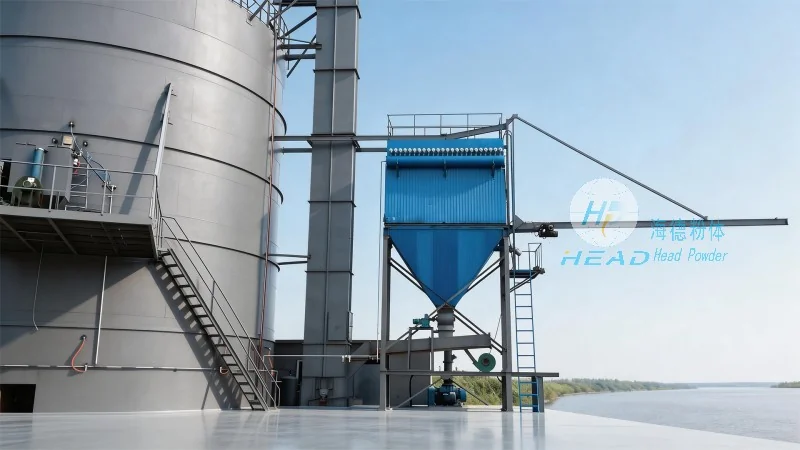
Several key components work in tandem to ensure the smooth operation of a pneumatic conveying system. The hopper serves as the storage vessel, holding the bulk material until it is needed. The feeder, which can be a rotary valve, screw feeder, or vibratory feeder, regulates the material flow into the pipeline, preventing overloading and ensuring a steady supply. The pipeline itself is typically made of stainless steel or other corrosion-resistant materials to withstand the abrasive nature of the materials being transported. The blower or compressor provides the motive force, generating the airflow that propels the material through the system. The receiver, often a hopper or silo, collects the material at the end of the pipeline, ready for further processing. Each component must be carefully selected and sized to match the specific requirements of the material being handled.
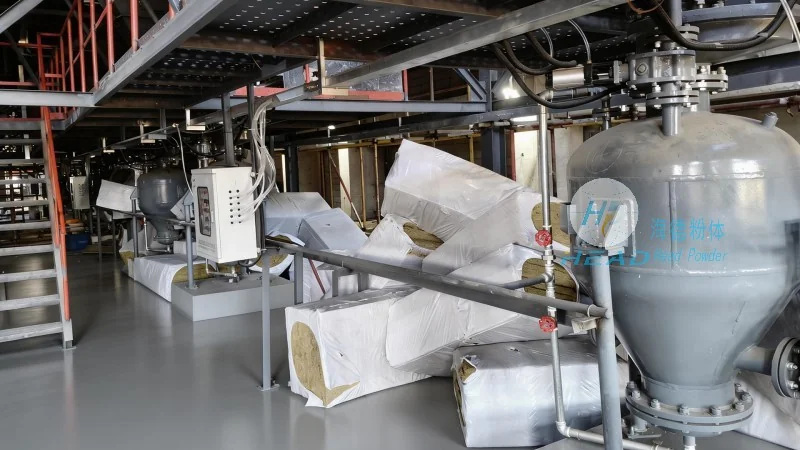
The design of a pneumatic conveying system for coking coal and limestone powder involves several critical principles to ensure efficiency and reliability. First, the system must be designed to handle the specific properties of the materials, such as particle size distribution, density, and moisture content. For example, fine limestone powder may require a higher air velocity to prevent settling in the pipeline, while coarser coking coal particles may need a different flow rate to avoid blockages. Second, the system should be optimized for energy efficiency, as the blower or compressor accounts for a significant portion of the operational costs. This can be achieved by selecting the appropriate blower type (e.g., centrifugal or positive displacement) and ensuring the pipeline is properly sized to minimize pressure losses. Third, the system must incorporate safety features, such as pressure relief valves and explosion-proof components, to protect against potential hazards. Additionally, the design should allow for easy maintenance and cleaning, as the abrasive nature of the materials can lead to wear and tear on components.

Pneumatic conveying systems for coking coal and limestone powder are widely used in various industrial applications. In steel production, coking coal is used as a fuel in the coking process, and limestone is added to the blast furnace to control slag formation. The pneumatic conveying system ensures that these materials are transported efficiently from storage to the processing units, reducing downtime and improving productivity. In cement manufacturing, limestone is a primary raw material, and its transport to the grinding mills is critical for maintaining production rates. The system also finds applications in chemical processing, where fine powders are used in various reactions, and in mining operations, where bulk materials are moved between processing stages. The versatility of pneumatic conveying systems makes them an ideal solution for handling a wide range of materials in these industries.
Shandong HeadPowder Engineering Co., Ltd., commonly known as HeadPowder, is a leading manufacturer and supplier of pneumatic conveying systems and related equipment. With a strong focus on innovation and quality, the company has established itself as a trusted partner in the industry. HeadPowder specializes in designing and manufacturing customized solutions for various bulk material handling applications, including those involving coking coal and limestone powder. The company's team of experienced engineers and technicians work closely with clients to understand their specific needs and develop tailored systems that meet their operational requirements. HeadPowder's products are known for their durability, efficiency, and reliability, making them a preferred choice for many industrial applications. The company is committed to providing excellent customer service and support, ensuring that clients receive the best possible solutions for their material handling needs.

 Shandong Headpowder Engineering Co., Ltd.
 156-6277-7102(Manager Zhang)
  0531-83386006
  Zhangqiu District, Jinan City, Shandong Province, China
telephone
WeChatconsult
top