With more than 10‑year industry experience, Shandong Headpowder delivers full‑service pneumatic‑conveying systems and blowers, undertaking nationwide turn‑key powder‑handling projects.
Ammonium nitrate is a widely used chemical compound in various industrial applications, and its efficient handling and transportation are crucial for operational efficiency. Pneumatic conveying systems offer a reliable method for moving this material, especially in bulk handling scenarios. This article explores the different types of pneumatic conveying systems used for ammonium nitrate, their key features, and the typical application ranges where these systems are employed.
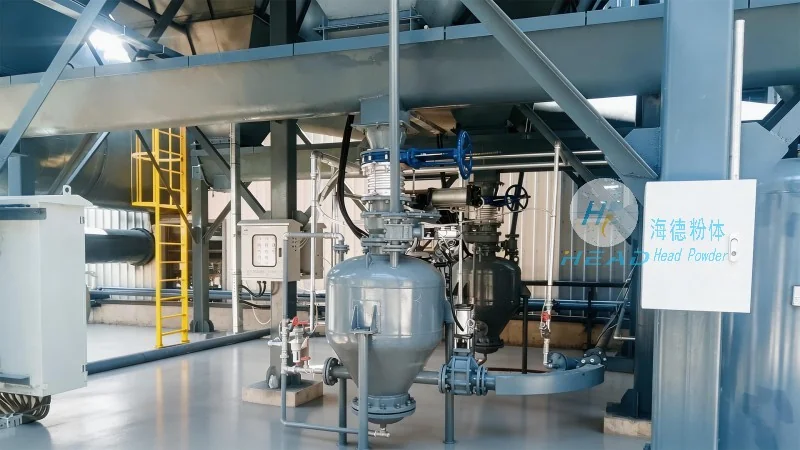
Ammonium nitrate (AN) is a white crystalline solid commonly used as a fertilizer, in explosives, and in various chemical processes. Due to its granular or powdered form, traditional conveying methods like belt conveyors or bucket elevators may not be suitable for all applications. Pneumatic conveying systems utilize air or other gases to transport the material through a pipeline network, providing a dust-free, closed-loop operation that enhances safety and environmental compliance. The choice of pneumatic conveying system depends on factors such as material properties, required throughput, system layout, and operational environment.
Several types of pneumatic conveying systems are available for handling ammonium nitrate, each with distinct characteristics and suitability for different conditions. The primary categories include:
Dilute phase systems are the most common type for ammonium nitrate handling. In this system, the material is suspended in a high-velocity air stream, typically at velocities above 20 m/s. The air-to-material ratio is relatively high, which allows for long-distance transport with minimal pressure drops. Dilute phase systems are suitable for applications requiring high throughput and relatively short to medium transport distances. They are often used in fertilizer plants, chemical processing facilities, and bulk material handling operations where the material needs to be moved from storage to processing units or to loading/unloading points.
Dense phase systems operate at lower air velocities, typically between 5 to 15 m/s, and a lower air-to-material ratio compared to dilute phase systems. The material is conveyed in a dense, slurry-like state, which reduces the risk of material degradation and blockages. This type of system is ideal for transporting ammonium nitrate over longer distances or when the material is sensitive to high velocities or pressure changes. Dense phase conveying is commonly used in applications where the material needs to be transported from a storage silo to a processing plant or for interplant transfer, ensuring minimal product degradation and consistent flow.
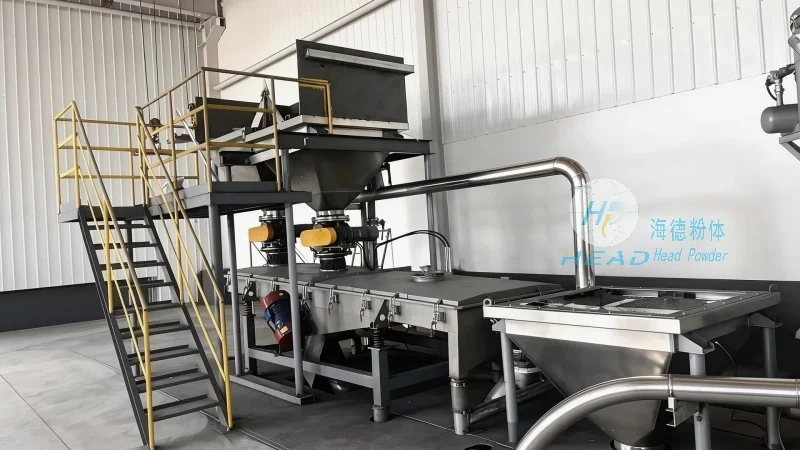
Hybrid systems combine elements of both dilute and dense phase operations. They may use a combination of high and low air velocities in different sections of the pipeline to optimize performance. For instance, a system might use a dilute phase for the initial transport segment and then transition to a dense phase for the final delivery to the destination. Hybrid systems are particularly useful when dealing with varying material characteristics or when the transport distance and required throughput vary significantly. They offer flexibility in handling ammonium nitrate in diverse operational scenarios, ensuring efficient and reliable material movement.
The effectiveness of a pneumatic conveying system for ammonium nitrate is determined by several key features that enhance performance, safety, and operational efficiency. These features include:
Efficient material handling is achieved through proper design of the conveying system, including the selection of appropriate air velocities, pipeline diameters, and pressure levels. The system must be capable of maintaining a consistent flow rate while minimizing pressure losses and ensuring that the material is fully suspended or conveyed in a dense phase as required. This ensures that the ammonium nitrate is transported without segregation or degradation, maintaining its quality and usability.
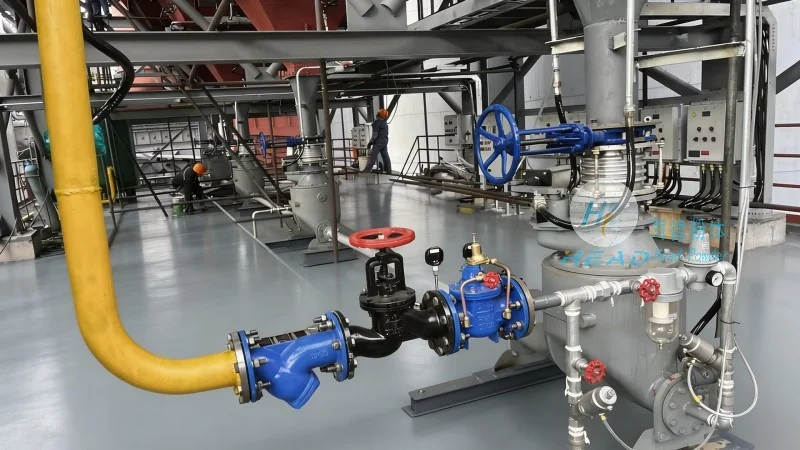
Ammonium nitrate is a hazardous material, and pneumatic conveying systems are designed to minimize risks associated with dust explosions and material exposure. The closed-loop operation of these systems prevents dust from entering the environment, reducing the risk of inhalation hazards and environmental contamination. Additionally, the system incorporates safety features such as pressure relief valves, explosion-proof components, and material flow monitoring to ensure safe operation. These features are crucial for compliance with industrial safety regulations and environmental standards.
Pneumatic conveying systems are designed to be flexible and scalable to accommodate varying production demands and operational changes. The system can be easily expanded or modified to handle increased throughput or to integrate additional conveying lines. This flexibility is particularly important in industrial settings where production volumes may fluctuate or where new processing units are added. The ability to adapt the system to changing needs ensures long-term operational efficiency and cost-effectiveness.
The application ranges of pneumatic conveying systems for ammonium nitrate are broad and cover various industrial sectors. The primary applications include:
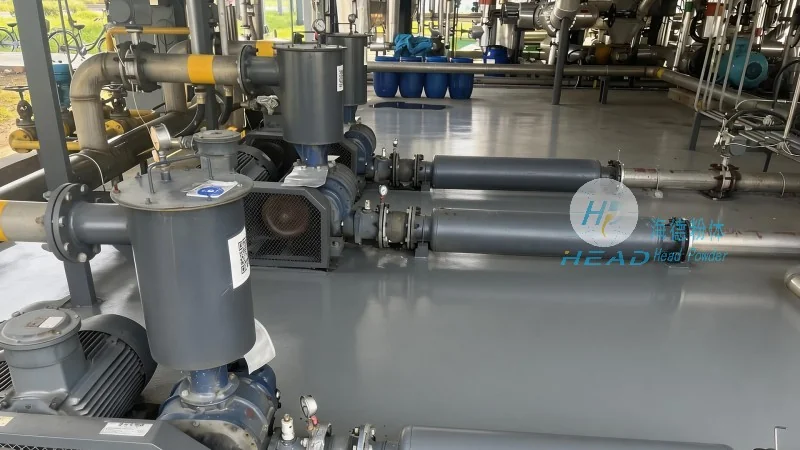
In the fertilizer industry, ammonium nitrate is a key component in nitrogen-based fertilizers. Pneumatic conveying systems are used to transport the material from storage silos to processing units, where it is mixed with other ingredients to form fertilizer blends. The systems are also used to move the finished fertilizer products from the production line to storage or loading facilities for distribution. The high throughput and reliability of pneumatic conveying make it ideal for meeting the demands of modern fertilizer manufacturing, ensuring consistent and efficient material handling.
Ammonium nitrate is used in various chemical processes, including the production of explosives, plastics, and other chemical intermediates. Pneumatic conveying systems are employed to transport the material to chemical reactors or processing equipment, where it is used as a raw material. The systems are designed to handle the material under controlled conditions, minimizing the risk of reaction or contamination. The ability to convey ammonium nitrate in a closed system ensures that the material is handled safely and efficiently, supporting the overall chemical processing operations.
For bulk material handling and storage facilities, pneumatic conveying systems are used to move ammonium nitrate between storage silos, processing units, and loading/unloading points. The systems can be integrated with silo discharge systems to ensure continuous material flow. They are also used in interplant transfer operations, where ammonium nitrate is transported from one facility to another for further processing or distribution. The reliability and efficiency of pneumatic conveying make it a preferred method for bulk material handling, ensuring that the material is moved without interruption or loss.
Pneumatic conveying systems offer a reliable and efficient method for handling ammonium nitrate in various industrial applications. The different types of systems, including dilute phase, dense phase, and hybrid options, provide flexibility to meet the diverse needs of material handling. Key features such as material handling efficiency, safety compliance, and system scalability ensure that these systems are suitable for long-term operational use. The application ranges span from fertilizer production and chemical processing to bulk material handling, highlighting the versatility of pneumatic conveying in the industrial sector. As a result, companies like Shandong HeadPowder Engineering Co., Ltd., based in China, specialize in designing and implementing these systems to meet the specific requirements of their clients, ensuring optimal performance and safety in ammonium nitrate handling operations.

 Shandong Headpowder Engineering Co., Ltd.
 156-6277-7102(Manager Zhang)
  0531-83386006
  Zhangqiu District, Jinan City, Shandong Province, China
telephone
WeChatconsult
top