With more than 10‑year industry experience, Shandong Headpowder delivers full‑service pneumatic‑conveying systems and blowers, undertaking nationwide turn‑key powder‑handling projects.
Graphite anode material is a critical component in lithium-ion battery production, and the efficient handling of its particle form is essential for maintaining production line stability and product quality. Pneumatic conveying systems are widely used to transport these fine particles from one location to another within industrial facilities. Two primary methods dominate this application: positive pressure conveying and negative pressure conveying. This analysis compares the two approaches, highlighting their operational principles, advantages, disadvantages, and suitability for graphite anode material handling, with a focus on the technical and practical considerations that influence their selection in industrial settings.
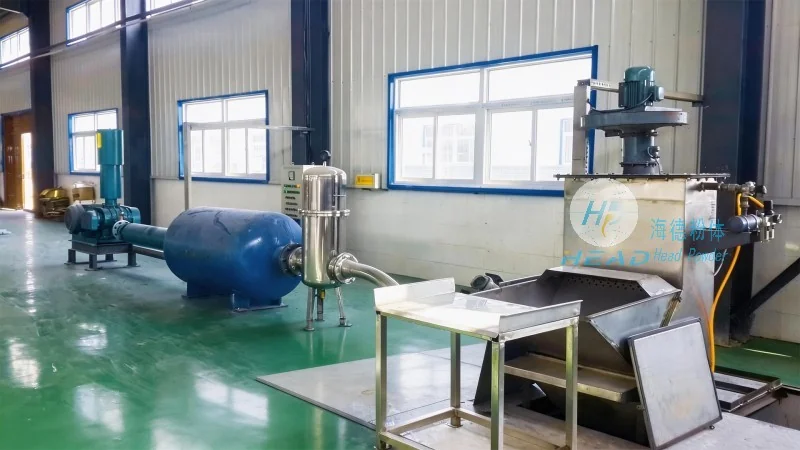
Graphite anode material, typically in the form of fine powders or granules, requires specialized handling due to its abrasive nature and the need to prevent contamination or agglomeration. Pneumatic conveying systems utilize air or gas to transport solid materials through a pipeline network, offering a dust-free and enclosed solution that is well-suited for sensitive materials like graphite anodes. The choice between positive pressure and negative pressure conveying depends on factors such as material properties, system layout, and operational requirements.
Positive pressure conveying, also known as pressure conveying, operates by generating a higher pressure in the conveying line than the ambient environment. This is achieved by using a positive displacement blower or a rotary lobe blower that forces air into the pipeline, carrying the material particles forward. The system typically includes a feed hopper, a conveyor line, and a discharge point, with the entire pipeline under positive pressure. For graphite anode material, this method is effective for short to medium distance transport and when the material is relatively dry and free-flowing. The positive pressure also helps to maintain consistent material flow rates, which is crucial for maintaining production line throughput. Additionally, the system is relatively simple to install and maintain, with fewer components compared to negative pressure systems. This makes it a cost-effective solution for many industrial applications, particularly when the conveying distance is short and the material is non-hazardous.
One of the key advantages of positive pressure conveying is its ability to handle a wide range of material sizes and densities. It can effectively transport fine powders, as well as larger granules, without requiring excessive air volumes. The positive pressure also ensures consistent flow rates, which is vital for production line efficiency. Furthermore, the system's simplicity reduces installation and maintenance costs, making it an economical choice for short to medium distance applications.
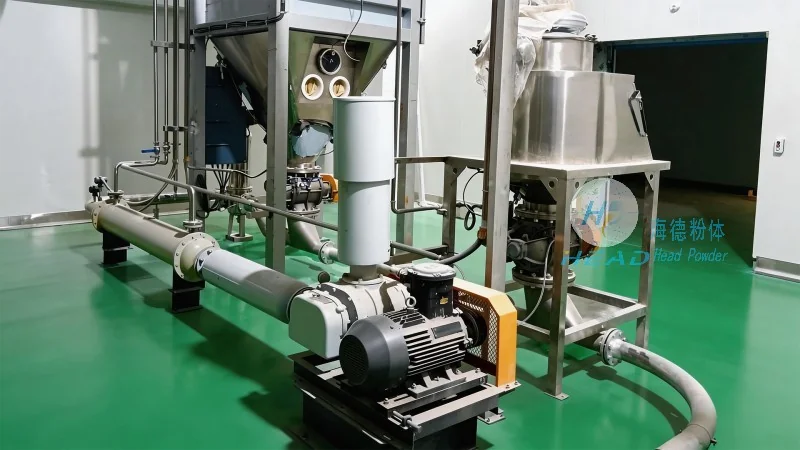
Despite its advantages, positive pressure conveying has limitations when applied to graphite anode material. The high pressure required increases energy consumption, making it less efficient for long-distance transport. The system also generates more noise and vibration, necessitating additional noise control measures. Furthermore, positive pressure systems are more prone to pressure drops and blockages, especially with abrasive materials like graphite, which can cause wear on the pipeline and components. Regular maintenance and monitoring are essential to prevent system failures and ensure reliable operation.
Negative pressure conveying, or vacuum conveying, operates by creating a lower pressure in the conveying line than the ambient environment. This is achieved using a vacuum pump that draws air and material particles into the pipeline from the feed point and transports them to the discharge point. The system typically includes a feed hopper, a vacuum pump, and a filter or cyclone to separate the material from the air at the discharge end. Negative pressure conveying is particularly suitable for handling fine powders and dust, as it can draw material from a source without the need for a direct feed mechanism.
One of the primary advantages of negative pressure conveying is its lower energy consumption compared to positive pressure systems, especially for long-distance transport. The vacuum pump operates at lower pressures, reducing energy costs and making it more economical for extended conveying distances. Additionally, negative pressure systems are generally quieter and less vibration-prone, contributing to a more comfortable working environment. The ability to draw material from a source without direct contact also minimizes the risk of material contamination and worker exposure.
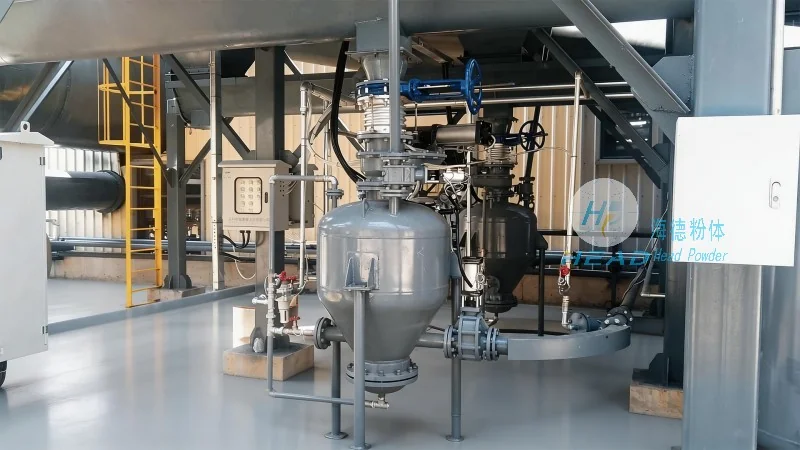
However, negative pressure conveying has its own set of challenges when handling graphite anode material. The system is more complex and requires more components, including a vacuum pump, filter, and often a larger pipeline diameter to maintain sufficient airflow. This increases the initial investment and maintenance costs. The vacuum system is also more susceptible to clogging, especially with fine powders that can accumulate in the filter or cyclone, leading to reduced efficiency and potential system downtime. Furthermore, negative pressure conveying may not be suitable for abrasive materials like graphite, as the pipeline and components are more prone to wear and damage over time.
When comparing positive and negative pressure conveying for graphite anode material, several factors must be considered to determine the most suitable method. The primary consideration is the conveying distance: positive pressure is generally more efficient for short to medium distances, while negative pressure is better for longer distances. Material properties also play a critical role; fine powders and abrasive materials are better suited to negative pressure systems due to their lower energy requirements and reduced wear on components. System layout and installation costs are also important; positive pressure systems are simpler and less expensive to install, whereas negative pressure systems require more complex equipment and infrastructure.
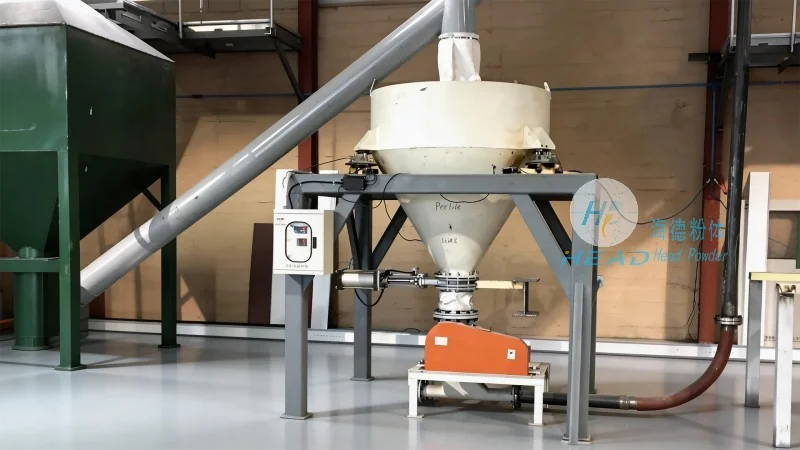
Regardless of the chosen method, proper operational practices are essential to ensure the reliability and efficiency of pneumatic conveying systems for graphite anode material. Regular maintenance, including cleaning filters and checking for wear on components, is crucial to prevent system failures. Monitoring pressure and flow rates helps to identify potential issues early, allowing for timely adjustments. Additionally, selecting the appropriate air velocity and pipeline diameter is critical to prevent material settling or clogging, which can lead to reduced throughput and increased maintenance costs.
In conclusion, both positive and negative pressure conveying methods have their advantages and limitations when applied to graphite anode material. The choice between the two depends on the specific requirements of the industrial application, including conveying distance, material properties, and operational costs. Positive pressure conveying is ideal for short to medium distances and non-abrasive materials, while negative pressure conveying is better suited for long-distance transport and fine powders. By carefully evaluating these factors and implementing best practices, manufacturers can select the most effective pneumatic conveying system to ensure efficient and reliable handling of graphite anode material, ultimately contributing to improved production efficiency and product quality.
Shandong HeadPowder Engineering Co., Ltd. specializes in providing advanced pneumatic conveying solutions tailored to the needs of the battery materials industry. With expertise in both positive and negative pressure systems, the company offers customized solutions that optimize material handling for graphite anode production. The company's commitment to quality and innovation ensures that clients receive reliable and efficient systems that meet the highest standards of performance and safety. HeadPowder Engineering is dedicated to supporting the growth and success of the battery industry through advanced material handling technologies.

 Shandong Headpowder Engineering Co., Ltd.
 156-6277-7102(Manager Zhang)
  0531-83386006
  Zhangqiu District, Jinan City, Shandong Province, China
telephone
WeChatconsult
top