With more than 10‑year industry experience, Shandong Headpowder delivers full‑service pneumatic‑conveying systems and blowers, undertaking nationwide turn‑key powder‑handling projects.
Zinc powder, a vital material in industries such as galvanization, battery manufacturing, and chemical processing, demands efficient and safe handling methods to preserve its integrity and ensure operational safety. Pneumatic conveying technology addresses this need by transporting zinc powder through pipelines using air or other gases. This approach is particularly advantageous for zinc powder due to its fine particle size and propensity for dust generation, as it minimizes material degradation and exposure risks compared to traditional bulk handling techniques. The decision between vacuum and positive pressure systems hinges on factors like transport distance, material characteristics, and system complexity, making an understanding of each approach essential for optimizing zinc powder handling in industrial settings.
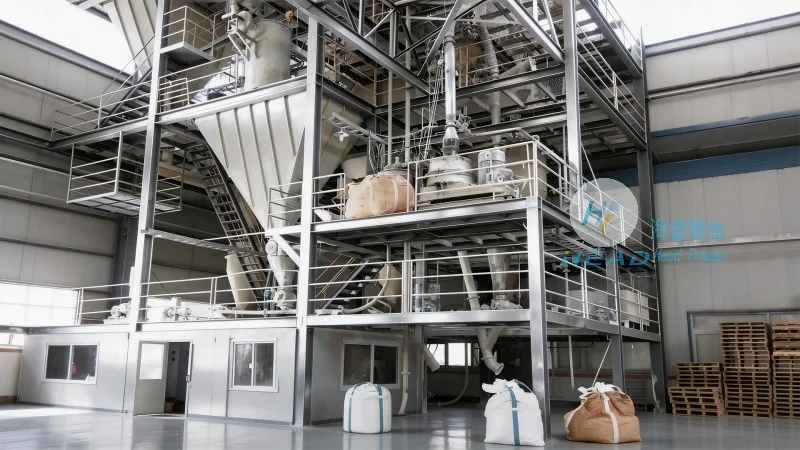
Vacuum pneumatic conveying systems operate by creating a negative pressure environment to draw zinc powder from a source into a conveying line. This method is ideal for short to medium-distance transport, typically up to several hundred meters, and is especially effective when the zinc powder is stored in a hopper or silo at the source. The vacuum system functions by establishing a pressure differential, with the conveying line maintained at a lower pressure than the ambient environment, causing the powder to be drawn into the line via suction force. Key advantages of vacuum conveying for zinc powder include its ability to handle fine powders without high air velocities, reducing the risk of particle degradation and equipment wear. Additionally, vacuum systems are more energy-efficient for shorter distances, as they require less power to sustain the pressure differential compared to positive pressure systems. However, vacuum conveying has limitations, such as lower transport capacity for larger quantities and potential backpressure issues if the line is blocked or the destination container is full. For longer-distance or higher-volume applications, vacuum systems may not be the most suitable option.
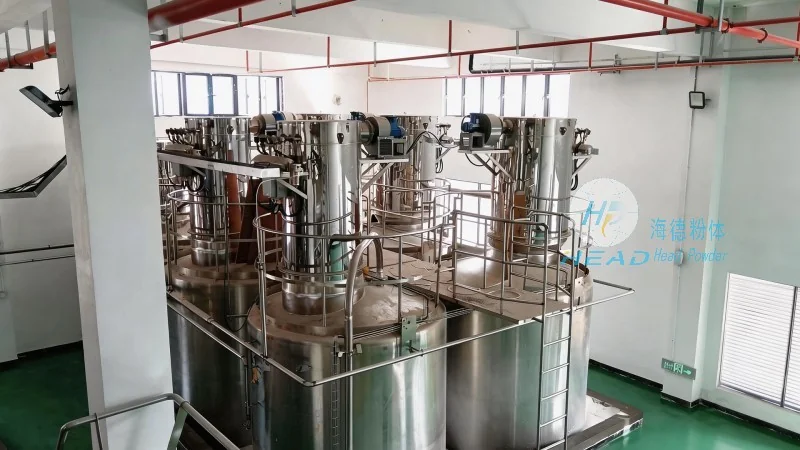
Positive pressure pneumatic conveying systems, conversely, operate by blowing air or gas into the conveying line, creating a positive pressure environment that pushes zinc powder from the source to the destination. This method is commonly used for longer transport distances, often exceeding several hundred meters, and is suitable for both bulk and fine powders. The positive pressure system typically employs a blower or compressor to supply compressed air to the conveying line, ensuring consistent material flow. One of the primary advantages of positive pressure conveying is its higher transport capacity, making it ideal for large-scale zinc powder handling in industrial plants. Moreover, positive pressure systems are less susceptible to backpressure issues compared to vacuum systems, as the line pressure remains above atmospheric pressure, preventing material from flowing back into the source. However, positive pressure conveying requires more energy to operate, as it must overcome pipeline resistance and valve/fitting resistance. Higher air velocities in positive pressure systems may also increase the risk of particle degradation and equipment wear if not properly managed. Proper system design and maintenance are crucial to ensure efficient and reliable operation.
When selecting a pneumatic conveying system for zinc powder, several factors must be carefully evaluated to ensure optimal performance and cost-effectiveness. The first consideration is transport distance: vacuum systems are generally more suitable for short to medium distances, while positive pressure systems are better for longer distances. The second factor is material characteristics, including particle size, density, and flowability. Fine powders with high moisture content or cohesive properties may require specialized equipment or additional conditioning to ensure smooth transport. The third consideration is system capacity, which depends on production rate and storage requirements. For high-volume applications, positive pressure systems are often preferred due to their higher capacity, while vacuum systems may suffice for smaller-scale operations. Additionally, facility layout and source/destination locations play a critical role in system design. Obstacles, elevation changes, or multiple transfer points may necessitate complex configurations, such as multi-stage or loop systems. Proper selection of pipeline materials, valves, and filters is essential to prevent buildup, clogging, or contamination. Regular maintenance and monitoring are also vital to ensure long-term reliability and minimize downtime.
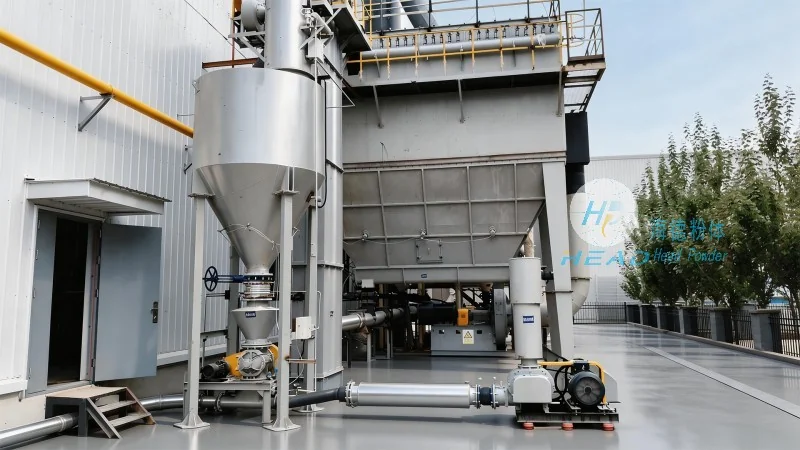
Zinc powder is widely utilized in various industrial applications, and the choice of pneumatic conveying system depends on specific requirements. For instance, in galvanization plants, zinc powder is transported from storage silos to the coating line using a vacuum system, as the distance is short and the material is fine. The vacuum system ensures safe and efficient handling, minimizing dust exposure and product degradation. In battery manufacturing, zinc powder serves as an electrode material and is transported from a processing line to a mixing tank using a positive pressure system, as the distance is longer and volume is higher. The positive pressure system provides the necessary capacity and pressure for smooth transport and prevents material loss. In chemical processing, zinc powder is used as a catalyst or reagent and is conveyed from a storage tank to a reactor using a combination of vacuum and positive pressure stages, depending on distance and flow rate. System design is tailored to process conditions, ensuring controlled delivery and preventing contamination. These examples illustrate the versatility of pneumatic conveying systems in handling zinc powder for different industrial applications, highlighting the importance of selecting the appropriate system based on operational needs.

 Shandong Headpowder Engineering Co., Ltd.
 156-6277-7102(Manager Zhang)
  0531-83386006
  Zhangqiu District, Jinan City, Shandong Province, China
telephone
WeChatconsult
top