With more than 10‑year industry experience, Shandong Headpowder delivers full‑service pneumatic‑conveying systems and blowers, undertaking nationwide turn‑key powder‑handling projects.
When it comes to transporting diatomite powder via pneumatic systems, the choice between positive pressure and negative pressure conveyors is a critical decision that impacts efficiency, safety, and operational costs. Understanding the fundamental differences between these two methods is essential for selecting the most suitable solution for your specific application. This article explores the key distinctions, operational characteristics, and practical considerations to help you make an informed choice.
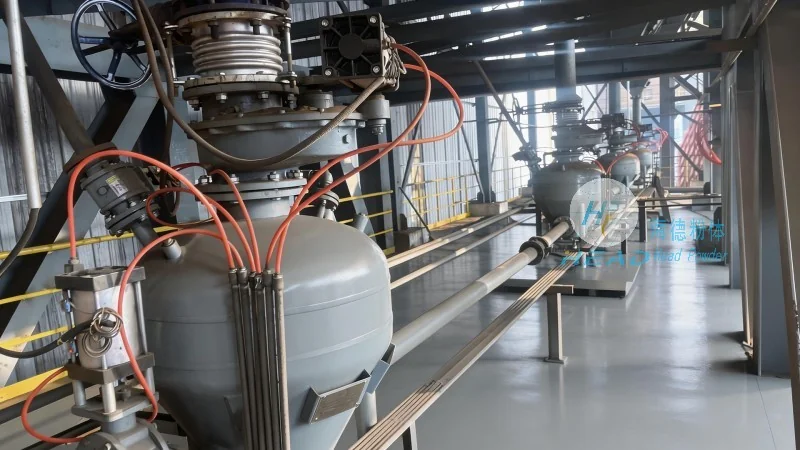
Positive pressure systems operate by generating and maintaining a pressure within the conveying line that is higher than the surrounding atmospheric pressure. This is typically achieved using a positive displacement blower or a rotary lobe blower that forces air through the system. The high-pressure air pushes the diatomite powder particles along the pipeline, ensuring consistent and reliable transport. A key advantage of positive pressure is its ability to handle long-distance and multi-point delivery, as the pressure can be maintained throughout the entire system. Additionally, positive pressure systems are often more suitable for transporting hot or abrasive materials, as the high-pressure air can effectively handle these challenges without compromising the integrity of the material.
Negative pressure systems, on the other hand, create a vacuum or low-pressure environment within the conveying line, which is lower than the atmospheric pressure. This is typically accomplished using a fan or an eductor that draws air and material into the system. The negative pressure pulls the diatomite powder particles from the source into the pipeline, moving them toward the destination. Unlike positive pressure, negative pressure systems are generally more effective for short-distance and low-volume applications. They are particularly well-suited for handling materials that are sensitive to pressure changes or for applications where dust control and environmental protection are paramount.
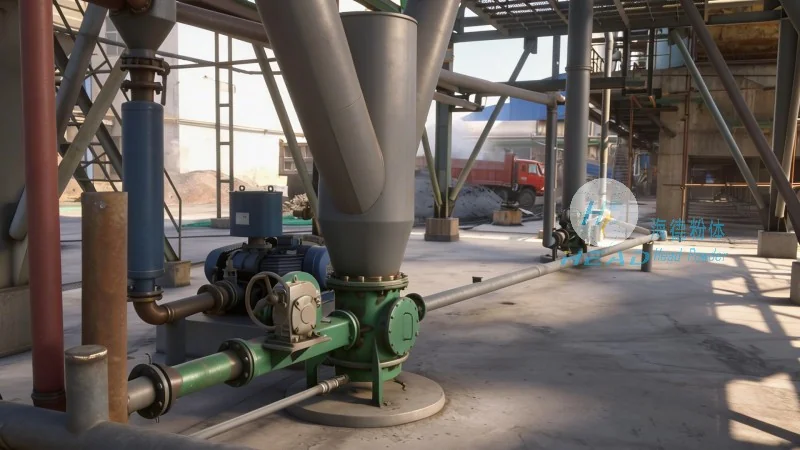
The primary difference between positive and negative pressure pneumatic conveying lies in the direction of air flow and the pressure differential. In positive pressure, air moves from the blower into the pipeline, pushing the material forward. In negative pressure, air is drawn into the system from the environment, pulling the material into the pipeline. This fundamental difference dictates the design, equipment, and operational requirements of each system. Positive pressure systems require robust blower units capable of maintaining high pressure, while negative pressure systems rely on efficient fans or eductors to generate sufficient suction. The choice between the two also depends on factors such as the distance between the source and destination, the volume of material to be transported, and the specific properties of the diatomite powder, including its particle size, moisture content, and dust generation characteristics.
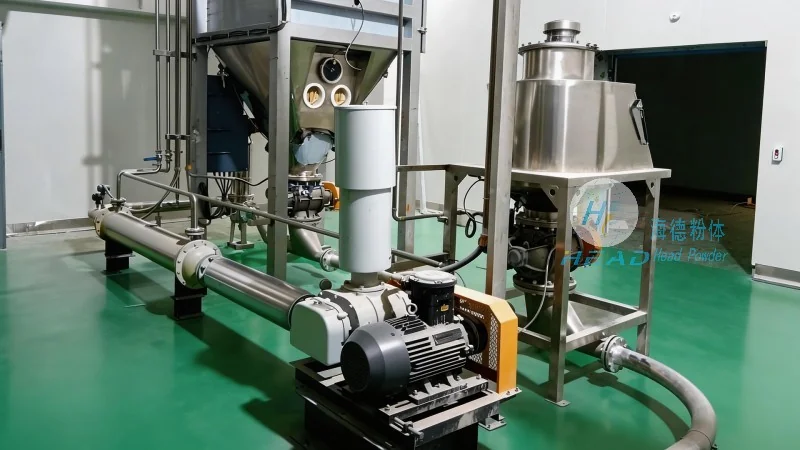
For diatomite powder, which is often used in industrial applications like filtration, insulation, and as a filler in various products, the choice of conveying system can significantly impact performance. Positive pressure systems are commonly preferred for large-scale operations where the diatomite needs to be transported over long distances or to multiple points of use. The consistent pressure ensures that the powder is delivered without segregation or degradation. Negative pressure systems, however, may be more appropriate for smaller-scale applications or for handling diatomite that is prone to dust generation, as they help minimize the release of fine particles into the environment. The selection also considers the need for dust control measures, as negative pressure systems inherently provide better containment compared to positive pressure systems, which may require additional filtration or sealing components.
Shandong HeadPowder Engineering Co., Ltd., a leading provider of pneumatic conveying solutions, specializes in designing and implementing customized systems tailored to the unique needs of diatomite powder applications. With a focus on efficiency, reliability, and safety, the company leverages its expertise to deliver optimal positive or negative pressure solutions. HeadPowder's team of engineers evaluates factors such as material properties, operational requirements, and site constraints to recommend the most suitable system. The company's commitment to quality and customer satisfaction ensures that clients receive systems that meet their specific conveying needs while adhering to industry standards. Located in Shandong, China, HeadPowder serves a wide range of industries, including mining, chemical processing, and manufacturing, providing comprehensive support from system design to installation and maintenance.

 Shandong Headpowder Engineering Co., Ltd.
 156-6277-7102(Manager Zhang)
  0531-83386006
  Zhangqiu District, Jinan City, Shandong Province, China
telephone
WeChatconsult
top