With more than 10‑year industry experience, Shandong Headpowder delivers full‑service pneumatic‑conveying systems and blowers, undertaking nationwide turn‑key powder‑handling projects.
When it comes to transporting PVC materials, selecting the right conveying method is crucial for efficiency and safety. Two primary approaches are widely used: positive pressure conveying and negative pressure conveying. Understanding the differences between these methods is essential for making an informed decision that aligns with operational needs. This article, presented by Shandong HeadPowder Engineering Co., Ltd. (headpowder), will explore the characteristics of each method and provide guidance on how to distinguish between them.
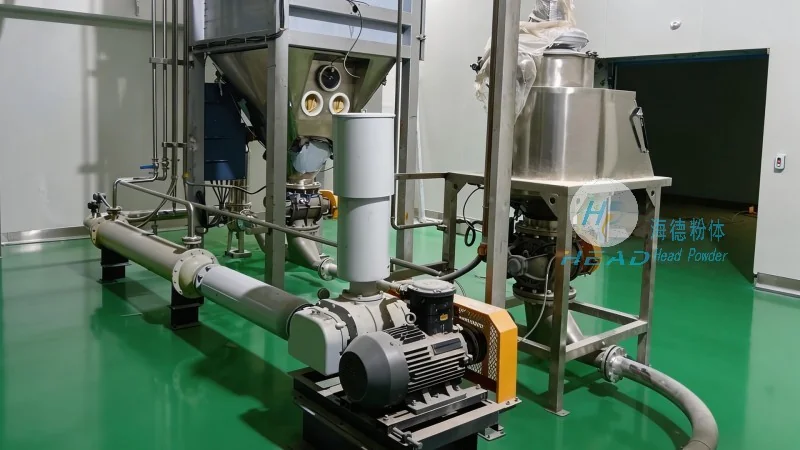
Positive pressure conveying involves blowing air or a gas mixture into the material stream to move the PVC particles. This method is often used for materials that are difficult to handle due to their properties, such as fine powders or those with high moisture content. The system typically includes a blower or compressor that generates the necessary pressure to push the material through the conveying line. One of the key advantages of positive pressure is its ability to handle abrasive or corrosive materials without causing excessive wear on the equipment. Additionally, it can be used in environments where dust control is a priority, as the system can be designed with enclosed ducts to minimize particle dispersion.
In the context of PVC, positive pressure conveying is particularly effective for handling materials that are prone to caking or agglomeration. The consistent pressure helps maintain the material's flowability, ensuring smooth transport from the source to the destination. However, it's important to note that this method may require more energy compared to negative pressure, as the blower needs to overcome the resistance of the material and the ductwork.
Negative pressure conveying, also known as suction conveying, operates by creating a vacuum in the conveying line to draw the PVC material from the source. This method relies on a vacuum pump or fan to create the necessary suction force. Unlike positive pressure, negative pressure does not use compressed air to push the material, which can be more energy-efficient in some cases. It is commonly used for materials that are light and free-flowing, as the vacuum can effectively pull the particles through the ducts. Negative pressure conveying is also beneficial for applications where the material needs to be transported from a higher elevation to a lower one, as the vacuum can assist in the movement without the need for additional mechanical assistance.
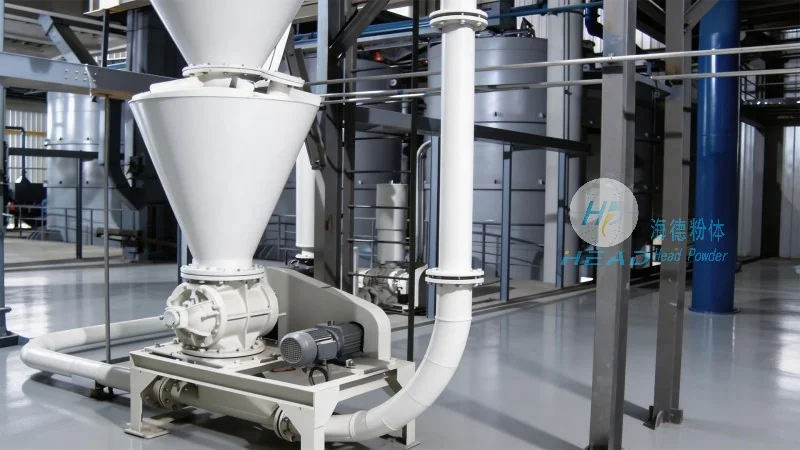
For PVC applications, negative pressure is often preferred when dealing with non-abrasive materials or when the conveying distance is relatively short. The system is generally simpler and more cost-effective compared to positive pressure, as it does not require high-pressure blowers. However, it may have limitations when handling heavy or sticky materials, as the suction force might not be sufficient to maintain consistent flow. Additionally, the risk of dust contamination is higher in negative pressure systems, as the vacuum can draw in ambient air and particles from the environment.
So, how can one distinguish between positive and negative pressure conveying for PVC? The key factors to consider include the material properties, conveying distance, and environmental requirements. Material properties such as particle size, moisture content, and tendency to agglomerate play a significant role. For example, if the PVC is a fine powder with high moisture content, positive pressure might be more suitable due to its ability to maintain flowability. Conversely, if the material is light and free-flowing, negative pressure could be the better choice.
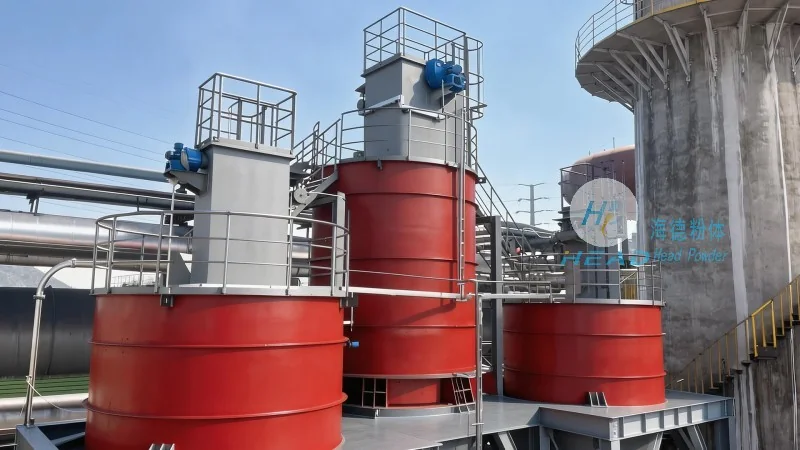
Conveying distance is another critical factor. Positive pressure is generally preferred for longer distances, as it can maintain the material's velocity and prevent settling. Negative pressure is more suitable for shorter distances or when the material needs to be transported from a higher to a lower level. Environmental considerations, such as dust control and air quality, also influence the choice. Positive pressure systems are often enclosed, reducing dust dispersion, while negative pressure systems may require additional filtration to meet air quality standards.
Energy consumption is a practical consideration. Positive pressure systems typically consume more energy due to the need for high-pressure blowers, whereas negative pressure systems are more energy-efficient. However, the overall cost-effectiveness depends on the specific application and operational scale. It's also important to evaluate the equipment maintenance requirements. Positive pressure systems may have more moving parts, such as blowers and filters, which can increase maintenance costs. Negative pressure systems, while simpler, may require more frequent cleaning of the suction lines to prevent clogging.
Choosing between positive pressure and negative pressure for PVC conveying requires a thorough assessment of the material characteristics, operational constraints, and environmental factors. Positive pressure conveying offers robustness and control, making it ideal for challenging materials, while negative pressure provides simplicity and energy efficiency for lighter, more manageable materials. By understanding the distinctions outlined in this article, businesses can select the most appropriate conveying method to ensure efficient and safe PVC transport. Whether you are dealing with fine powders or bulk materials, the right choice will directly impact productivity and operational costs.

 Shandong Headpowder Engineering Co., Ltd.
 156-6277-7102(Manager Zhang)
  0531-83386006
  Zhangqiu District, Jinan City, Shandong Province, China
telephone
WeChatconsult
top