With more than 10‑year industry experience, Shandong Headpowder delivers full‑service pneumatic‑conveying systems and blowers, undertaking nationwide turn‑key powder‑handling projects.
In the industrial material conveying field, selecting the right conveying technology is crucial for enhancing production efficiency, reducing operational costs, and ensuring environmental cleanliness. For polyvinyl chloride (PVC), a material that is prone to dust generation and environmentally sensitive, traditional conveying methods often present significant challenges. Shandong HeadPowder Engineering Co., Ltd., a leading enterprise specializing in engineering solutions, is committed to providing efficient and clean solutions for PVC conveying through advanced pneumatic conveying technology. This article delves into how pneumatic conveying technology has become an optimal choice for improving PVC conveying efficiency and analyzes its core advantages and application value.
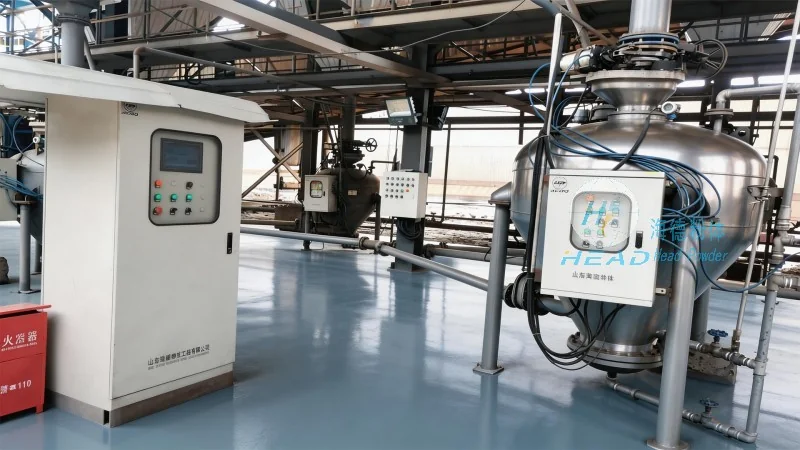
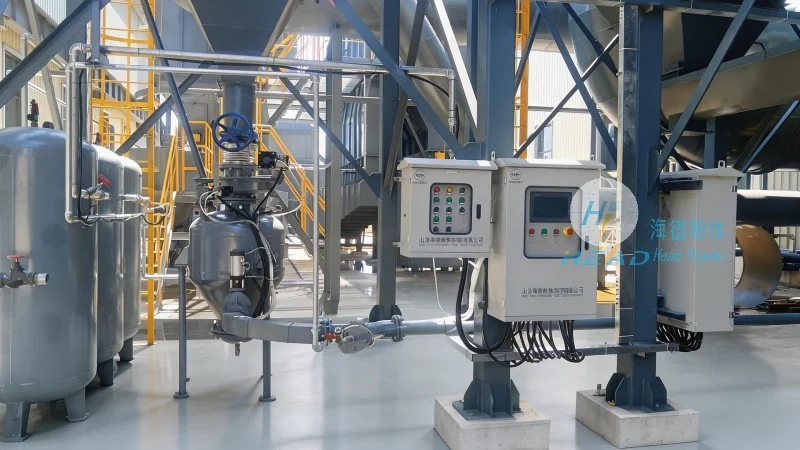
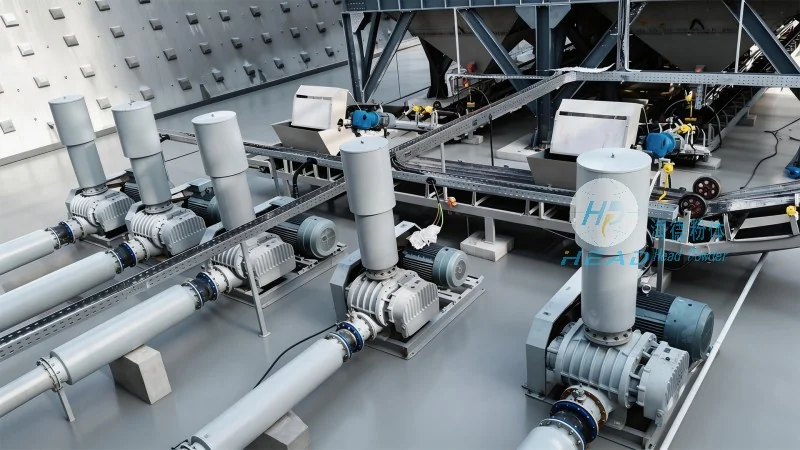
Polyvinyl chloride is a common plastic raw material widely used in construction, packaging, industrial products, and other fields. However, the particle characteristics, brittleness, and dust-flying issues of PVC present numerous challenges for traditional conveying methods. For example, belt conveyors may become blocked due to material adhesion, while screw conveyors can generate heat through friction, potentially causing material degradation. Additionally, dust control for PVC production lines is increasingly stringent, with traditional methods often requiring extra dust removal equipment, which increases system complexity and costs. To address these challenges, pneumatic conveying technology offers innovative solutions through its unique advantages. By utilizing compressed air or inert gases as the driving force, pneumatic conveying systems can achieve non-contact material transport, effectively avoiding friction and wear between materials and equipment while maintaining the material's original state. This non-contact transport method not only reduces material loss but also significantly lowers dust generation, meeting the requirements of modern industrial clean production.
Pneumatic conveying technology works by mixing materials with air flow and using the kinetic energy of the air to transport materials to the designated location. Its working principle mainly includes suction and pressure types. Suction systems typically draw materials from the source and transport them through pipelines to the destination, suitable for short-distance, low-pressure conveying needs; while pressure systems press materials from the source to the destination, suitable for long-distance, high-pressure conveying needs. For PVC, which is prone to static electricity, pneumatic conveying systems often use inert gases (such as nitrogen) as the conveying medium to avoid safety hazards caused by static accumulation. Shandong HeadPowder Engineering Co., Ltd. considers the characteristics of PVC materials in the design of pneumatic conveying systems, using corrosion-resistant and wear-resistant materials (such as stainless steel and special plastics) to manufacture conveying pipelines and equipment, ensuring long-term stable operation of the system. Additionally, the system is equipped with advanced control devices that can monitor air flow speed, pressure, and material flow in real time, ensuring the stability and reliability of the conveying process. The core advantages of pneumatic conveying technology lie in its efficiency, cleanliness, and flexibility. Compared to traditional conveying methods, pneumatic conveying can achieve faster material transport speeds, shortening production cycles. At the same time, non-contact transport reduces the contact area between materials and equipment, lowering the risk of material contamination and equipment wear. For environmentally sensitive materials like PVC, the cleanliness of pneumatic conveying is particularly important, as it can effectively control dust generation, reduce the impact on operators' health, and meet environmental regulations.

 Shandong Headpowder Engineering Co., Ltd.
 156-6277-7102(Manager Zhang)
  0531-83386006
  Zhangqiu District, Jinan City, Shandong Province, China
telephone
WeChatconsult
top