With more than 10‑year industry experience, Shandong Headpowder delivers full‑service pneumatic‑conveying systems and blowers, undertaking nationwide turn‑key powder‑handling projects.
HeadPowder, a leading engineering firm based in Shandong, China, specializes in the design and implementation of advanced pneumatic conveying systems tailored for handling husk materials. This article provides a comprehensive analysis of such systems, focusing on their operational principles, key components, and practical applications within industrial settings.
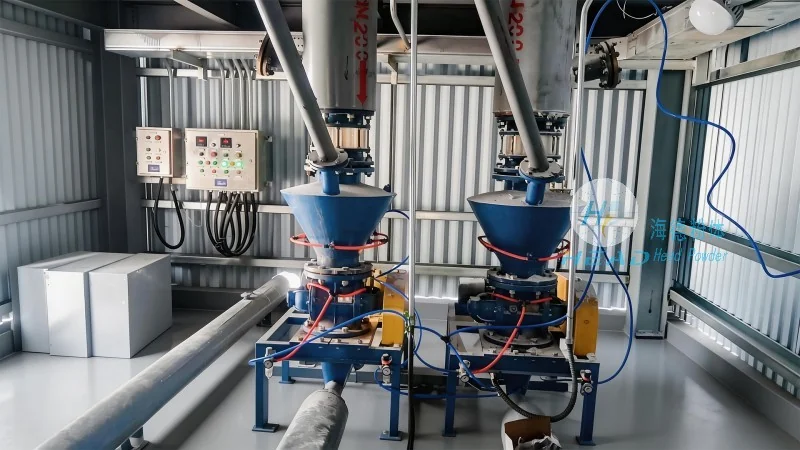
Pneumatic conveying systems are widely used in various industries to transport bulk materials like husk efficiently and safely. The core principle involves using air pressure to move particles through a pipeline, eliminating the need for mechanical components such as belts or buckets. This method offers several advantages, including reduced maintenance costs, improved material handling speed, and enhanced safety by minimizing direct human contact with the conveyed material.
The effectiveness of a husk pneumatic conveying system relies on a well-designed combination of components. These typically include a hopper for material storage, a feeder to control the flow rate, a blower or compressor to generate the necessary air pressure, a pipeline network to transport the material, and a receiver or discharge unit to collect the delivered husk. Each component plays a critical role in ensuring the system operates smoothly and efficiently.
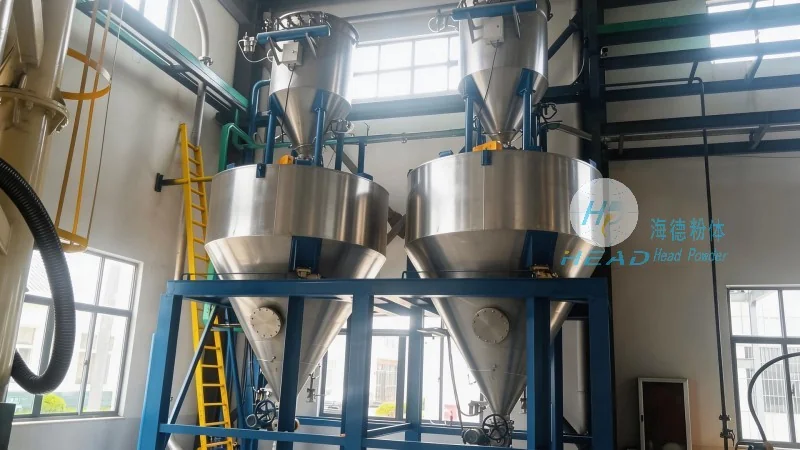
The operation of a husk pneumatic conveying system is governed by the balance between air velocity and material particle size. The air velocity must be sufficient to lift and transport the husk particles without causing excessive wear on the system components. Flow control mechanisms, such as rotary valves or screw feeders, are essential to regulate the material feed rate, preventing blockages and ensuring consistent performance. Proper flow control also helps in maintaining the desired air-to-material ratio, which is crucial for optimal system efficiency.
Compared to traditional mechanical conveying methods, pneumatic systems offer distinct benefits when handling husk. These include the ability to transport materials over long distances with minimal loss, the capacity to handle a wide range of particle sizes and moisture contents, and the flexibility to integrate with existing industrial processes. Additionally, pneumatic conveying systems are less prone to material degradation due to reduced friction and minimal exposure to external contaminants.

Husk pneumatic conveying systems find applications in several industries, including agriculture, food processing, and biomass energy production. In agricultural settings, these systems are used to transport husk from storage facilities to processing plants, ensuring a continuous supply of raw material. In food processing, they help in moving husk from grinding or milling operations to storage or further processing stages. For biomass energy plants, pneumatic conveying is essential for transporting husk to combustion or gasification units, supporting efficient energy generation.
The design of a husk pneumatic conveying system must consider several factors, including the type of husk being handled, the distance to be covered, and the required material flow rate. Customization is a key aspect, as each industrial application has unique requirements. HeadPowder, with its expertise in engineering, offers tailored solutions that address specific operational needs, ensuring optimal performance and reliability. The company’s engineers work closely with clients to assess their material characteristics and process requirements, developing systems that maximize efficiency and minimize operational costs.
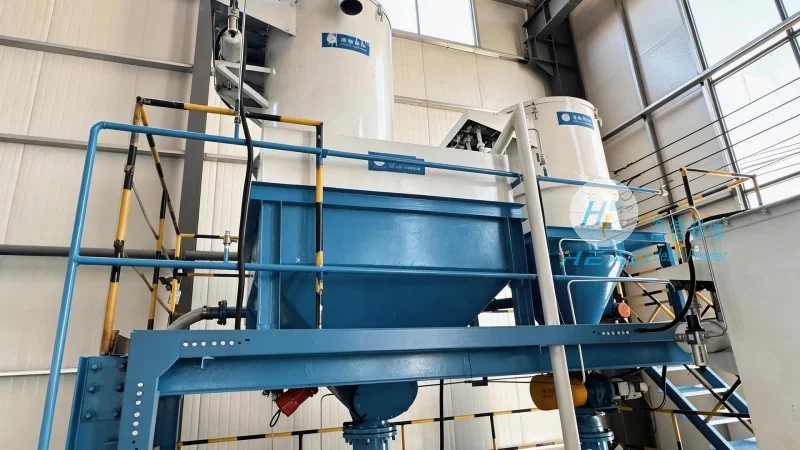
Proper maintenance is crucial for the long-term performance and longevity of a husk pneumatic conveying system. Regular inspections of components like the blower, pipeline, and feeder are necessary to detect and address potential issues before they escalate. HeadPowder provides comprehensive maintenance services, including routine checks, component replacement, and system upgrades, to ensure the system operates at peak efficiency. By adhering to recommended maintenance schedules, users can extend the service life of their equipment and reduce downtime, thereby enhancing overall productivity.
In conclusion, husk pneumatic conveying systems represent a highly effective solution for the efficient and safe handling of bulk husk materials. With their advanced design, operational flexibility, and numerous benefits, these systems are increasingly adopted in various industrial applications. HeadPowder Engineering Co., Ltd., based in Shandong, China, continues to lead in the development and implementation of such systems, providing clients with reliable and customized solutions that meet their specific needs. By leveraging their expertise and commitment to quality, HeadPowder ensures that its pneumatic conveying systems deliver optimal performance and contribute to the success of industrial operations.

 Shandong Headpowder Engineering Co., Ltd.
 156-6277-7102(Manager Zhang)
  0531-83386006
  Zhangqiu District, Jinan City, Shandong Province, China
telephone
WeChatconsult
top