With more than 10‑year industry experience, Shandong Headpowder delivers full‑service pneumatic‑conveying systems and blowers, undertaking nationwide turn‑key powder‑handling projects.
Heavy powder pneumatic conveying systems are critical in industrial applications for transporting bulk materials like powders and granules over long distances with efficiency and reliability. These systems utilize air or other gases as the conveying medium to move materials from one location to another, offering advantages such as reduced labor costs, minimized product contamination, and the ability to handle materials in hazardous environments. The classification and composition of these systems are essential for understanding their functionality and selecting the appropriate system for specific industrial needs.
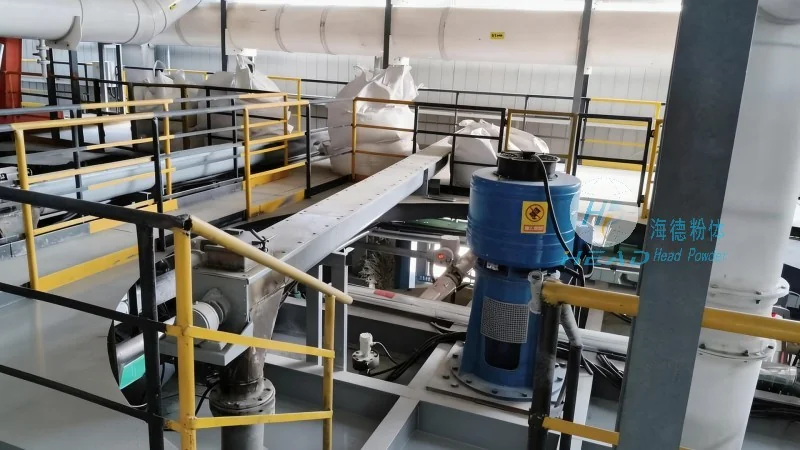
The core components of a heavy powder pneumatic conveying system typically include a material hopper, a feeder, a conveying line, a receiver, and a blower or compressor. The material hopper stores the bulk material to be conveyed, ensuring a consistent supply. The feeder regulates the flow of material into the conveying line, preventing blockages and maintaining system efficiency. The conveying line, often made of metal or plastic, transports the material and air mixture. The receiver collects the conveyed material and may include a dust collection system to ensure environmental compliance. The blower or compressor provides the necessary air pressure to move the material through the system. Additionally, accessories such as filters, cyclones, and check valves may be included to enhance system performance and ensure smooth operation.
Heavy powder pneumatic conveying systems can be classified based on several factors, including the conveying principle, material handling capacity, and application requirements. The primary classification is between pressure and vacuum systems. Pressure systems operate by blowing air or gas into the conveying line under positive pressure, typically using a blower. Vacuum systems, on the other hand, create a negative pressure in the conveying line using a vacuum pump, drawing material from the source. Within these categories, subtypes include dilute-phase and dense-phase systems. Dilute-phase systems use high air velocities to transport material in a dispersed state, suitable for short to medium distances and low to medium material loads. Dense-phase systems use lower air velocities and higher material concentrations, ideal for long-distance transport and handling abrasive or sensitive materials. Another classification is based on the type of feeder used, such as rotary valves, screw feeders, or vibratory feeders, each suited to different material characteristics and flow rates.
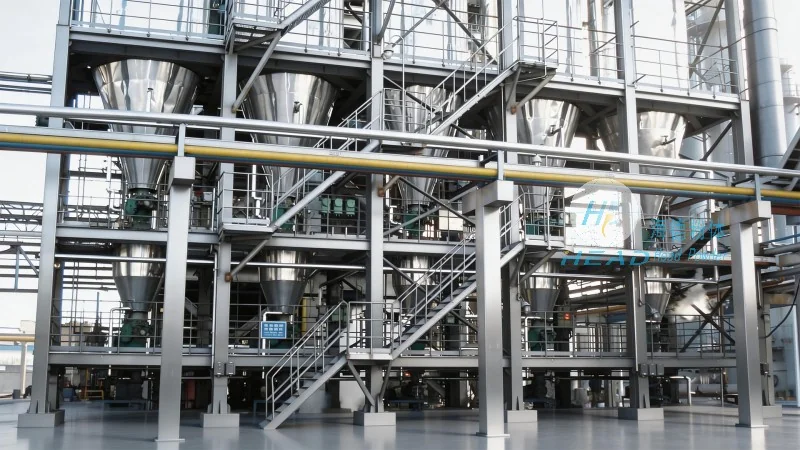
Heavy powder pneumatic conveying systems are widely used across various industries, including chemical, pharmaceutical, food processing, and mining. In the chemical industry, these systems are used to transport raw materials and finished products, ensuring safe and efficient handling of potentially hazardous powders. The pharmaceutical industry relies on these systems for sterile and contamination-free material transport, maintaining product quality and regulatory compliance. Food processing applications involve conveying ingredients like flour, sugar, and spices, where hygiene and product integrity are paramount. In the mining sector, heavy powder systems are used to transport ore and other bulk materials from processing plants to storage or shipping facilities. The versatility of these systems makes them suitable for a wide range of industrial applications, adapting to different material properties and operational requirements.
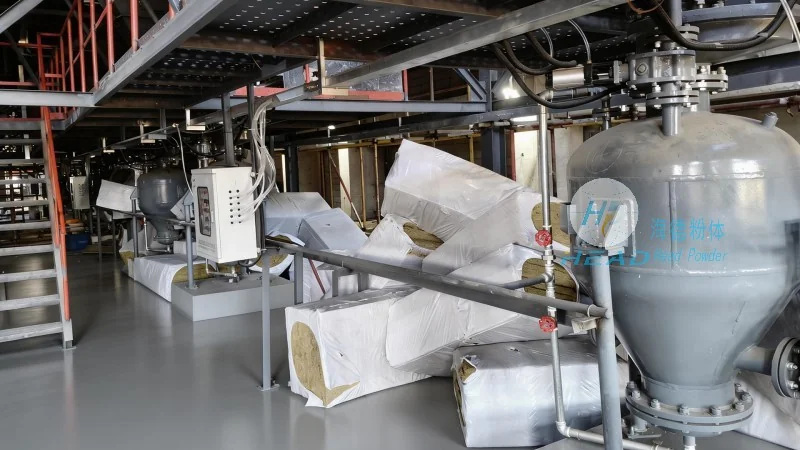
Heavy powder pneumatic conveying systems offer several advantages over traditional mechanical conveying methods. These include reduced installation costs due to fewer components and less infrastructure, lower maintenance requirements as there are fewer moving parts, and the ability to handle materials in hazardous environments without the risk of explosion. However, system design must consider factors such as material characteristics, including particle size, density, and moisture content, as these affect system performance and efficiency. The choice of conveying principle (pressure or vacuum) and phase (dilute or dense) depends on the specific material and application. Additionally, environmental regulations and dust control measures are critical considerations, as these systems can generate significant dust during operation. Proper filtration and dust collection systems are essential to ensure compliance with environmental standards and maintain workplace safety.
Understanding the classification and composition of heavy powder pneumatic conveying systems is vital for selecting the most suitable system for industrial applications. These systems play a crucial role in enhancing operational efficiency, reducing costs, and ensuring product quality across various industries. Shandong HeadPowder Engineering Co., Ltd., a leading provider in this field, specializes in designing and manufacturing customized pneumatic conveying solutions tailored to specific industrial needs. With a focus on quality and innovation, the company ensures that its systems meet the highest standards of performance and reliability, supporting clients in achieving their operational goals. Based in Shandong, China, HeadPowder Engineering Co., Ltd. leverages its expertise to deliver efficient and effective pneumatic conveying systems that enhance productivity and safety in industrial settings.

 Shandong Headpowder Engineering Co., Ltd.
 156-6277-7102(Manager Zhang)
  0531-83386006
  Zhangqiu District, Jinan City, Shandong Province, China
telephone
WeChatconsult
top