With more than 10‑year industry experience, Shandong Headpowder delivers full‑service pneumatic‑conveying systems and blowers, undertaking nationwide turn‑key powder‑handling projects.
Chlorinated polyethylene (CPE) is a versatile polymer widely used in various industrial applications due to its excellent properties such as flexibility, heat resistance, and chemical stability. When handling CPE in powder or granular form, efficient material transport is crucial for maintaining production efficiency and product quality. Airflow transport, also known as pneumatic conveying, offers a reliable method to move these materials over long distances or within complex processing systems.
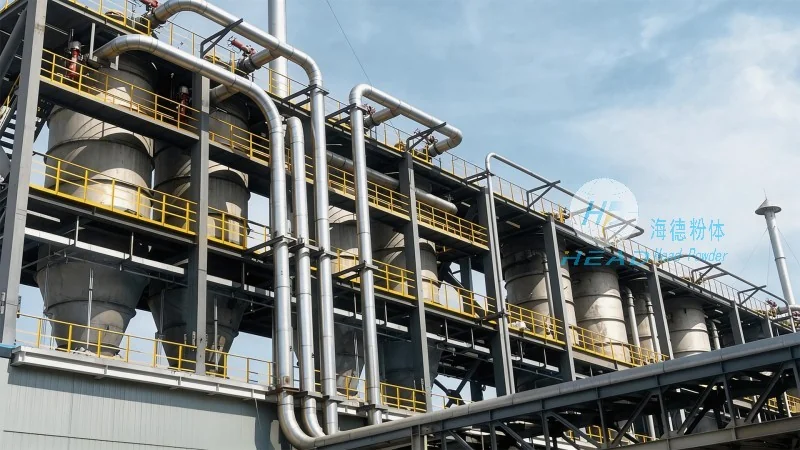
Pneumatic conveying systems utilize air or gas to transport bulk materials like CPE powders and granules. These systems can be categorized into two main types: dilute-phase and dense-phase. Dilute-phase systems use high air velocities to keep particles suspended in the air stream, suitable for short to medium distances and low to medium material loads. Dense-phase systems, on the other hand, operate at lower air velocities, creating a slurry-like flow that is ideal for high-value or sensitive materials, minimizing product degradation and equipment wear.
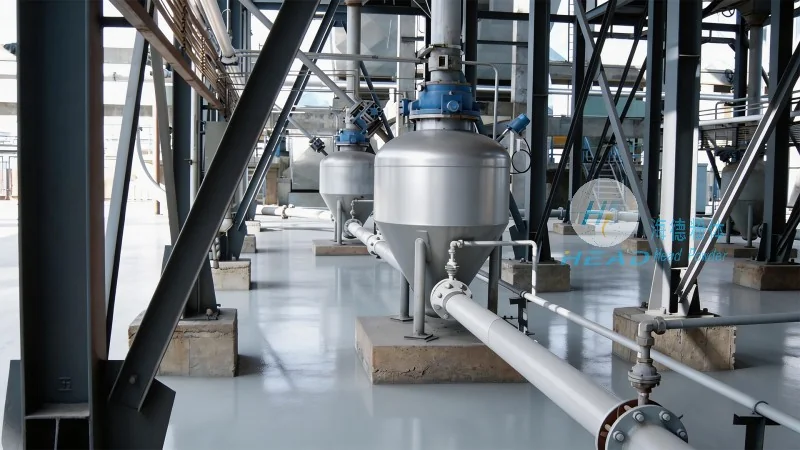
The effectiveness of an airflow transport system for chlorinated polyethylene depends on several critical components. The primary components include the material feed hopper, which ensures a consistent flow of CPE into the system; the air compressor or blower, which generates the necessary air pressure and flow rate; the conveying line, typically made of durable materials like stainless steel or special polymers to resist corrosion from CPE; and the control system, which regulates air pressure, flow rate, and material feed to maintain optimal operation.
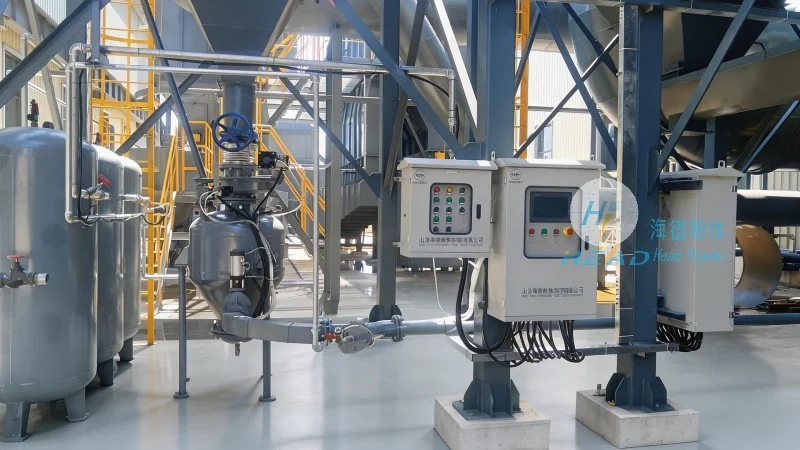
Implementing an airflow transport system for chlorinated polyethylene offers numerous advantages. First, it provides a dust-free and hygienic environment, which is essential for maintaining product purity and compliance with industry standards. Second, it allows for the safe and efficient transport of materials over long distances without the need for mechanical components like belts or screws, reducing maintenance and downtime. Third, the system can be easily integrated into existing production lines, adapting to various processing requirements. Additionally, pneumatic conveying minimizes product degradation by reducing friction and exposure to external elements, preserving the quality of CPE for downstream applications.
When designing an airflow transport system for chlorinated polyethylene, several factors must be considered to ensure optimal performance. The first consideration is the material's physical properties, such as particle size, density, and moisture content, as these affect the air velocity and pressure required for effective conveying. The second factor is the distance and layout of the conveying line, which influences the choice between dilute-phase and dense-phase systems. Third, the system's capacity and throughput must be matched to the production requirements to avoid bottlenecks or overloading. Furthermore, the selection of materials for the conveying line and components is critical to prevent corrosion or degradation from the CPE, ensuring long-term reliability.
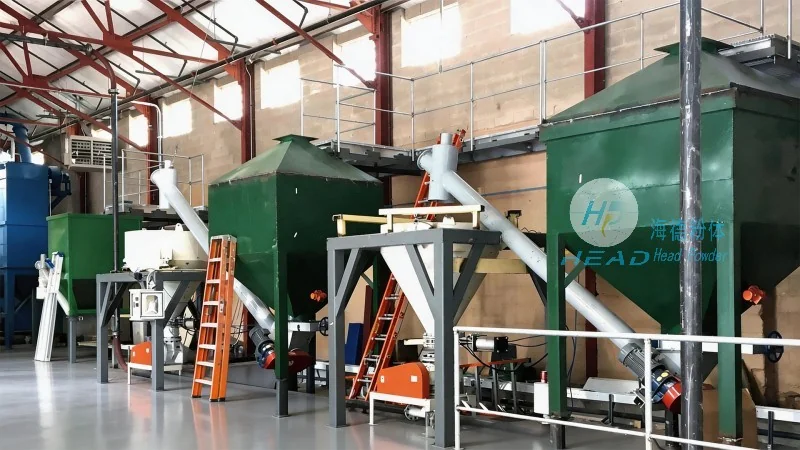
Shandong HeadPowder Engineering Co., Ltd., a leading provider of bulk material handling solutions, recently implemented an airflow transport system for a client's CPE production facility. The client, a major manufacturer of CPE-based products, required a reliable method to move large quantities of CPE powders from storage silos to processing units. The HeadPowder team designed a dense-phase pneumatic conveying system tailored to the client's specific needs. The system utilized stainless steel conveying lines and advanced control technology to maintain consistent air pressure and material flow. As a result, the client achieved significant improvements in production efficiency, reduced material loss, and enhanced product quality. The success of this project highlights the effectiveness of airflow transport in handling chlorinated polyethylene and other similar materials.

 Shandong Headpowder Engineering Co., Ltd.
 156-6277-7102(Manager Zhang)
  0531-83386006
  Zhangqiu District, Jinan City, Shandong Province, China
telephone
WeChatconsult
top